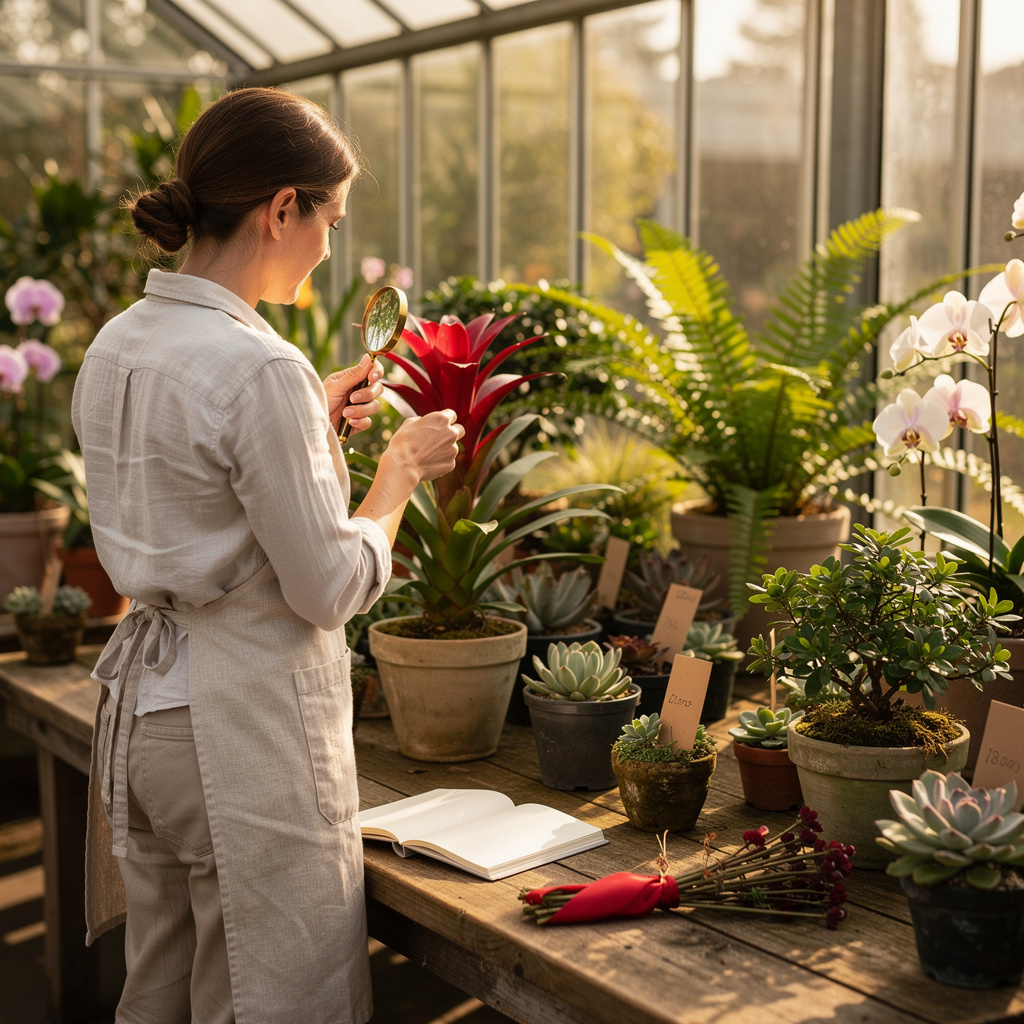
What is Botany and Ornamental Plant Classification?
Botany and Ornamental Plant Classification Certificate Program
Botany and Ornamental Plant Classification certificate program provides a structured foundation in the scientific principles used to identify, name, and categorize plants, with a specific focus on ornamental species. It teaches plant biology, morphology and anatomy, physiology and growth, taxonomic hierarchy and nomenclature, major plant groups from bryophytes to gymnosperms, and angiosperm diversity before moving into ornamental plant classification by growth habit, life cycle, ornamental features, and use. The program is designed for horticulture and landscape professionals, garden designers, nursery and botanical garden staff, students in plant science, and committed enthusiasts who need more than casual plant knowledge. Its main practical outcome is the ability to identify and classify ornamental plants accurately, use botanical names with confidence, and make better-informed planting and garden-design decisions.
The curriculum is organized as a beginner-friendly progression: it starts with foundational botany and plant biology, builds through morphology, anatomy, physiology, taxonomy, systematics, and nomenclature, then expands into major plant groups, angiosperm diversity, and ornamental-plant classification. Theory is balanced with applied classification work, so learners practice reading plant form, interpreting taxonomic relationships, checking cultivar names, and connecting classification categories to real garden and horticultural choices. Across the program, five core skill areas are developed: plant identification, taxonomic reasoning, nomenclature literacy, ornamental selection, and applied classification for design and horticultural practice. Learners choose this program now because horticulture increasingly depends on precise plant naming, traceable cultivar information, biodiversity-conscious planting, and reliable communication among growers, designers, and conservation teams.
What is Botany and Ornamental Plant Classification?
Botany and ornamental plant classification is an applied plant-science field that links the study of plant form, structure, growth, evolution, and naming with the practical organization of cultivated plants for horticulture and garden design. Its scope runs from plant morphology, anatomy, and physiology to systematics, taxonomic hierarchy, botanical nomenclature, and the diversity of bryophytes, gymnosperms, and angiosperms. For ornamentals, it examines growth habit, life cycle, ornamental features, landscape use, and cultivar registration, treating classification as both a scientific system and a working horticultural tool. Core concepts include diagnostic plant characters, evolutionary relationships, valid naming rules, hierarchical categories, and the distinction between botanical taxa and cultivated-plant categories.
The subject matters today because accurate plant identity underpins nursery production, botanical garden curation, landscape architecture, conservation planning, plant trade documentation, and public education. It is used whenever professionals need to select the right species for a site, verify a cultivar, compare growth requirements, or communicate reliably across suppliers and design teams. Recent shifts toward DNA-informed taxonomy, online nomenclature databases, pollinator-friendly and climate-resilient planting, and stronger cultivar registration have made classification literacy more valuable, not less. As gardens and nurseries face biodiversity loss, climate stress, and complex supply chains, sound botanical classification supports better decisions about what to plant, how to label it, and where it belongs.
Mastering this subject builds a distinctive skill stack: close observation of plant characters, comparative morphology, taxonomic reasoning, precise nomenclature, cultivar awareness, and the ability to translate classification into planting and design choices. These skills benefit plant buyers, growers, landscape designers, parks and collections staff, conservation practitioners, educators, and advanced home gardeners who want defensible plant identifications and clearer records. The bridge from subject knowledge to practice is strongest when classification is treated as a decision-making language rather than a list of names. That language supports reliable plant selection, coherent garden composition, accurate labelling, responsible sourcing, and effective collaboration between scientific and horticultural communities.
What Will This Course Bring You?
- Explain core plant biology concepts, including cell structure, photosynthesis, and respiration, to interpret how ornamental plants grow and respond to their environment.
- Analyze plant morphology and anatomy, identifying roots, stems, leaves, flowers, and reproductive structures, to describe diagnostic features used in ornamental plant classification.
- Evaluate plant physiological processes and growth patterns, such as transpiration, hormone regulation, and photoperiodism, to predict ornamental plant development and seasonal performance.
- Apply principles of plant taxonomy and systematics to compare classification approaches and justify grouping decisions for ornamental plants using morphological and genetic evidence.
- Use taxonomic hierarchy and botanical nomenclature rules to construct correct scientific names for selected ornamental species, genera, and families.
- Differentiate major plant groups from bryophytes through gymnosperms and angiosperms by analyzing representative life cycles, reproductive structures, and classification characteristics relevant to ornamental horticulture.
- Classify ornamental plants by growth habit, life cycle, ornamental features, and landscape use to select appropriate species for specific garden design and horticultural applications.
- Interpret cultivar registration and botanical nomenclature standards to evaluate naming accuracy and documentation for ornamental plant cultivars in horticultural practice.
Curriculum
12 Units1. Introduction to Botany and Plant Biology
1 hour
2. Plant Morphology and Anatomy
1 hour
3. Plant Physiology and Growth
1 hour
4. Principles of Plant Taxonomy and Systematics
1 hour
5. Taxonomic Hierarchy and Nomenclature
1 hour
6. Major Plant Groups: Bryophytes to Gymnosperms
1 hour
7. Angiosperm Classification and Diversity
1 hour
8. Introduction to Ornamental Plants
1 hour
9. Classification of Ornamental Plants by Growth Habit and Life Cycle
1 hour
10. Classification by Ornamental Features and Use
1 hour
11. Botanical Nomenclature and Cultivar Registration for Ornamentals
1 hour
12. Applied Classification: Garden Design and Horticultural Practice
1 hour
Exam – Botany and Ornamental Plant Classification
20 Questions • 70% Pass • 30 min
Unlock All Units for Free
Create an account, enroll in the course, and start with the first unit right away.
Exam – Botany and Ornamental Plant Classification
20 Questions • Pass: 70% • 30 min
Course Duration
720
Total Minutes
12
Unit
1
Final Exam
~60
Min / Unit
Botany and Ornamental Plant Classification Certificate Program
Document Your Skill
Those who pass the 20-question, 30-minute exam with 70% receive the Botany and Ornamental Plant Classification Certificate.
Stand Out on Your CV
By adding your certificate to your CV, gain a professional reference in job applications and stand out from the crowd.
Career Advantage
With the verification code, employers can check your certificate instantly — a concrete way to show your growth.
CERTIFICATE FEE
At the end of the course, an online exam consisting of 20 questions with a 30-minute time limit is given. The exam appears automatically after you complete the topics. Anyone who scores at least 70 out of 100 on the certificate exam is awarded the Botany and Ornamental Plant Classification Document (certificate of attendance). You can add the certificate you earn to your CV for job applications in the many sectors listed above, and use it as a reference proving that you took this interactive course.
The Certificate of Achievement you receive with the Botany and Ornamental Plant Classification course program holds value that proves your personal and professional development in the business world. By adding it to your CV, it can serve as an important reference in your job applications. Moreover, compared with certificates from other private training institutions, Catch Wisdom certificates are offered to our participants at a much more affordable price.
The Botany and Ornamental Plant Classification course certificate is a document that proves, with a unique verification code, that you completed the course. Employers can instantly check its authenticity with this code, which helps you show your development concretely in your job applications.
For more information, we recommend visiting the Support page.
Certificate in 7 Languages
Earning success certificates from our courses is now more meaningful and global. With certificates available in Turkish, English, German, French, Spanish, Arabic, and Russian, we fully unlock the potential of students worldwide.
Why Certificate in 7 Languages?
-
01
Global Skill Development
Receiving your certificates in 7 different languages strengthens your communication skills as you engage with more people worldwide. It lets you operate more confidently and capably on the international stage.
-
02
International Job Opportunities
Employers may see your certificates in multiple languages as a sign of your ability to seize global opportunities. You can open more doors to new jobs and projects.
-
03
Cultural Richness
The chance to earn certificates in different languages helps you build closer ties with various cultures and broadens your worldview. It enriches your global perspective and deepens cultural understanding.
-
04
Ability to Participate in International Projects
Multilingual certificates give you an edge to work more effectively on international projects. They boost your chances of leadership and participation in diverse projects in the business world.
-
05
Prove Yourself on the Global Stage
Certificates in multiple languages give you the opportunity to present your skills and knowledge worldwide.
Language diversity opens worldwide opportunities. If you want to prove yourself in the international arena, join our online Botany and Ornamental Plant Classification course program and begin this journey with us.
Frequently Asked Questions (FAQ)
Is this course paid?
How do I join the course?
Can I take the course at my own pace?
How can I get my certificate?
What are the advantages of the certificate?
Boost Your Career
Take a new career step with the Botany and Ornamental Plant Classification course. Add your certificate to your CV, stand out in job applications, and open the door to new opportunities in the industry.
StartStudent Reviews
No reviews yet
Enroll in this course and be the first to leave a review about your experience with Botany and Ornamental Plant Classification.
Start