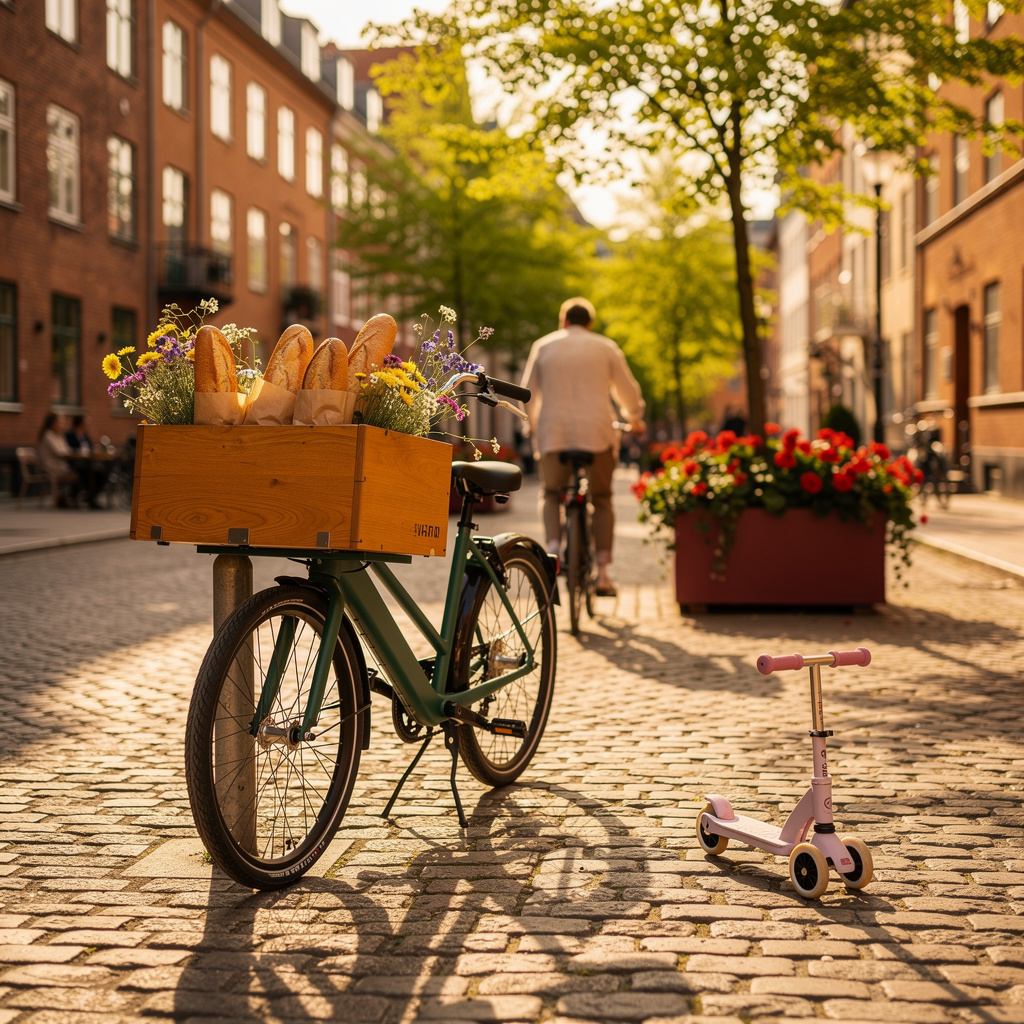
What is Car-Free Living?
Car-Free Living Training
The Car-Free Living certificate program is a comprehensive, practical training designed for anyone ready to reduce or eliminate car dependence—whether for financial, environmental, or lifestyle reasons. This course takes you from a simple desire to drive less to a fully operational car-free routine, covering everything from assessing your current habits to mastering public transit, biking, walking, car-sharing, and even handling groceries, commuting, and family logistics without a personal vehicle. By the end, you will have a personalized transition plan and the confidence to navigate daily life car-free, with measurable savings and a lower carbon footprint.
The program is structured as a beginner-friendly progression, starting with motivation and self-assessment, then moving through transportation options, practical skills like route planning and micro-mobility, and finally long-term sustainability and community advocacy. It balances theory with hands-on exercises, building four core skill areas: transportation literacy, urban navigation, logistics management, and lifestyle integration. With urban congestion, rising fuel costs, and climate urgency making headlines, this training is your timely, actionable guide to reclaiming your time, money, and health—while becoming part of the growing movement toward walkable, bikeable, transit-rich communities.
What is Car-Free Living?
Car-free living is a lifestyle and mobility paradigm in which individuals deliberately reduce or eliminate their reliance on privately owned automobiles, instead using a combination of public transit, active transportation (walking, cycling, scooters), shared mobility services, and urban design that prioritizes people over vehicles. Its core concepts include multimodal trip planning, last-mile connectivity, transit-oriented development, and the recognition that personal car ownership is not a necessity but one option among many. This subject encompasses not just the physical act of moving, but also the social, economic, and environmental systems that support car-free choices—from bike lanes and bus rapid transit to car-sharing cooperatives and zoning laws that enable dense, mixed-use neighborhoods.
Today, car-free living matters more than ever as cities worldwide face gridlock, air pollution, and the urgent need to cut greenhouse gas emissions. Governments and urban planners are investing heavily in public transit, protected bike lanes, pedestrian zones, and shared mobility platforms, while employers and universities increasingly offer transit subsidies and bike parking. The COVID-19 pandemic accelerated shifts toward remote work and micro-mobility, and the global push for 15-minute cities has made car-free living a mainstream aspiration rather than a fringe ideal. Real-world applications range from individual households going car-free to entire districts designed around transit, and academic research in urban planning, public health, and environmental science continually validates the benefits of reduced car dependence.
Mastering the subject of car-free living builds a versatile skill stack that includes spatial reasoning, route optimization, time management, budgeting, and resilience in navigating complex urban systems. These skills are directly applicable in professional contexts such as urban planning, transportation logistics, sustainability consulting, and public policy, while also enriching personal life through improved fitness, lower expenses, and stronger community connections. For anyone seeking to reduce their environmental impact, save money, or simply experience their city more intimately, this knowledge transforms abstract ideals into daily practice—empowering learners to become advocates for better streets and more livable neighborhoods.
Common Questions About Car-Free Living
Does the car-free living certificate boost my resume for sustainability jobs?
Can a total beginner start the car-free living course without prior knowledge?
How does the car dependency index formula measure my car habit?
What is the 10,000 km tipping point for car-sharing vs owning?
What's the difference between hub-and-spokes and integrated transit networks?
- Hub-and-spokes: All routes radiate from a central hub, so you often travel inward before going outward. For example, a suburb-to-suburb trip may require a downtown transfer.
- Integrated: Multiple nodes are linked directly, allowing cross-town travel without a central transfer. This reduces travel time and transfers.
How does micro-mobility solve the last mile problem in car-free living?
Is car-free living only possible in dense city centers?
What Will This Course Bring You?
- Analyze personal car dependence using a structured assessment tool to identify key areas for change.
- Evaluate various transportation options to determine the most suitable alternatives for specific trips.
- Design a personalized weekly schedule integrating public transit, biking, and walking for daily commutes and errands.
- Apply navigation and fare-payment strategies to efficiently use public transit systems in unfamiliar cities.
- Implement safe biking and micro-mobility practices, including route selection and equipment maintenance, for urban travel.
- Develop a plan for grocery shopping and errands using walking, biking, and delivery services without a personal vehicle.
- Evaluate strategies for managing family and social activities car-free, including coordinating schedules and using shared mobility.
- Construct a long-term advocacy plan to promote car-free infrastructure and policies in your community.
Curriculum
12 Units1. Why Go Car-Free: Benefits and Motivations
1 hour
2. Assessing Your Current Car Dependence
1 hour
3. Understanding Your Transportation Options
1 hour
4. Planning Your Car-Free Lifestyle
1 hour
5. Mastering Public Transit
1 hour
6. Biking and Micro-Mobility
1 hour
7. Walking and Urban Design
1 hour
8. Car-Sharing and Ride-Hailing
1 hour
9. Groceries and Errands Without a Car
1 hour
10. Commuting and Work Travel
1 hour
11. Family and Social Life Without a Car
1 hour
12. Long-Term Sustainability and Advocacy
1 hour
Exam – Car-Free Living
20 Questions • 70% Pass • 30 min
Unlock All Units for Free
Create an account, enroll in the course, and start with the first unit right away.
Exam – Car-Free Living
20 Questions • Pass: 70% • 30 min
Course Duration
720
Total Minutes
12
Unit
1
Final Exam
~60
Min / Unit
Car-Free Living Certificate Program
Document Your Skill
Those who pass the 20-question, 30-minute exam with 70% receive the Car-Free Living Certificate.
Stand Out on Your CV
By adding your certificate to your CV, gain a professional reference in job applications and stand out from the crowd.
Career Advantage
Catch Wisdom certificates are recognized by HR departments and increase career opportunities.
CERTIFICATE FEE
At the end of the course, an online exam consisting of 20 questions with a 30-minute time limit is given. The exam appears automatically after you complete the topics. Anyone who scores at least 70 out of 100 on the certificate exam is awarded the Car-Free Living Document (certificate of attendance). You can add the certificate you earn to your CV for job applications in the many sectors listed above, and use it as a reference proving that you took this interactive course.
The Certificate of Achievement you receive with the Car-Free Living course program holds value that proves your personal and professional development in the business world. By adding it to your CV, it can serve as an important reference in your job applications. Moreover, compared with certificates from other private training institutions, Catch Wisdom certificates are offered to our participants at a much more affordable price.
Because HR departments recognize Catch Wisdom as a reputable institution in this field, they value these certificates and may evaluate your job applications favorably. For this reason, a Car-Free Living course certificate from Catch Wisdom can make your applications more attractive and place you in an advantageous position in the business world.
For more information, we recommend visiting the Support page.
Certificate in 7 Languages
Earning success certificates from our courses is now more meaningful and global. With certificates available in Turkish, English, German, French, Spanish, Arabic, and Russian, we fully unlock the potential of students worldwide.
Why Certificate in 7 Languages?
-
01
Global Skill Development
Receiving your certificates in 7 different languages strengthens your communication skills as you engage with more people worldwide. It lets you operate more confidently and capably on the international stage.
-
02
International Job Opportunities
Employers may see your certificates in multiple languages as a sign of your ability to seize global opportunities. You can open more doors to new jobs and projects.
-
03
Cultural Richness
The chance to earn certificates in different languages helps you build closer ties with various cultures and broadens your worldview. It enriches your global perspective and deepens cultural understanding.
-
04
Ability to Participate in International Projects
Multilingual certificates give you an edge to work more effectively on international projects. They boost your chances of leadership and participation in diverse projects in the business world.
-
05
Prove Yourself on the Global Stage
Certificates in multiple languages let you showcase your skills and knowledge worldwide. You can become an internationally recognized professional.
Language diversity opens worldwide opportunities. If you want to prove yourself in the international arena, join our online Car-Free Living course program and begin this journey with us.
Frequently Asked Questions (FAQ)
Is this course paid?
How do I join the course?
Can I take the course at my own pace?
How can I get my certificate?
What are the advantages of the Certified Certificate?
Boost Your Career
Take a new career step with the Car-Free Living course. Add your certificate to your CV, stand out in job applications, and open the door to new opportunities in the industry.
StartStudent Reviews
No reviews yet
Enroll in this course and be the first to leave a review about your experience with Car-Free Living.
Start