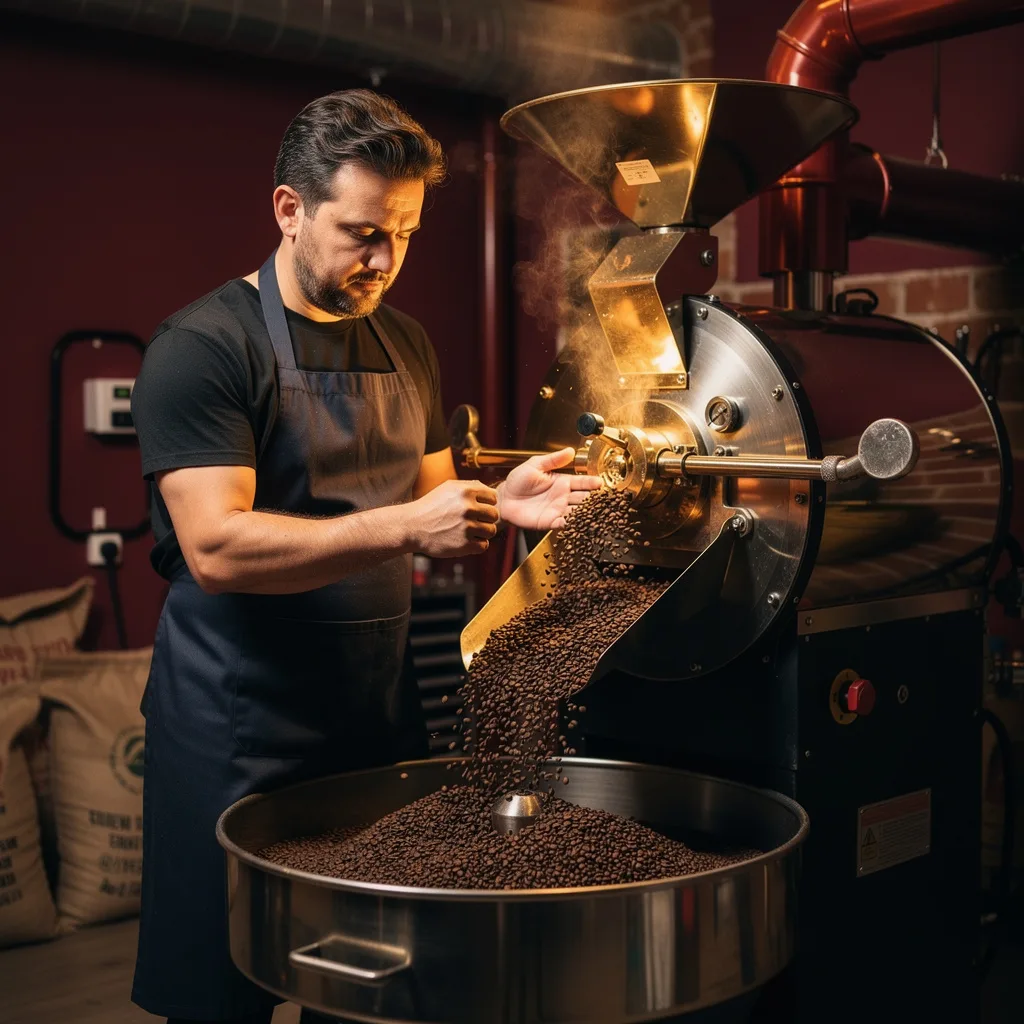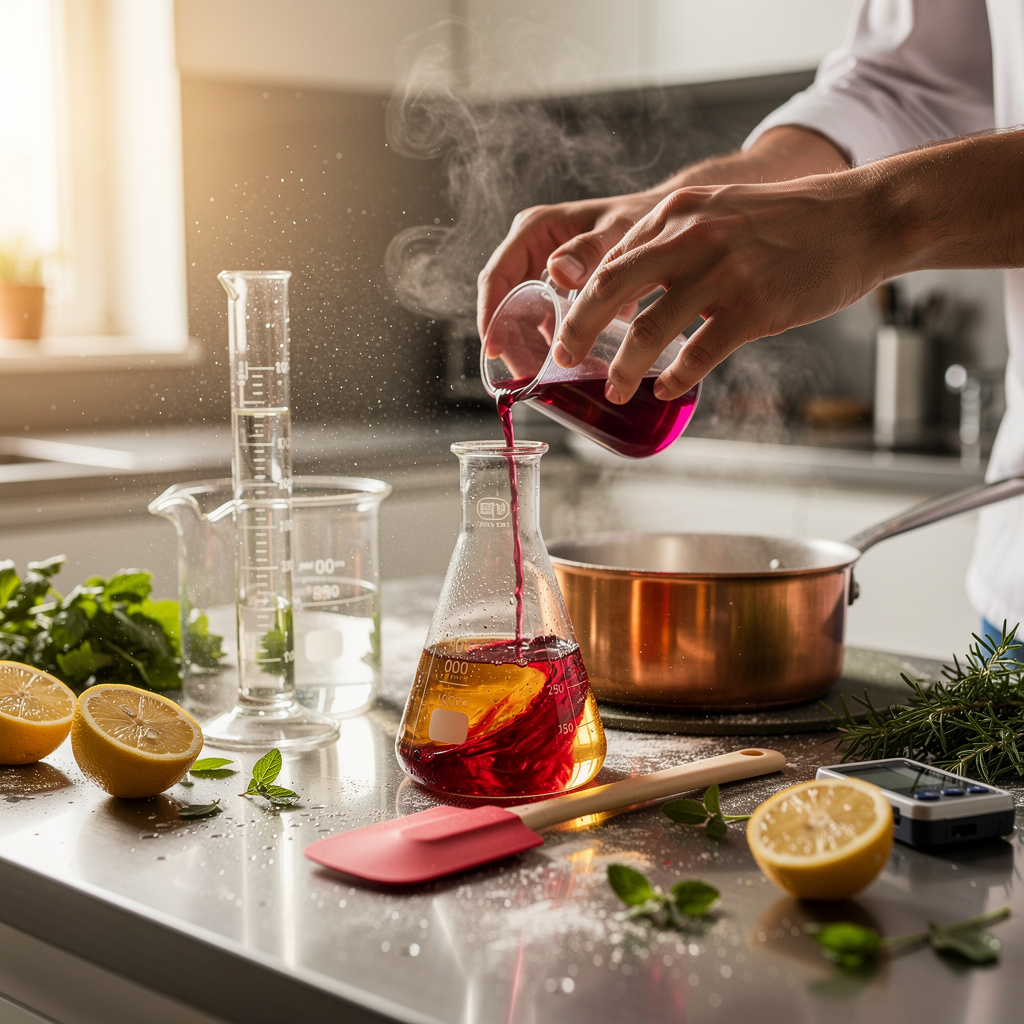
What is Chemistry in the Kitchen?
Chemistry in the Kitchen Certificate Program
Chemistry in the Kitchen certificate program explores how matter, energy, water, acids, proteins, carbohydrates, fats, enzymes, microbes, browning reactions, colloids, and preservation shape everyday cooking. It is designed for home cooks, culinary students, food-service professionals, and science-curious learners who want to understand why recipes work rather than merely follow them. Participants examine thermodynamics and kinetics in heat transfer, pH and taste, protein denaturation, starch gelatinization, emulsion stability, fermentation pathways, and Maillard and caramelization chemistry. The main practical outcome is the ability to diagnose and adjust texture, flavor, safety, and consistency in real recipes using evidence-based kitchen reasoning.
The program is structured as a beginner-friendly progression from foundational matter and atoms through heat, water, and pH to proteins, carbohydrates, fats, enzymes, fermentation, browning, colloidal systems, and advanced preservation and flavor chemistry. Each topic balances explanatory theory with kitchen application, so learners connect molecular behavior to observable results such as thickening sauces, stabilizing vinaigrettes, controlling browning, or managing fermentation. Across the sequence, it builds five core skill areas: chemical literacy, recipe diagnosis, experimental design, sensory analysis, and safe food handling. Learners choose this program now because food science literacy is increasingly valuable in home cooking, product development, culinary education, and quality-focused food work, where small chemical differences often determine success.
What is Chemistry in the Kitchen?
Chemistry in the Kitchen is the study of the physical and chemical changes that occur when ingredients are combined, heated, cooled, fermented, or stored. Its scope ranges from the molecular structure of water, proteins, carbohydrates, and fats to the energy transfers and reaction rates that govern cooking processes. Core concepts include polarity and solubility, pH and acid-base balance, denaturation and gelation, oxidation, browning reactions, colloidal dispersion, and microbial metabolism. Rather than treating recipes as fixed instructions, the subject explains why ingredients behave as they do under specific conditions.
This knowledge matters today because food systems face pressure to improve sustainability, reduce waste, create plant-based and reformulated products, and deliver consistent quality at scale. In homes, it supports safer preservation, better texture control, and more reliable flavor outcomes; in industry, it informs product development, shelf-life decisions, and process optimization; in academia, it connects food science with chemistry, biology, and engineering. Recent shifts toward precision fermentation, alternative proteins, cleaner labels, and data-informed cooking have made molecular understanding more relevant, not less. Consumers and professionals increasingly want explanations that connect sensory experience to measurable chemical principles.
Mastery of kitchen chemistry builds a transferable skill stack: observing a system, identifying variables, predicting reaction outcomes, measuring relevant properties, and iterating toward a desired result. These skills apply in culinary research and development, quality assurance, food education, recipe testing, fermentation hobbies, and everyday cooking decisions. The subject also strengthens scientific communication, because it gives cooks and food professionals a shared vocabulary for discussing flavor, texture, safety, and stability. In personal and professional contexts alike, that combination supports more deliberate experimentation and more consistent results.
What Will This Course Bring You?
- Analyze how molecular structure and intermolecular forces in kitchen ingredients determine solubility, texture, and flavor distribution during mixing and cooking.
- Apply thermodynamic and kinetic principles to predict how cooking time, temperature, and heat-transfer method affect doneness and browning in representative recipes.
- Evaluate water activity and solvent behavior to explain how hydration, boiling, steaming, and evaporation influence texture and flavor in foods such as pasta, rice, and sauces.
- Design simple pH-based taste tests and analyze how acid-base balance alters flavor perception, color, and texture in dressings, marinades, and baked goods.
- Implement controlled protein denaturation experiments to compare how heat, acid, salt, and mechanical action change texture in eggs, meat, and dairy.
- Analyze carbohydrate transformations and browning reactions by comparing starch gelatinization, sugar caramelization, and Maillard browning under varied temperature and moisture conditions.
- Evaluate fat and oil properties to design stable emulsions, foams, or gels, explaining how emulsifiers, temperature, and mechanical action affect colloidal stability.
- Implement a controlled fermentation or enzyme-assisted process and evaluate how microbial activity, temperature, salt, and pH shape flavor, texture, and preservation outcomes.
Curriculum
12 Units1. Foundations of Kitchen Chemistry: Matter, Atoms, and Molecules
1 hour
2. Heat and Energy in Cooking: Thermodynamics and Kinetics
1 hour
3. Water: The Universal Solvent in Cooking
1 hour
4. Acids and Bases: pH and Taste in the Kitchen
1 hour
5. Proteins: Structure, Denaturation, and Cooking
1 hour
6. Carbohydrates: Sugars, Starches, and Their Transformations
1 hour
7. Fats and Oils: Properties and Roles in Cooking
1 hour
8. Enzymes: Biological Catalysts in Food
1 hour
9. Fermentation: Microbial Chemistry in the Kitchen
1 hour
10. The Maillard Reaction and Caramelization: Browning Chemistry
1 hour
11. Emulsions, Foams, and Gels: Colloidal Systems in Food
1 hour
12. Food Preservation and Flavor Chemistry: Advanced Topics
1 hour
Exam – Chemistry in the Kitchen
20 Questions • 70% Pass • 30 min
Unlock All Units for Free
Create an account, enroll in the course, and start with the first unit right away.
Exam – Chemistry in the Kitchen
20 Questions • Pass: 70% • 30 min
Course Duration
720
Total Minutes
12
Unit
1
Final Exam
~60
Min / Unit
Chemistry in the Kitchen Certificate Program
Document Your Skill
Those who pass the 20-question, 30-minute exam with 70% receive the Chemistry in the Kitchen Certificate.
Stand Out on Your CV
By adding your certificate to your CV, gain a professional reference in job applications and stand out from the crowd.
Career Advantage
With the verification code, employers can check your certificate instantly — a concrete way to show your growth.
CERTIFICATE FEE
At the end of the course, an online exam consisting of 20 questions with a 30-minute time limit is given. The exam appears automatically after you complete the topics. Anyone who scores at least 70 out of 100 on the certificate exam is awarded the Chemistry in the Kitchen Document (certificate of attendance). You can add the certificate you earn to your CV for job applications in the many sectors listed above, and use it as a reference proving that you took this interactive course.
The Certificate of Achievement you receive with the Chemistry in the Kitchen course program holds value that proves your personal and professional development in the business world. By adding it to your CV, it can serve as an important reference in your job applications. Moreover, compared with certificates from other private training institutions, Catch Wisdom certificates are offered to our participants at a much more affordable price.
The Chemistry in the Kitchen course certificate is a document that proves, with a unique verification code, that you completed the course. Employers can instantly check its authenticity with this code, which helps you show your development concretely in your job applications.
For more information, we recommend visiting the Support page.
Certificate in 7 Languages
Earning success certificates from our courses is now more meaningful and global. With certificates available in Turkish, English, German, French, Spanish, Arabic, and Russian, we fully unlock the potential of students worldwide.
Why Certificate in 7 Languages?
-
01
Global Skill Development
Receiving your certificates in 7 different languages strengthens your communication skills as you engage with more people worldwide. It lets you operate more confidently and capably on the international stage.
-
02
International Job Opportunities
Employers may see your certificates in multiple languages as a sign of your ability to seize global opportunities. You can open more doors to new jobs and projects.
-
03
Cultural Richness
The chance to earn certificates in different languages helps you build closer ties with various cultures and broadens your worldview. It enriches your global perspective and deepens cultural understanding.
-
04
Ability to Participate in International Projects
Multilingual certificates give you an edge to work more effectively on international projects. They boost your chances of leadership and participation in diverse projects in the business world.
-
05
Prove Yourself on the Global Stage
Certificates in multiple languages give you the opportunity to present your skills and knowledge worldwide.
Language diversity opens worldwide opportunities. If you want to prove yourself in the international arena, join our online Chemistry in the Kitchen course program and begin this journey with us.
Frequently Asked Questions (FAQ)
Is this course paid?
How do I join the course?
Can I take the course at my own pace?
How can I get my certificate?
What are the advantages of the certificate?
Boost Your Career
Take a new career step with the Chemistry in the Kitchen course. Add your certificate to your CV, stand out in job applications, and open the door to new opportunities in the industry.
StartStudent Reviews
No reviews yet
Enroll in this course and be the first to leave a review about your experience with Chemistry in the Kitchen.
Start