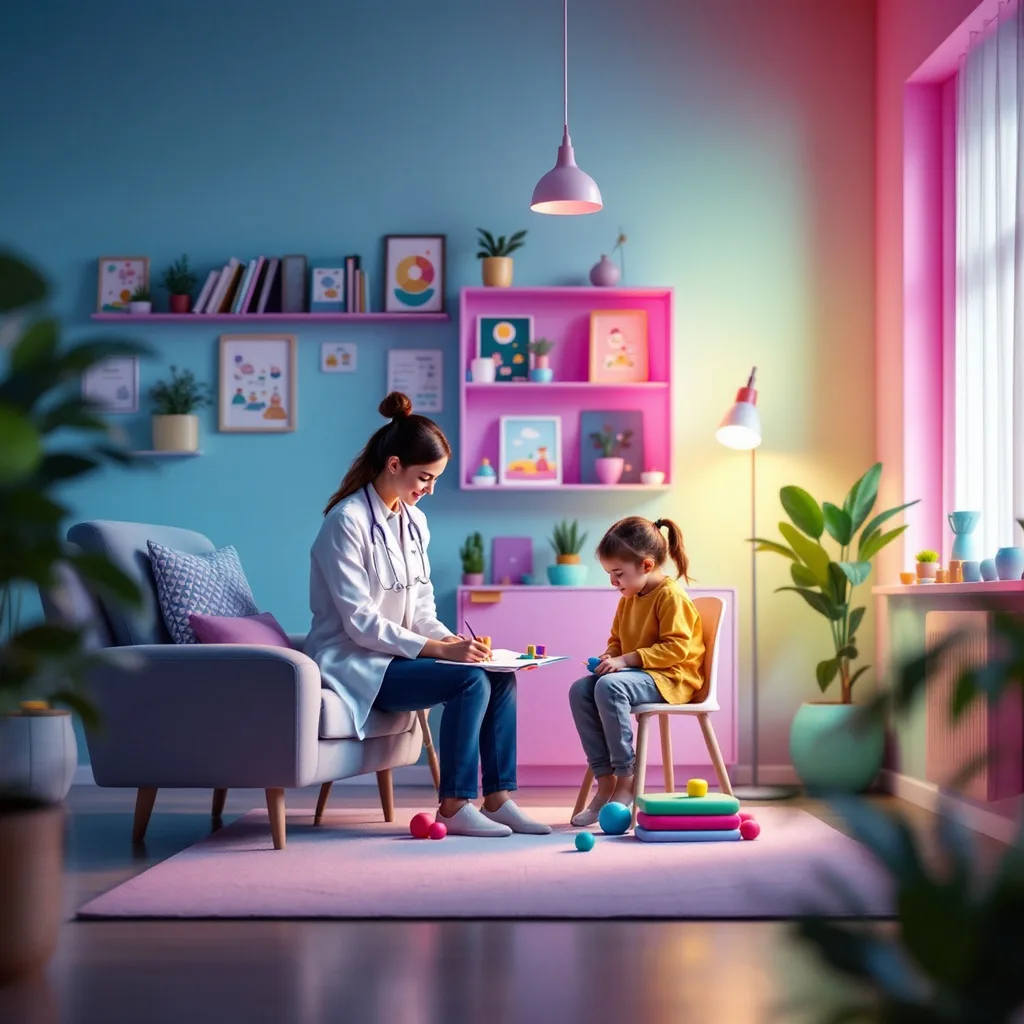
What is Child Emotional Wellbeing?
Child Emotional Wellbeing Training
This Child Emotional Wellbeing certificate program provides a comprehensive, evidence-based framework for understanding and nurturing the emotional lives of children. Designed for parents, educators, counselors, and caregivers, the course translates developmental psychology and neuroscience into practical strategies you can use immediately. You will learn how to help children recognize and name their feelings, develop self-regulation, build empathy, and navigate social challenges, ultimately fostering a secure emotional foundation that supports learning, resilience, and healthy relationships.
The program follows a clear, beginner-friendly progression that begins with the developing emotional brain and moves into hands-on skills like co-regulation, stress management, and fostering a growth mindset. Each module balances accessible theory with real-world application, strengthening four core areas: emotional literacy, self-regulation, social awareness, and resilience. With children’s mental health now a global priority, this training offers a timely, structured pathway for anyone who wants to create emotionally safe environments at home, in school, or in the community.
What is Child Emotional Wellbeing?
Child emotional wellbeing refers to a child’s capacity to experience, understand, express, and manage emotions in ways that support healthy development, learning, and relationships. It encompasses emotional literacy, self-regulation, empathy, and the ability to cope with stress and adversity. Rooted in secure attachment and co-regulation with caregivers, emotional wellbeing is not simply the absence of distress but the presence of skills that allow a child to navigate their inner world and connect meaningfully with others. This field integrates insights from developmental psychology, neuroscience, and social-emotional learning to explain how children build the emotional foundation for lifelong mental health.
In an era of academic pressure, digital saturation, and global uncertainty, child emotional wellbeing has become a central concern for families, schools, and healthcare systems. Research consistently links early emotional health to later outcomes such as academic achievement, relationship quality, and resilience against mental illness. Schools are rapidly adopting social-emotional learning curricula, while pediatricians and therapists emphasize the importance of early intervention. The recent pandemic further underscored the need for robust emotional skills, as children faced isolation, disrupted routines, and heightened anxiety, making the subject more relevant than ever.
Understanding child emotional wellbeing builds a powerful skill stack that includes emotional coaching, empathetic communication, and trauma-informed support. These competencies are essential for parents, teachers, social workers, counselors, and anyone involved in child development. By learning how emotions shape behavior and learning, adults can create environments where children feel safe, seen, and supported—leading to fewer behavioral challenges, stronger relationships, and a solid foundation for lifelong mental health. This knowledge transforms both professional practice and personal caregiving, making it an indispensable asset for raising resilient, emotionally intelligent children.
Common Questions About Child Emotional Wellbeing
What certification does this emotional wellbeing training provide?
How long does the Child Emotional Wellbeing program take?
How does the developing emotional brain affect tantrums?
Why is naming emotions considered a superpower for children?
How can caregivers practice co-regulation with a child?
- Self-regulation: The caregiver first manages their own emotional state to remain a calm anchor.
- Attunement: Notice and acknowledge the child's emotion without judgment.
- Validation: Verbally reflect the child's feeling, e.g., 'You seem really frustrated.'
- Soothing: Offer comfort through tone, touch, or proximity to help the child down-regulate.
What are the four pillars of empathy in childhood?
Are tantrums always a sign of bad parenting?
What Will This Course Bring You?
- Analyze the key biological, psychological, and social factors that contribute to emotional wellbeing in childhood and their long-term impact on mental health.
- Explain how brain development and neuroplasticity influence children's capacity for emotional regulation and shape their behavioral responses.
- Apply emotion-coaching strategies to help children accurately recognize, label, and communicate their feelings in real-life situations.
- Design a set of age-appropriate self-regulation activities that teach children to manage impulses, soothe themselves, and cope with frustration.
- Evaluate caregiver-child interactions within family dynamics to identify co-regulation practices that foster secure attachment and promote emotional resilience.
- Implement storytelling and role-playing exercises to build children's empathy, perspective-taking, and social awareness in diverse contexts.
- Assess peer dynamics in school and community settings and apply conflict-resolution strategies to help children navigate friendships and build healthy social connections.
- Develop a toolkit of evidence-based techniques to help children manage stress, anxiety, and intense emotions while fostering resilience and a growth mindset.
Curriculum
12 Units1. Understanding Emotional Wellbeing in Childhood
1 hour
2. The Developing Emotional Brain
1 hour
3. Recognizing and Naming Emotions
1 hour
4. Self-Regulation Skills for Children
1 hour
5. Caregiver Co-Regulation and Attachment
1 hour
6. Building Empathy and Social Awareness
1 hour
7. Navigating Friendships and Peer Relationships
1 hour
8. Managing Stress, Anxiety, and Big Emotions
1 hour
9. The School Environment and Emotional Wellbeing
1 hour
10. Family Dynamics and the Home Environment
1 hour
11. Fostering Resilience and a Growth Mindset
1 hour
12. Supporting Lifelong Emotional Wellbeing
1 hour
Exam – Child Emotional Wellbeing
20 Questions • 70% Pass • 30 min
Unlock All Units for Free
Create an account, enroll in the course, and start with the first unit right away.
Exam – Child Emotional Wellbeing
20 Questions • Pass: 70% • 30 min
Course Duration
720
Total Minutes
12
Unit
1
Final Exam
~60
Min / Unit
Child Emotional Wellbeing Certificate Program
Document Your Skill
Those who pass the 20-question, 30-minute exam with 70% receive the Child Emotional Wellbeing Certificate.
Stand Out on Your CV
By adding your certificate to your CV, gain a professional reference in job applications and stand out from the crowd.
Career Advantage
With the verification code, employers can check your certificate instantly — a concrete way to show your growth.
CERTIFICATE FEE
At the end of the course, an online exam consisting of 20 questions with a 30-minute time limit is given. The exam appears automatically after you complete the topics. Anyone who scores at least 70 out of 100 on the certificate exam is awarded the Child Emotional Wellbeing Document (certificate of attendance). You can add the certificate you earn to your CV for job applications in the many sectors listed above, and use it as a reference proving that you took this interactive course.
The Certificate of Achievement you receive with the Child Emotional Wellbeing course program holds value that proves your personal and professional development in the business world. By adding it to your CV, it can serve as an important reference in your job applications. Moreover, compared with certificates from other private training institutions, Catch Wisdom certificates are offered to our participants at a much more affordable price.
The Child Emotional Wellbeing course certificate is a document that proves, with a unique verification code, that you completed the course. Employers can instantly check its authenticity with this code, which helps you show your development concretely in your job applications.
For more information, we recommend visiting the Support page.
Certificate in 7 Languages
Earning success certificates from our courses is now more meaningful and global. With certificates available in Turkish, English, German, French, Spanish, Arabic, and Russian, we fully unlock the potential of students worldwide.
Why Certificate in 7 Languages?
-
01
Global Skill Development
Receiving your certificates in 7 different languages strengthens your communication skills as you engage with more people worldwide. It lets you operate more confidently and capably on the international stage.
-
02
International Job Opportunities
Employers may see your certificates in multiple languages as a sign of your ability to seize global opportunities. You can open more doors to new jobs and projects.
-
03
Cultural Richness
The chance to earn certificates in different languages helps you build closer ties with various cultures and broadens your worldview. It enriches your global perspective and deepens cultural understanding.
-
04
Ability to Participate in International Projects
Multilingual certificates give you an edge to work more effectively on international projects. They boost your chances of leadership and participation in diverse projects in the business world.
-
05
Prove Yourself on the Global Stage
Certificates in multiple languages give you the opportunity to present your skills and knowledge worldwide.
Language diversity opens worldwide opportunities. If you want to prove yourself in the international arena, join our online Child Emotional Wellbeing course program and begin this journey with us.
Frequently Asked Questions (FAQ)
Is this course paid?
How do I join the course?
Can I take the course at my own pace?
How can I get my certificate?
What are the advantages of the certificate?
Boost Your Career
Take a new career step with the Child Emotional Wellbeing course. Add your certificate to your CV, stand out in job applications, and open the door to new opportunities in the industry.
StartStudent Reviews
No reviews yet
Enroll in this course and be the first to leave a review about your experience with Child Emotional Wellbeing.
Start