What is Chromatography and Laboratory Instruments?
Chromatography and Laboratory Instruments Training
Chromatography and Laboratory Instruments certificate program provides a comprehensive foundation in the science of separation and the instruments that make it possible, covering retention principles, sample preparation, mobile and stationary phase selection, thin-layer, gas, and liquid chromatography, detectors, quantitation, method validation, troubleshooting, and advanced hyphenated systems. It is designed for laboratory technicians, analytical chemists, quality control analysts, research assistants, and students in chemistry or pharmaceutical sciences who need to operate chromatographic systems reliably and interpret their output correctly. The main practical outcome is the ability to select appropriate chromatographic techniques, set up and run instruments, diagnose common problems, and produce validated quantitative data that meets regulatory and industrial standards.
The program follows a beginner-friendly progression that begins with the principles of separation and retention and an overview of laboratory instruments and workflow, then moves through sample preparation and injection techniques, phase selection, planar and column chromatography, detectors, and signal processing before addressing quantitation, calibration, method validation, troubleshooting, preventive maintenance, and advanced hyphenated systems. Theory is balanced with practical operational detail across five core skill areas: separation fundamentals, instrument operation and workflow, method development and validation, troubleshooting and maintenance, and advanced applications with quality control integration. Learners choose this program now because laboratories across pharmaceuticals, food safety, environmental testing, and clinical diagnostics face growing demand for skilled personnel who can maintain instrument uptime, ensure data integrity, and validate methods under tightening regulatory scrutiny.
What is Chromatography and Laboratory Instruments?
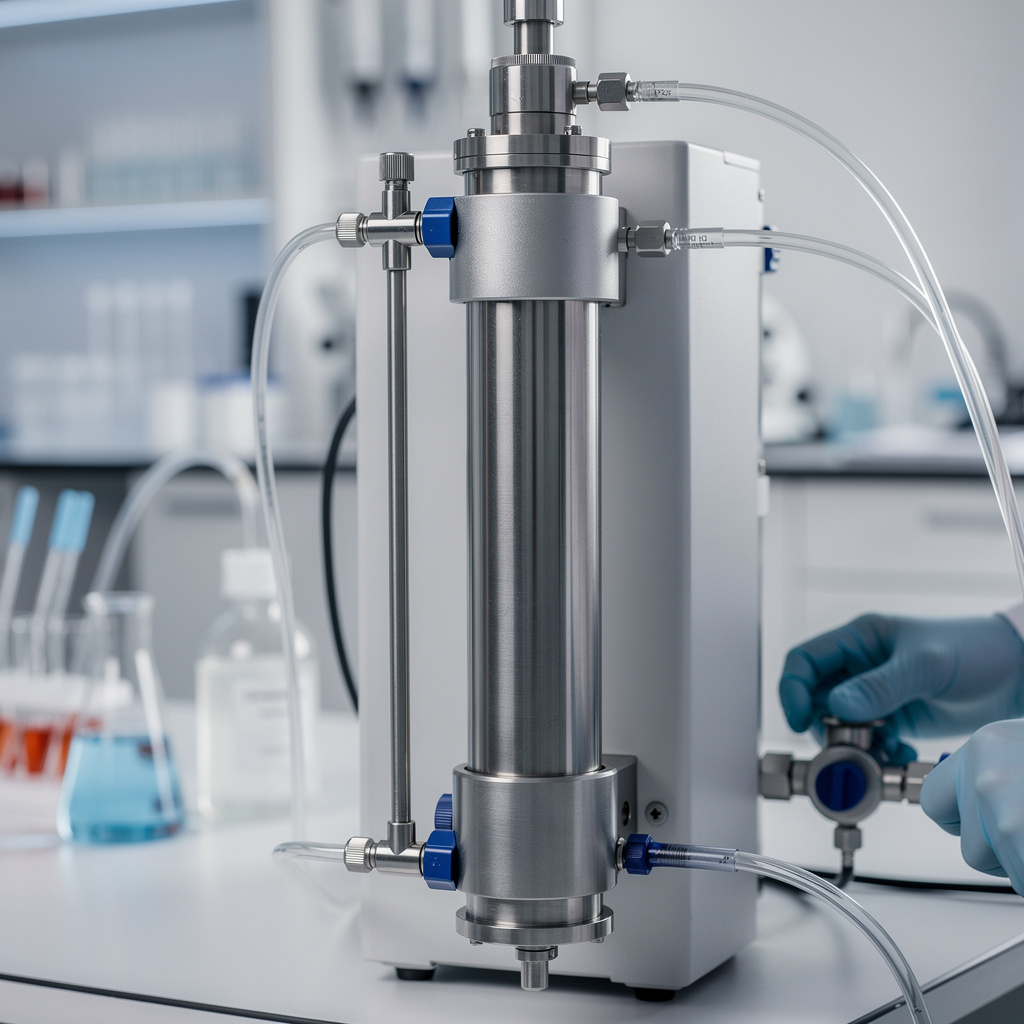
Chromatography is an analytical separation technique in which components of a mixture distribute between a mobile phase and a stationary phase, allowing identification and quantification based on differences in retention and interaction. Core concepts include retention time, retention factor, selectivity, resolution, plate height, and the van Deemter equation, which together describe how bands broaden or resolve as they travel through a column or planar bed. Laboratory instruments for chromatography encompass injectors, pumps, ovens, detectors, fraction collectors, and data acquisition systems, and the field spans gas chromatography, liquid chromatography, thin-layer chromatography, and hyphenated systems that couple separation with mass spectrometry or other detectors. The scope ranges from routine quality control assays to research-grade method development and preparative purification.
Chromatography and laboratory instruments matter today because reliable separation and detection underpin decisions in pharmaceutical quality control, environmental monitoring, food safety, forensic analysis, clinical diagnostics, and omics research. Modern laboratories depend on validated chromatographic methods to confirm identity, purity, potency, and contamination limits, and regulators increasingly require documented method validation, system suitability testing, and data integrity controls. Recent shifts include the adoption of ultra-high-performance liquid chromatography, compact and portable instruments, high-resolution mass spectrometry, automated sample handling, and greener solvent strategies that reduce waste. These developments raise the demand for professionals who understand both the separation science and the operational realities of instrument maintenance and troubleshooting.
Mastering the subject builds a skill stack that combines mechanistic understanding of separation with practical competence in instrument selection, method optimization, calibration, signal interpretation, and preventive maintenance. This stack is valuable in regulated laboratories, contract research organizations, manufacturing quality units, academic research groups, and environmental or clinical testing facilities, where chromatographic data often support safety, compliance, and product release decisions. The knowledge also benefits professionals who supervise laboratory workflows, audit data, or communicate analytical results to non-specialists. Because chromatography is both a mature discipline and a rapidly evolving instrument-driven field, a solid grasp of its principles and hardware provides durable value across changing technologies and regulations.
What Will This Course Bring You?
- Explain retention and separation principles to predict how analyte polarity and column chemistry affect chromatographic resolution.
- Map laboratory instrument workflows and sample-handling steps to identify bottlenecks and traceability requirements in a chromatography laboratory.
- Select and justify sample preparation and injection techniques for specific matrices, analytes, and chromatographic methods.
- Evaluate mobile and stationary phase choices to design separations that balance selectivity, retention, and compatibility with detection.
- Operate gas and liquid chromatography instruments by configuring injection, flow, temperature, and column parameters for reliable separations.
- Apply calibration, quantitation, and method validation procedures to calculate analyte concentrations and document acceptable performance criteria.
- Diagnose common chromatographic faults and implement preventive maintenance and troubleshooting actions that restore instrument performance.
- Compare advanced and hyphenated chromatographic systems, including mass spectrometry detection, to recommend techniques for application and quality-control needs.
Curriculum
12 Units1. Principles of Separation and Retention
1 hour
2. Overview of Laboratory Instruments and Workflow
1 hour
3. Sample Preparation and Injection Techniques
1 hour
4. Mobile and Stationary Phase Selection
1 hour
5. Thin-Layer Chromatography and Planar Separation
1 hour
6. Gas Chromatography Instrumentation and Operation
1 hour
7. Liquid Chromatography Instrumentation and Operation
1 hour
8. Detectors and Signal Processing in Chromatography
1 hour
9. Quantitation, Calibration, and Method Validation
1 hour
10. Troubleshooting and Preventive Maintenance
1 hour
11. Advanced Techniques and Hyphenated Systems
1 hour
12. Applications, Quality Control, and Laboratory Workflow
1 hour
Exam – Chromatography and Laboratory Instruments
20 Questions • 70% Pass • 30 min
Unlock All Units for Free
Create an account, enroll in the course, and start with the first unit right away.
Exam – Chromatography and Laboratory Instruments
20 Questions • Pass: 70% • 30 min
Course Duration
720
Total Minutes
12
Unit
1
Final Exam
~60
Min / Unit
Chromatography and Laboratory Instruments Certificate Program
Document Your Skill
Those who pass the 20-question, 30-minute exam with 70% receive the Chromatography and Laboratory Instruments Certificate.
Stand Out on Your CV
By adding your certificate to your CV, gain a professional reference in job applications and stand out from the crowd.
Career Advantage
With the verification code, employers can check your certificate instantly — a concrete way to show your growth.
CERTIFICATE FEE
At the end of the course, an online exam consisting of 20 questions with a 30-minute time limit is given. The exam appears automatically after you complete the topics. Anyone who scores at least 70 out of 100 on the certificate exam is awarded the Chromatography and Laboratory Instruments Document (certificate of attendance). You can add the certificate you earn to your CV for job applications in the many sectors listed above, and use it as a reference proving that you took this interactive course.
The Certificate of Achievement you receive with the Chromatography and Laboratory Instruments course program holds value that proves your personal and professional development in the business world. By adding it to your CV, it can serve as an important reference in your job applications. Moreover, compared with certificates from other private training institutions, Catch Wisdom certificates are offered to our participants at a much more affordable price.
The Chromatography and Laboratory Instruments course certificate is a document that proves, with a unique verification code, that you completed the course. Employers can instantly check its authenticity with this code, which helps you show your development concretely in your job applications.
For more information, we recommend visiting the Support page.
Certificate in 7 Languages
Earning success certificates from our courses is now more meaningful and global. With certificates available in Turkish, English, German, French, Spanish, Arabic, and Russian, we fully unlock the potential of students worldwide.
Why Certificate in 7 Languages?
-
01
Global Skill Development
Receiving your certificates in 7 different languages strengthens your communication skills as you engage with more people worldwide. It lets you operate more confidently and capably on the international stage.
-
02
International Job Opportunities
Employers may see your certificates in multiple languages as a sign of your ability to seize global opportunities. You can open more doors to new jobs and projects.
-
03
Cultural Richness
The chance to earn certificates in different languages helps you build closer ties with various cultures and broadens your worldview. It enriches your global perspective and deepens cultural understanding.
-
04
Ability to Participate in International Projects
Multilingual certificates give you an edge to work more effectively on international projects. They boost your chances of leadership and participation in diverse projects in the business world.
-
05
Prove Yourself on the Global Stage
Certificates in multiple languages give you the opportunity to present your skills and knowledge worldwide.
Language diversity opens worldwide opportunities. If you want to prove yourself in the international arena, join our online Chromatography and Laboratory Instruments course program and begin this journey with us.
Frequently Asked Questions (FAQ)
Is this course paid?
How do I join the course?
Can I take the course at my own pace?
How can I get my certificate?
What are the advantages of the certificate?
Boost Your Career
Take a new career step with the Chromatography and Laboratory Instruments course. Add your certificate to your CV, stand out in job applications, and open the door to new opportunities in the industry.
StartStudent Reviews
No reviews yet
Enroll in this course and be the first to leave a review about your experience with Chromatography and Laboratory Instruments.
Start