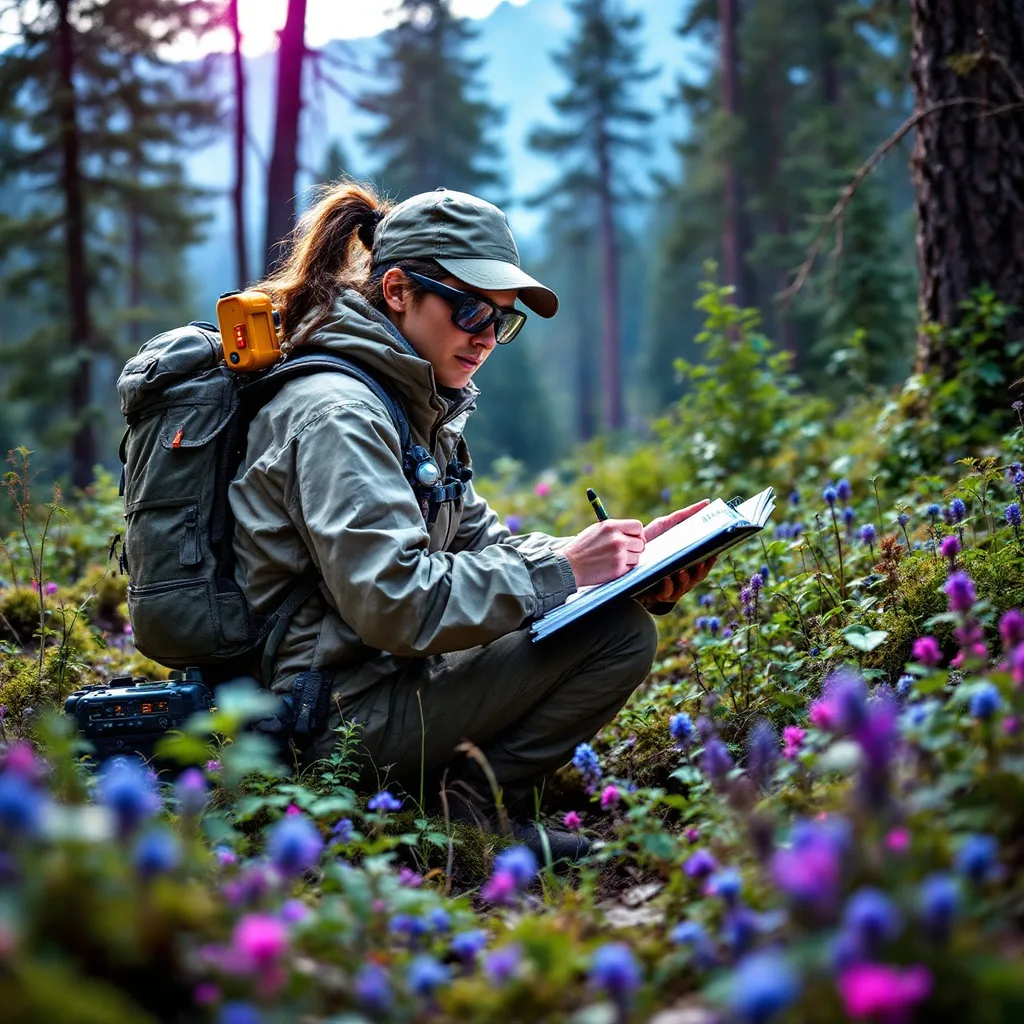
What is Ecology and Environmental Science?
Ecology and Environmental Science Training
This Ecology and Environmental Science certificate program offers a rigorous, systems-level exploration of the natural world and humanity’s place within it. Designed for aspiring environmental professionals, sustainability coordinators, educators, and anyone seeking to understand the science behind today’s ecological crises, the course moves from foundational principles to applied solutions. You will examine how energy flows through ecosystems, how nutrients cycle globally, and how populations and communities interact, then connect these concepts directly to biodiversity loss, pollution, and climate change. The main practical outcome is the ability to analyze environmental problems through a scientific lens and contribute to data-informed, sustainable decision-making in your organization or community.
The program is structured as a progressive journey that begins with systems thinking and core ecological principles, ensuring no prior advanced science background is required. Early lessons on ecosystem structure and biogeochemical cycles build a conceptual toolkit, which is then applied to real-world challenges like toxicology, resource depletion, and climate impacts. Throughout the training, you will strengthen four essential skill areas: scientific literacy for interpreting environmental data, systems analysis for understanding interconnected problems, conservation strategy for protecting biodiversity, and policy awareness for evaluating ethical and regulatory frameworks. Choosing this program now means equipping yourself with the interdisciplinary knowledge that governments, NGOs, and businesses urgently need to navigate the transition toward a sustainable future.
What is Ecology and Environmental Science?
Ecology and Environmental Science together form the scientific study of interactions between organisms and their surroundings, and the broader investigation of how natural and human systems shape the planet. Ecology focuses on the relationships among living things and their physical environment, from individual species to entire biomes, while environmental science integrates biology, chemistry, geology, and social sciences to address complex issues like pollution, resource management, and climate change. Core concepts include energy flow through food webs, nutrient cycling, population dynamics, community structure, and the factors that determine biodiversity. The field spans scales from a single soil microbe to global biogeochemical cycles, always emphasizing that everything is connected.
In an era of accelerating climate disruption, mass extinction, and resource scarcity, this discipline has never been more critical. Ecology and environmental science provide the evidence base for understanding phenomena like coral bleaching, shifting biomes, and the health effects of air and water pollution. The knowledge is applied daily in conservation planning, environmental impact assessments, renewable energy siting, urban green infrastructure, and corporate sustainability reporting. Recent shifts toward nature-based solutions and circular economy models have further elevated the field, as decision-makers increasingly rely on ecological insights to design resilient systems that work with nature rather than against it.
Mastering this subject builds a powerful skill stack that merges quantitative analysis with big-picture thinking. You develop the ability to interpret environmental data, model population and community changes, assess ecosystem health, and evaluate the trade-offs inherent in resource use. These competencies are invaluable for careers in environmental consulting, wildlife management, policy analysis, and education, but they also enrich personal decision-making—from understanding your carbon footprint to advocating for evidence-based local policies. Ultimately, ecology and environmental science cultivate a mindset that sees the world as a set of dynamic, interdependent systems, empowering you to think critically and act responsibly in a rapidly changing world.
Common Questions About Ecology and Environmental Science
Does the Ecology and Environmental Science certificate help in job applications?
Can I start this ecology course with no prior knowledge?
How does the reservoir-flux model explain carbon cycling?
- Atmosphere: stores carbon as CO₂, a key reservoir.
- Oceans: hold dissolved carbon, the largest active reservoir.
- Biomass: living organisms store carbon in organic matter.
- Fossil fuels: long-term storage, but human extraction creates a large flux to the atmosphere.
What is the difference between exponential and logistic growth in populations?
Why is Simpson's Index used to measure biodiversity?
How do trophic levels relate to energy loss in food webs?
Is the greenhouse effect always harmful to the planet?
What Will This Course Bring You?
- Apply systems thinking to model feedback loops and emergent properties in ecological systems, predicting how changes in one component affect the whole.
- Quantify energy flow through trophic levels by constructing ecological pyramids and calculating ecological efficiencies.
- Analyze the carbon and nitrogen biogeochemical cycles to evaluate human impacts such as fossil fuel combustion and agricultural runoff.
- Use life tables and exponential/logistic growth models to project population size and assess the effects of density-dependent and density-independent factors.
- Evaluate species interactions such as competition, predation, and mutualism using niche theory and field data to predict community structure.
- Design a conservation plan for a threatened ecosystem that applies principles of island biogeography and population viability analysis.
- Compare the climatic, soil, and biotic characteristics of major terrestrial biomes to explain global patterns of biodiversity.
- Assess the fate and transport of a selected pollutant using toxicological dose-response curves and environmental partitioning models.
Curriculum
12 Units1. Ecological Principles and Systems Thinking
1 hour
2. Ecosystem Structure and Energy Flow
1 hour
3. Biogeochemical Cycles
1 hour
4. Population Ecology and Dynamics
1 hour
5. Community Ecology and Species Interactions
1 hour
6. Biodiversity and Conservation Biology
1 hour
7. Global Biomes and Biogeography
1 hour
8. Environmental Pollution and Toxicology
1 hour
9. Climate Change Science and Impacts
1 hour
10. Human Population and Resource Use
1 hour
11. Sustainable Resource Management
1 hour
12. Environmental Policy, Ethics, and Future Solutions
1 hour
Exam – Ecology and Environmental Science
20 Questions • 70% Pass • 30 min
Unlock All Units for Free
Create an account, enroll in the course, and start with the first unit right away.
Exam – Ecology and Environmental Science
20 Questions • Pass: 70% • 30 min
Course Duration
720
Total Minutes
12
Unit
1
Final Exam
~60
Min / Unit
Ecology and Environmental Science Certificate Program
Document Your Skill
Those who pass the 20-question, 30-minute exam with 70% receive the Ecology and Environmental Science Certificate.
Stand Out on Your CV
By adding your certificate to your CV, gain a professional reference in job applications and stand out from the crowd.
Career Advantage
Catch Wisdom certificates are recognized by HR departments and increase career opportunities.
CERTIFICATE FEE
At the end of the course, an online exam consisting of 20 questions with a 30-minute time limit is given. The exam appears automatically after you complete the topics. Anyone who scores at least 70 out of 100 on the certificate exam is awarded the Ecology and Environmental Science Document (certificate of attendance). You can add the certificate you earn to your CV for job applications in the many sectors listed above, and use it as a reference proving that you took this interactive course.
The Certificate of Achievement you receive with the Ecology and Environmental Science course program holds value that proves your personal and professional development in the business world. By adding it to your CV, it can serve as an important reference in your job applications. Moreover, compared with certificates from other private training institutions, Catch Wisdom certificates are offered to our participants at a much more affordable price.
Because HR departments recognize Catch Wisdom as a reputable institution in this field, they value these certificates and may evaluate your job applications favorably. For this reason, a Ecology and Environmental Science course certificate from Catch Wisdom can make your applications more attractive and place you in an advantageous position in the business world.
For more information, we recommend visiting the Support page.
Certificate in 7 Languages
Earning success certificates from our courses is now more meaningful and global. With certificates available in Turkish, English, German, French, Spanish, Arabic, and Russian, we fully unlock the potential of students worldwide.
Why Certificate in 7 Languages?
-
01
Global Skill Development
Receiving your certificates in 7 different languages strengthens your communication skills as you engage with more people worldwide. It lets you operate more confidently and capably on the international stage.
-
02
International Job Opportunities
Employers may see your certificates in multiple languages as a sign of your ability to seize global opportunities. You can open more doors to new jobs and projects.
-
03
Cultural Richness
The chance to earn certificates in different languages helps you build closer ties with various cultures and broadens your worldview. It enriches your global perspective and deepens cultural understanding.
-
04
Ability to Participate in International Projects
Multilingual certificates give you an edge to work more effectively on international projects. They boost your chances of leadership and participation in diverse projects in the business world.
-
05
Prove Yourself on the Global Stage
Certificates in multiple languages let you showcase your skills and knowledge worldwide. You can become an internationally recognized professional.
Language diversity opens worldwide opportunities. If you want to prove yourself in the international arena, join our online Ecology and Environmental Science course program and begin this journey with us.
Frequently Asked Questions (FAQ)
Is this course paid?
How do I join the course?
Can I take the course at my own pace?
How can I get my certificate?
What are the advantages of the Certified Certificate?
Boost Your Career
Take a new career step with the Ecology and Environmental Science course. Add your certificate to your CV, stand out in job applications, and open the door to new opportunities in the industry.
StartStudent Reviews
No reviews yet
Enroll in this course and be the first to leave a review about your experience with Ecology and Environmental Science.
Start