What is Clowning and Physical Comedy?
Clowning and Physical Comedy Certificate Training
Clowning and Physical Comedy certificate program is a practical training path for performers, teachers, improvisers, and creators who want to make comedy through the body rather than relying on scripted jokes. The course teaches how presence, neutral mask work, and the discovery of a clown persona connect to comic timing, rhythm, mime, object work, and safe slapstick foundations. It is designed for beginners as well as experienced actors, dancers, facilitators, and comedy writers who need stronger physical expression and stage confidence. By the end, learners can construct gags and bits, work with status and conflict, support partners, coordinate ensemble and crowd scenes, interact with audiences, use props and environments, and devise a short clowning and physical comedy act.
The program is structured as a beginner-friendly progression, moving from body awareness and expressive physicality into persona work, timing, object work, and then into slapstick safety, gag construction, partnering, ensemble choreography, audience interaction, and final devising. Each stage balances short theoretical framing with studio practice, reflection, and peer feedback so that comic ideas are tested in the body rather than only discussed. Across the sequence, learners build five core skill areas: physical awareness and presence; comic timing and rhythm; object, mime, and slapstick technique; partner and ensemble play; and audience-facing improvisation and act construction. People choose this program now because physical comedy travels across languages and digital formats, and it is increasingly valued in theatre, film, social media, teaching, facilitation, and live event work where embodied humour and safe, repeatable comic craft matter.
What is Clowning and Physical Comedy?
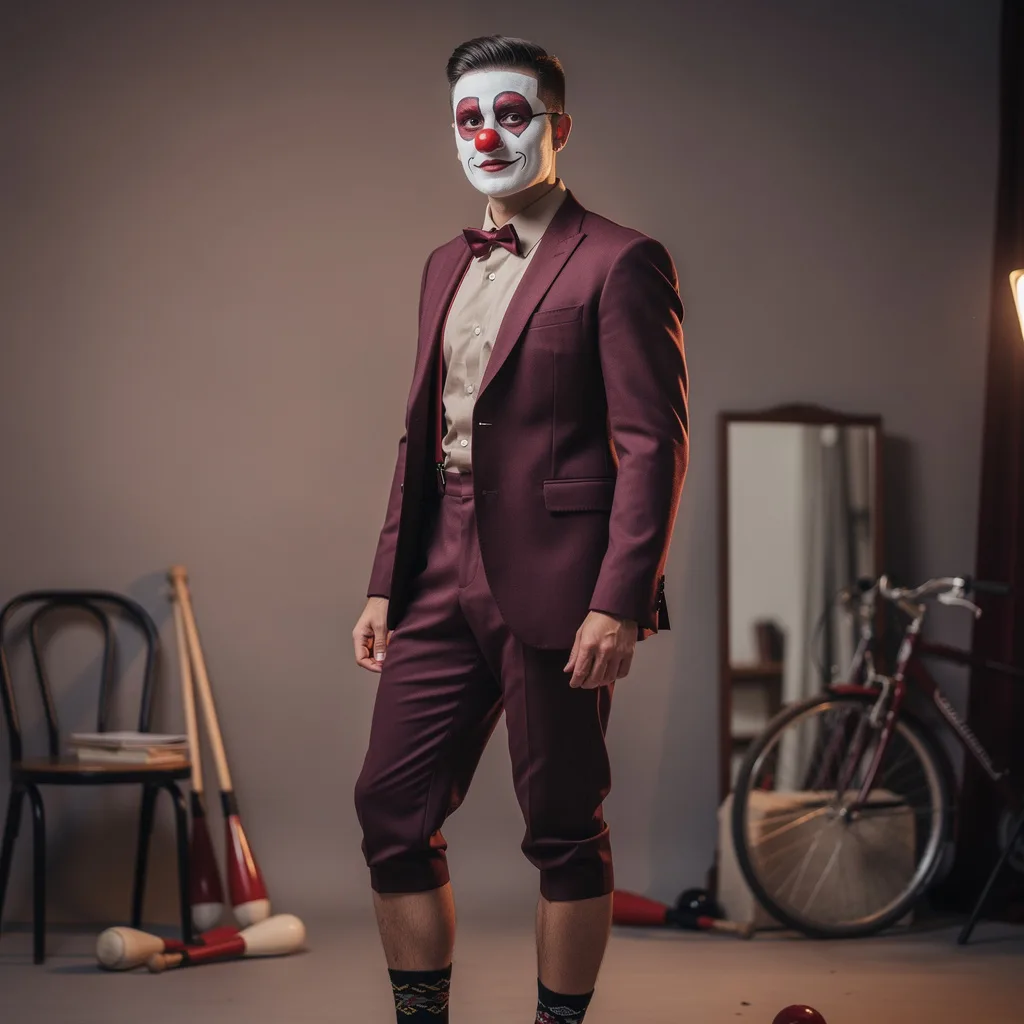
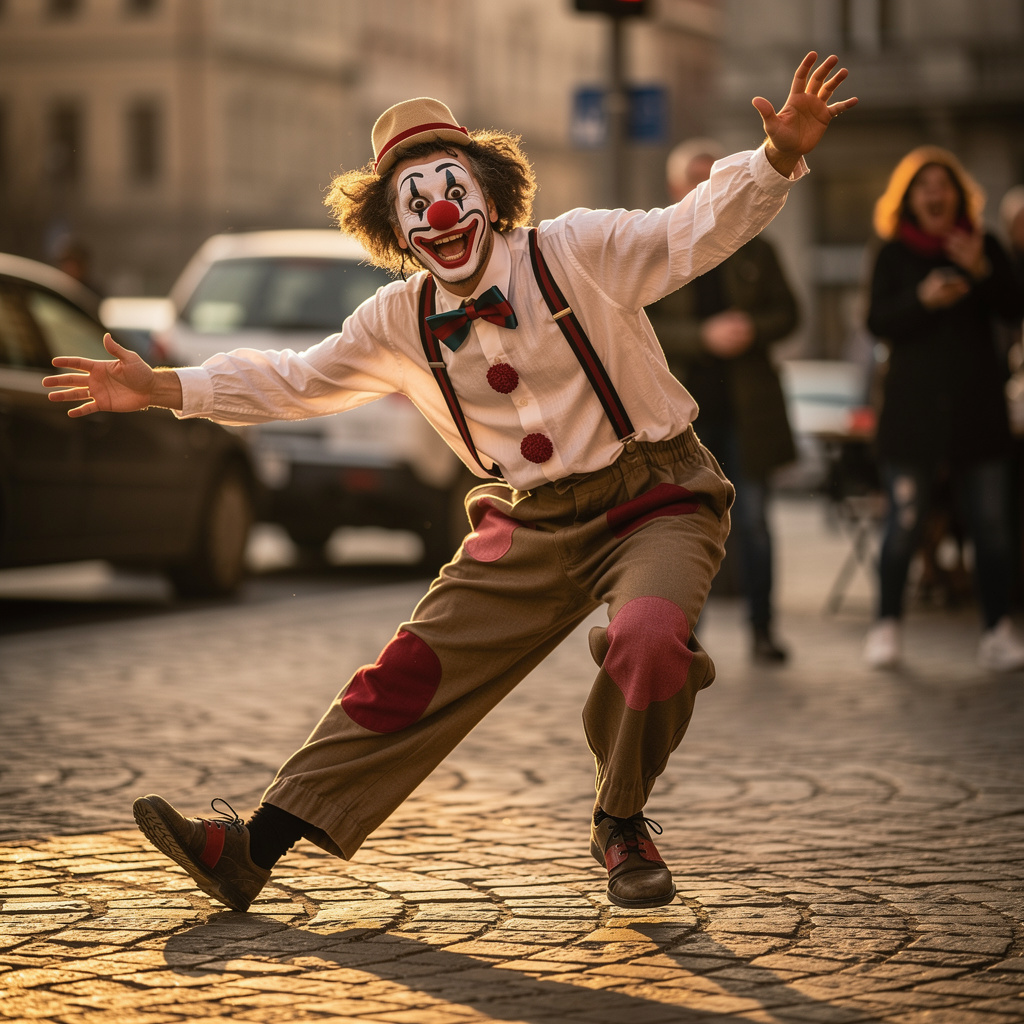
Clowning and physical comedy is a performance discipline built on embodied humour: the comedian’s body, face, breath, rhythm, and relationship to the audience become the primary comic instruments. It ranges from silent comedy and mime to object-based gags, slapstick, status play, and improvised encounters, with roots in theatrical clown traditions, vaudeville, circus, and film comedy. Core concepts include presence and complicity, comic timing, the logic of failure, status and conflict, clear physical action, safe risk, and the intelligent use of props or environment. Rather than depending on verbal punchlines, the form treats the performer’s whole body and the audience’s live attention as a shared comic laboratory.
Today clowning and physical comedy matter because they offer a highly portable comic language that can cross language barriers and suit short-form video, live performance, theatre, film, circus, and community settings. In industry, directors, animators, game designers, and movement coaches study physical comedy to create readable action, believable failure, and emotional contrast without dialogue. In academia and actor training, the form is examined through embodiment, audience studies, improvisation, and performance anthropology, while accessibility and consent-aware practice have become more central in slapstick and audience participation. Recent shifts toward intimacy coordination, safer stage combat, inclusive clowning, and digital sketch performance have refreshed the discipline rather than making it obsolete.
Mastering this subject builds a distinctive skill stack: heightened body awareness, precise timing, spatial intelligence, risk assessment, playful status negotiation, ensemble listening, and the confidence to respond to unpredictable audiences. These capacities transfer to acting, directing, comedy writing, motion capture, animation reference, teaching, facilitation, public speaking, and therapeutic or community arts practice because they train people to communicate intention through action and reaction. They also support personal development by making failure, improvisation, and shared laughter less threatening and more usable as creative material. The subject’s deeper value lies in turning physical impulse into reliable comic structure without losing the live, human unpredictability that makes clowning and physical comedy resonate.
What Will This Course Bring You?
- Demonstrate a grounded, open clown presence by applying breath, weight, and gaze exercises to hold audience attention in silence.
- Analyze neutral mask principles to isolate and exaggerate physical gestures that communicate emotion without relying on facial expression.
- Design a distinct clown persona by selecting and rehearsing a consistent costume, posture, and vocal signature that reads clearly on stage.
- Apply comic timing and rhythm by executing pauses, accelerations, and callbacks to shape laughter in short improvised and scripted bits.
- Implement safe slapstick technique by performing pratfalls, collisions, and knocks with controlled body mechanics and agreed safety protocols.
- Construct and sequence a comic gag by establishing a premise, escalating stakes, and landing a clear payoff with a partner.
- Evaluate status and conflict dynamics in partnered scenes to adjust dominance shifts and build sustainable comedic tension.
- Devise and perform an original short clowning and physical comedy act that integrates ensemble choreography, object work, and audience interaction.
Curriculum
12 Units1. The Clown's Body and Presence
1 hour
2. Neutral Mask and Expressive Physicality
1 hour
3. Discovering the Clown Persona
1 hour
4. Comic Timing and Rhythm
1 hour
5. Object Work and Mime for Physical Comedy
1 hour
6. Slapstick Foundations: Safe Falls and Collisions
1 hour
7. Constructing Gags and Bits
1 hour
8. Status, Conflict, and Partnering
1 hour
9. Ensemble and Crowd Choreography
1 hour
10. Audience Interaction and Improvisation
1 hour
11. Props, Sets, and Environmental Comedy
1 hour
12. Devising a Clowning and Physical Comedy Act
1 hour
Exam – Clowning and Physical Comedy
20 Questions • 70% Pass • 30 min
Unlock All Units for Free
Create an account, enroll in the course, and start with the first unit right away.
Exam – Clowning and Physical Comedy
20 Questions • Pass: 70% • 30 min
Course Duration
720
Total Minutes
12
Unit
1
Final Exam
~60
Min / Unit
Clowning and Physical Comedy Certificate Program
Document Your Skill
Those who pass the 20-question, 30-minute exam with 70% receive the Clowning and Physical Comedy Certificate.
Stand Out on Your CV
By adding your certificate to your CV, gain a professional reference in job applications and stand out from the crowd.
Career Advantage
With the verification code, employers can check your certificate instantly — a concrete way to show your growth.
CERTIFICATE FEE
At the end of the course, an online exam consisting of 20 questions with a 30-minute time limit is given. The exam appears automatically after you complete the topics. Anyone who scores at least 70 out of 100 on the certificate exam is awarded the Clowning and Physical Comedy Document (certificate of attendance). You can add the certificate you earn to your CV for job applications in the many sectors listed above, and use it as a reference proving that you took this interactive course.
The Certificate of Achievement you receive with the Clowning and Physical Comedy course program holds value that proves your personal and professional development in the business world. By adding it to your CV, it can serve as an important reference in your job applications. Moreover, compared with certificates from other private training institutions, Catch Wisdom certificates are offered to our participants at a much more affordable price.
The Clowning and Physical Comedy course certificate is a document that proves, with a unique verification code, that you completed the course. Employers can instantly check its authenticity with this code, which helps you show your development concretely in your job applications.
For more information, we recommend visiting the Support page.
Certificate in 7 Languages
Earning success certificates from our courses is now more meaningful and global. With certificates available in Turkish, English, German, French, Spanish, Arabic, and Russian, we fully unlock the potential of students worldwide.
Why Certificate in 7 Languages?
-
01
Global Skill Development
Receiving your certificates in 7 different languages strengthens your communication skills as you engage with more people worldwide. It lets you operate more confidently and capably on the international stage.
-
02
International Job Opportunities
Employers may see your certificates in multiple languages as a sign of your ability to seize global opportunities. You can open more doors to new jobs and projects.
-
03
Cultural Richness
The chance to earn certificates in different languages helps you build closer ties with various cultures and broadens your worldview. It enriches your global perspective and deepens cultural understanding.
-
04
Ability to Participate in International Projects
Multilingual certificates give you an edge to work more effectively on international projects. They boost your chances of leadership and participation in diverse projects in the business world.
-
05
Prove Yourself on the Global Stage
Certificates in multiple languages give you the opportunity to present your skills and knowledge worldwide.
Language diversity opens worldwide opportunities. If you want to prove yourself in the international arena, join our online Clowning and Physical Comedy course program and begin this journey with us.
Frequently Asked Questions (FAQ)
Is this course paid?
How do I join the course?
Can I take the course at my own pace?
How can I get my certificate?
What are the advantages of the certificate?
Boost Your Career
Take a new career step with the Clowning and Physical Comedy course. Add your certificate to your CV, stand out in job applications, and open the door to new opportunities in the industry.
StartStudent Reviews
No reviews yet
Enroll in this course and be the first to leave a review about your experience with Clowning and Physical Comedy.
Start