What is Cultivated Meat Commercialization?
Cultivated Meat Commercialization Training
The Cultivated Meat Commercialization certificate program equips professionals, researchers, and entrepreneurs with the practical frameworks needed to navigate the complex journey from lab-scale production to scalable, profitable market entry. This course bridges the gap between scientific innovation and commercial reality, covering bioprocessing scale-up, regulatory approval, production economics, and consumer adoption strategies. By the end, participants will be able to construct a viable commercialization roadmap, identify cost-reduction levers, and evaluate investment opportunities within the cultivated meat sector.
Structured for both newcomers and experienced industry players, the program progresses from foundational concepts to advanced strategic planning, balancing theoretical knowledge with real-world case studies and industry data. Core skill areas include bioprocess engineering, regulatory strategy, supply chain management, financial modeling, and market positioning—each reinforced through lessons on intellectual property, food safety, and sustainability claims. Choosing this program now positions you at the forefront of a rapidly evolving food technology landscape, where early movers are shaping the future of protein production.
What is Cultivated Meat Commercialization?
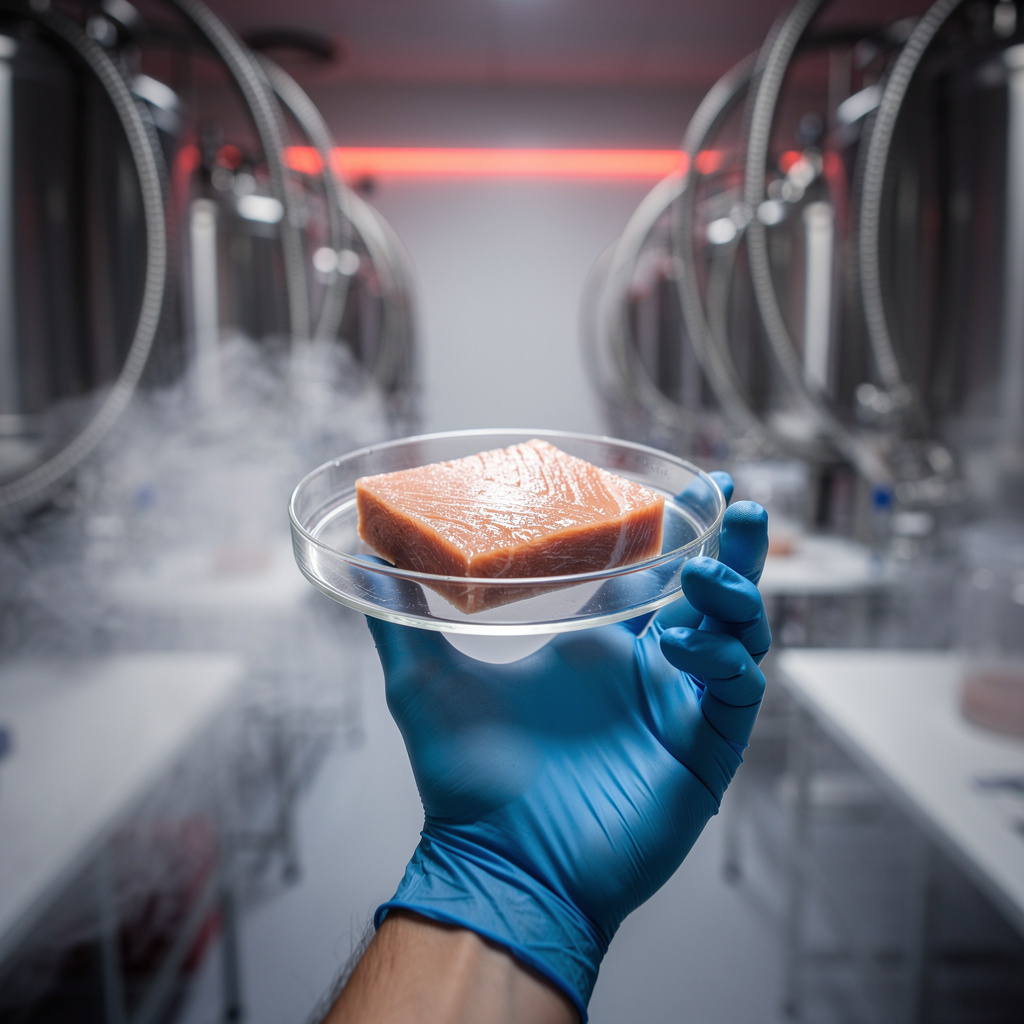
Cultivated meat commercialization is the multidisciplinary discipline focused on transforming laboratory-grown animal tissue into a viable, consumer-ready food product that can compete with conventional meat on price, taste, and scale. It encompasses the entire value chain—from cell line development and culture media optimization to bioreactor design, downstream processing, regulatory approval, and retail distribution. Core concepts include cell biology, tissue engineering, bioprocess economics, and the integration of food science with industrial manufacturing principles.
Today, cultivated meat commercialization matters because it addresses critical global challenges: food security, environmental sustainability, and animal welfare. As regulatory bodies like the FDA and EFSA establish clearer pathways, and as production costs drop from thousands to hundreds of dollars per kilogram, the industry is shifting from research curiosity to commercial reality. Real-world applications include pilot plants, strategic partnerships with traditional meat companies, and the emergence of specialized ingredient suppliers—all demanding professionals who can translate scientific breakthroughs into operational and marketable solutions.
Mastering this subject builds a unique skill stack that combines technical literacy with business acumen, enabling professionals to communicate across disciplines, manage complex projects, and make data-driven decisions under uncertainty. This expertise is invaluable for roles in biotech startups, food corporations, investment firms, regulatory agencies, and consulting practices. For learners, the outcome is not just knowledge but the ability to lead commercialization efforts, secure funding, and drive the adoption of sustainable protein alternatives in a competitive global market.
Common Questions About Cultivated Meat Commercialization
Will this certificate help me get a job in cultivated meat startups?
Is this course suitable for someone with no biotech background?
What is the 20,000-liter trap in bioprocessing scale-up?
- Mixing: larger vessels develop dead zones where nutrients and oxygen never reach the cells
- Shear stress: the impeller speeds needed to mix big tanks can physically damage fragile cultivated cells
- Oxygen transfer: surface-area-to-volume ratios shrink as tanks grow, making it harder to keep cells oxygenated
How do growth factors drive up production costs in cultivated meat?
Why is GMP qualification a challenge for raw materials?
What does the FDA actually review in a cultivated meat application?
Is cultivated meat really as safe as traditional meat?
- HACCP: hazard analysis at critical control points to prevent, eliminate, or reduce risks
- GMP: good manufacturing practices governing facilities, equipment, and personnel hygiene
- GCCP: good cell culture practices tailored to the unique risks of cell-based production
What Will This Course Bring You?
- Analyze the biological principles of cellular agriculture to identify critical production parameters for cultivated meat.
- Design a scalable bioprocessing strategy for cultivated meat, including bioreactor selection and cell culture optimization.
- Evaluate global regulatory pathways to develop a compliance strategy for cultivated meat market entry.
- Apply cost reduction techniques to estimate production economics and achieve price parity with conventional meat.
- Build a resilient supply chain for raw materials, including growth media and scaffolding, to ensure scalability.
- Design a consumer marketing campaign to increase acceptance and adoption of cultivated meat products.
- Evaluate business models for cultivated meat ventures to recommend an optimal market entry strategy.
- Assess environmental sustainability claims using life cycle analysis to support credible marketing for cultivated meat.
Curriculum
12 Units1. Foundations of Cultivated Meat
1 hour
2. Bioprocessing and Scale-Up
1 hour
3. Regulatory Pathways for Cultivated Meat
1 hour
4. Production Economics and Cost Reduction
1 hour
5. Supply Chain and Raw Materials
1 hour
6. Consumer Acceptance and Marketing
1 hour
7. Business Models and Market Entry
1 hour
8. Intellectual Property and Technology Landscape
1 hour
9. Food Safety and Quality Assurance
1 hour
10. Sustainability and Environmental Claims
1 hour
11. Investment and Financing Strategies
1 hour
12. Commercialization Roadmap and Future Outlook
1 hour
Exam – Cultivated Meat Commercialization
20 Questions • 70% Pass • 30 min
Unlock All Units for Free
Create an account, enroll in the course, and start with the first unit right away.
Exam – Cultivated Meat Commercialization
20 Questions • Pass: 70% • 30 min
Course Duration
720
Total Minutes
12
Unit
1
Final Exam
~60
Min / Unit
Cultivated Meat Commercialization Certificate Program
Document Your Skill
Those who pass the 20-question, 30-minute exam with 70% receive the Cultivated Meat Commercialization Certificate.
Stand Out on Your CV
By adding your certificate to your CV, gain a professional reference in job applications and stand out from the crowd.
Career Advantage
Catch Wisdom certificates are recognized by HR departments and increase career opportunities.
CERTIFICATE FEE
At the end of the course, an online exam consisting of 20 questions with a 30-minute time limit is given. The exam appears automatically after you complete the topics. Anyone who scores at least 70 out of 100 on the certificate exam is awarded the Cultivated Meat Commercialization Document (certificate of attendance). You can add the certificate you earn to your CV for job applications in the many sectors listed above, and use it as a reference proving that you took this interactive course.
The Certificate of Achievement you receive with the Cultivated Meat Commercialization course program holds value that proves your personal and professional development in the business world. By adding it to your CV, it can serve as an important reference in your job applications. Moreover, compared with certificates from other private training institutions, Catch Wisdom certificates are offered to our participants at a much more affordable price.
Because HR departments recognize Catch Wisdom as a reputable institution in this field, they value these certificates and may evaluate your job applications favorably. For this reason, a Cultivated Meat Commercialization course certificate from Catch Wisdom can make your applications more attractive and place you in an advantageous position in the business world.
For more information, we recommend visiting the Support page.
Certificate in 7 Languages
Earning success certificates from our courses is now more meaningful and global. With certificates available in Turkish, English, German, French, Spanish, Arabic, and Russian, we fully unlock the potential of students worldwide.
Why Certificate in 7 Languages?
-
01
Global Skill Development
Receiving your certificates in 7 different languages strengthens your communication skills as you engage with more people worldwide. It lets you operate more confidently and capably on the international stage.
-
02
International Job Opportunities
Employers may see your certificates in multiple languages as a sign of your ability to seize global opportunities. You can open more doors to new jobs and projects.
-
03
Cultural Richness
The chance to earn certificates in different languages helps you build closer ties with various cultures and broadens your worldview. It enriches your global perspective and deepens cultural understanding.
-
04
Ability to Participate in International Projects
Multilingual certificates give you an edge to work more effectively on international projects. They boost your chances of leadership and participation in diverse projects in the business world.
-
05
Prove Yourself on the Global Stage
Certificates in multiple languages let you showcase your skills and knowledge worldwide. You can become an internationally recognized professional.
Language diversity opens worldwide opportunities. If you want to prove yourself in the international arena, join our online Cultivated Meat Commercialization course program and begin this journey with us.
Frequently Asked Questions (FAQ)
Is this course paid?
How do I join the course?
Can I take the course at my own pace?
How can I get my certificate?
What are the advantages of the Certified Certificate?
Boost Your Career
Take a new career step with the Cultivated Meat Commercialization course. Add your certificate to your CV, stand out in job applications, and open the door to new opportunities in the industry.
StartStudent Reviews
No reviews yet
Enroll in this course and be the first to leave a review about your experience with Cultivated Meat Commercialization.
Start