What is Deep Retrofit Package Planning?
Deep Retrofit Package Planning Training
The Deep Retrofit Package Planning certificate program equips architects, energy consultants, and construction managers with the integrated skills needed to design comprehensive deep retrofit packages for existing buildings. The course covers everything from initial building assessment and data collection through to performance target setting, retrofit measure selection, and package design integration. Participants will learn how to combine insulation, HVAC upgrades, renewable energy systems, and smart controls into a cohesive, cost-effective package that maximizes energy savings. The main practical outcome is the ability to produce a complete, phased deep retrofit package plan ready for procurement and implementation.
The program is structured as a beginner-friendly progression that moves from foundational concepts through advanced modeling, simulation, and lifecycle economics, ensuring participants build confidence at every stage. It balances theoretical knowledge with hands-on practice across five core skill areas: building assessment, package design, economic analysis, risk management, and quality assurance. Lessons on procurement, implementation phasing, and monitoring ensure that graduates can manage retrofit projects from conception to verified performance. With the accelerating push for net-zero carbon buildings and rising energy costs, this program equips professionals to lead the retrofit market at a time when demand for deep retrofit expertise is surging.
What is Deep Retrofit Package Planning?
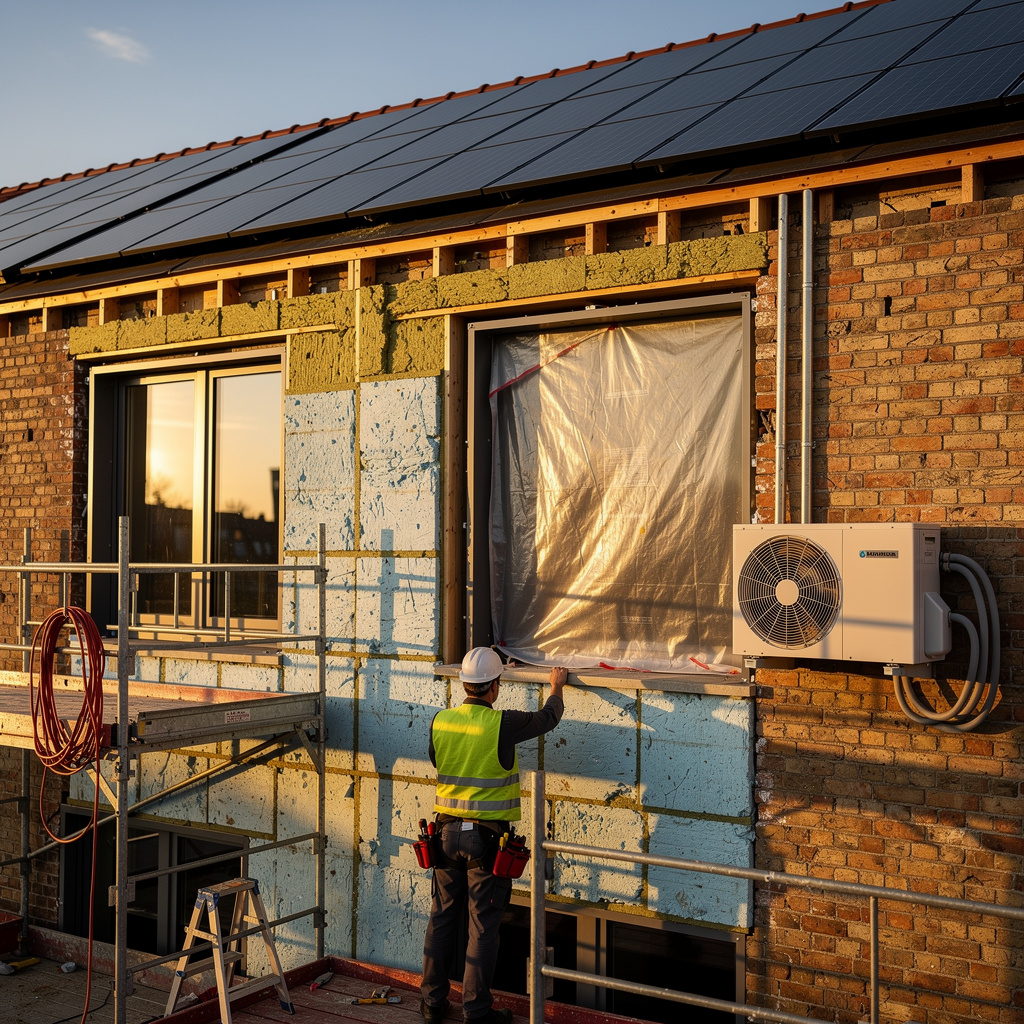
Deep retrofit package planning is the systematic process of designing a coordinated set of energy efficiency measures that together achieve dramatic reductions in a building's energy consumption and carbon emissions. Unlike single-measure retrofits, a deep retrofit package treats the building as an integrated system, considering how insulation, air sealing, ventilation, heating systems, and renewable generation interact with one another. Core concepts include the fabric-first approach, thermal bridging, moisture management, and the careful sequencing of measures to avoid unintended consequences such as poor indoor air quality or condensation.
The subject has gained critical importance as governments worldwide implement stricter building performance standards and carbon reduction targets. With buildings accounting for roughly 40% of global energy-related emissions, deep retrofits are now recognized as essential infrastructure for climate action. Real-world applications span residential, commercial, and institutional buildings, from social housing upgrades to corporate net-zero commitments. Recent shifts include the rise of digital twin modeling, performance-based contracting, and the integration of smart building technologies that enable continuous monitoring and optimization.
Mastering deep retrofit package planning builds a multidisciplinary skill stack that combines building physics, data analysis, economic evaluation, and project management. Professionals who understand this subject can navigate the complex trade-offs between upfront costs, long-term savings, occupant comfort, and environmental impact. This expertise is valuable for energy auditors, sustainability consultants, facility managers, policy makers, and developers seeking to future-proof their assets. The ability to design and deliver effective retrofit packages positions professionals at the forefront of the building decarbonization movement.
Common Questions About Deep Retrofit Package Planning
How does a deep retrofit package planning certificate boost my CV?
Is deep retrofit training suitable for beginners with no experience?
What is the most common mistake in building assessment for retrofit?
Which factors should be considered when setting performance targets?
What is the main difference between dynamic simulation and static calculation?
Which cost items are often overlooked in lifecycle costing?
Is deep retrofit just about adding insulation?
What Will This Course Bring You?
- Analyze comprehensive building assessment data to identify and prioritize deep retrofit opportunities.
- Design holistic integrated retrofit packages that optimize energy performance and occupant comfort.
- Apply modeling and simulation tools to predict the performance of retrofit packages.
- Evaluate lifecycle costs and benefits of retrofit measures to inform investment decisions.
- Assess and mitigate risks in retrofit project planning using systematic risk management techniques.
- Develop procurement and supply chain strategies to ensure timely delivery of retrofit components.
- Implement detailed phased retrofit plans with integrated quality assurance and commissioning procedures.
- Establish monitoring and verification protocols to support continuous improvement of retrofit performance.
Curriculum
12 Units1. Foundations of Deep Retrofit and the Package Approach
1 hour
2. Building Assessment and Data Collection
1 hour
3. Setting Performance Targets and Project Scope
1 hour
4. Retrofit Measures and Technologies
1 hour
5. Package Design Principles and Integration
1 hour
6. Modeling and Simulation for Retrofit Packages
1 hour
7. Cost-Benefit Analysis and Lifecycle Economics
1 hour
8. Risk Assessment and Mitigation in Retrofit
1 hour
9. Procurement and Supply Chain Management
1 hour
10. Implementation Planning and Phasing
1 hour
11. Quality Assurance and Commissioning
1 hour
12. Monitoring, Verification, and Continuous Improvement
1 hour
Exam – Deep Retrofit Package Planning
20 Questions • 70% Pass • 30 min
Unlock All Units for Free
Create an account, enroll in the course, and start with the first unit right away.
Exam – Deep Retrofit Package Planning
20 Questions • Pass: 70% • 30 min
Course Duration
720
Total Minutes
12
Unit
1
Final Exam
~60
Min / Unit
Deep Retrofit Package Planning Certificate Program
Document Your Skill
Those who pass the 20-question, 30-minute exam with 70% receive the Deep Retrofit Package Planning Certificate.
Stand Out on Your CV
By adding your certificate to your CV, gain a professional reference in job applications and stand out from the crowd.
Career Advantage
Catch Wisdom certificates are recognized by HR departments and increase career opportunities.
CERTIFICATE FEE
At the end of the course, an online exam consisting of 20 questions with a 30-minute time limit is given. The exam appears automatically after you complete the topics. Anyone who scores at least 70 out of 100 on the certificate exam is awarded the Deep Retrofit Package Planning Document (certificate of attendance). You can add the certificate you earn to your CV for job applications in the many sectors listed above, and use it as a reference proving that you took this interactive course.
The Certificate of Achievement you receive with the Deep Retrofit Package Planning course program holds value that proves your personal and professional development in the business world. By adding it to your CV, it can serve as an important reference in your job applications. Moreover, compared with certificates from other private training institutions, Catch Wisdom certificates are offered to our participants at a much more affordable price.
Because HR departments recognize Catch Wisdom as a reputable institution in this field, they value these certificates and may evaluate your job applications favorably. For this reason, a Deep Retrofit Package Planning course certificate from Catch Wisdom can make your applications more attractive and place you in an advantageous position in the business world.
For more information, we recommend visiting the Support page.
Certificate in 7 Languages
Earning success certificates from our courses is now more meaningful and global. With certificates available in Turkish, English, German, French, Spanish, Arabic, and Russian, we fully unlock the potential of students worldwide.
Why Certificate in 7 Languages?
-
01
Global Skill Development
Receiving your certificates in 7 different languages strengthens your communication skills as you engage with more people worldwide. It lets you operate more confidently and capably on the international stage.
-
02
International Job Opportunities
Employers may see your certificates in multiple languages as a sign of your ability to seize global opportunities. You can open more doors to new jobs and projects.
-
03
Cultural Richness
The chance to earn certificates in different languages helps you build closer ties with various cultures and broadens your worldview. It enriches your global perspective and deepens cultural understanding.
-
04
Ability to Participate in International Projects
Multilingual certificates give you an edge to work more effectively on international projects. They boost your chances of leadership and participation in diverse projects in the business world.
-
05
Prove Yourself on the Global Stage
Certificates in multiple languages let you showcase your skills and knowledge worldwide. You can become an internationally recognized professional.
Language diversity opens worldwide opportunities. If you want to prove yourself in the international arena, join our online Deep Retrofit Package Planning course program and begin this journey with us.
Frequently Asked Questions (FAQ)
Is this course paid?
How do I join the course?
Can I take the course at my own pace?
How can I get my certificate?
What are the advantages of the Certified Certificate?
Boost Your Career
Take a new career step with the Deep Retrofit Package Planning course. Add your certificate to your CV, stand out in job applications, and open the door to new opportunities in the industry.
StartStudent Reviews
No reviews yet
Enroll in this course and be the first to leave a review about your experience with Deep Retrofit Package Planning.
Start