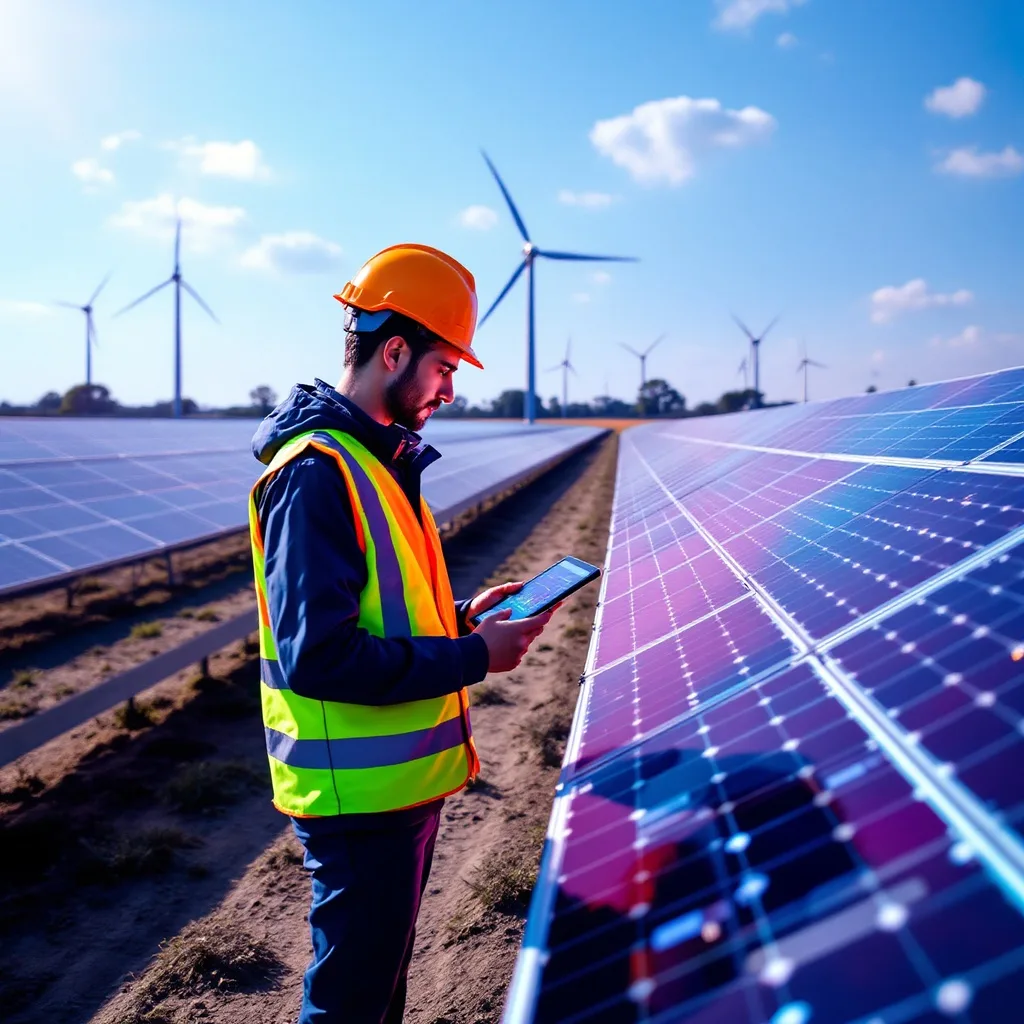
What is Energy Management and Renewable Energy?
Energy Management and Renewable Energy Training
This Energy Management and Renewable Energy certificate program equips professionals and career changers with the technical, economic, and strategic skills to optimize energy use and integrate clean power systems. It is designed for engineers, facility managers, sustainability officers, and anyone seeking to lead the transition toward low-carbon energy. The main practical outcome is the ability to conduct energy audits, evaluate renewable technologies, and implement efficiency measures that reduce costs and environmental impact in real-world settings.
The program follows a carefully scaffolded progression from fundamentals of energy and power through advanced topics like grid integration and energy policy, making it accessible to beginners while challenging experienced practitioners. Each module balances theory with applied case studies drawn from buildings, industry, and utility-scale projects, building four core skill areas: energy auditing and efficiency, renewable system design, storage and smart grid integration, and energy economics and policy. With global energy markets shifting rapidly and demand for decarbonization expertise surging, this training offers a timely, comprehensive pathway to mastering the full energy management and renewable energy value chain.
What is Energy Management and Renewable Energy?
Energy management is the systematic process of monitoring, controlling, and conserving energy in a building, organization, or entire grid to maximize efficiency and minimize waste. It encompasses demand-side strategies such as load shifting, equipment optimization, and behavioral change, as well as supply-side decisions about sourcing and generation. Renewable energy refers to power derived from naturally replenishing resources—solar, wind, hydropower, marine, geothermal, and biomass—that produce little to no greenhouse gas emissions during operation. Together, these two fields form an interdisciplinary domain that merges engineering, data analytics, environmental science, and policy to create sustainable energy systems.
Today, energy management and renewable energy are at the center of global efforts to combat climate change, enhance energy security, and drive economic competitiveness. Industries, commercial buildings, and municipalities are under increasing pressure to meet net-zero targets, comply with tightening regulations, and hedge against volatile fossil fuel prices. Breakthroughs in solar photovoltaic efficiency, large-scale battery storage, and smart grid digitalization have made integrated renewable solutions more viable than ever, while new business models like energy-as-a-service and virtual power plants are reshaping markets. This convergence of technology, policy, and market forces makes expertise in the field essential for any organization navigating the energy transition.
Mastering energy management and renewable energy builds a versatile skill stack that spans technical system design, data-driven performance analysis, financial modeling, and regulatory strategy. Professionals who understand how to assess a facility’s energy baseline, size a solar array, model storage dispatch, and evaluate policy incentives are uniquely positioned to drive decarbonization across sectors—from manufacturing and real estate to utilities and government. Whether applied to reducing a factory’s carbon footprint, designing a microgrid for a remote community, or shaping national energy policy, the knowledge of how to balance efficiency with clean generation is a powerful enabler of both environmental stewardship and long-term economic resilience.
Common Questions About Energy Management and Renewable Energy
Is the energy management course suitable for complete beginners?
What career benefits does the renewable energy certificate provide?
How does the PDCA cycle improve energy management systems?
- Plan: Establish baseline, set objectives, and create action plans.
- Do: Implement energy efficiency measures and renewable projects.
- Check: Monitor performance and compare against targets.
- Act: Correct deviations and standardize successful practices.
What is the difference between monocrystalline and thin-film solar?
Why is the Betz limit important for wind turbine design?
How do you conduct an energy audit for a building?
Do solar panels only work in sunny climates?
What Will This Course Bring You?
- Analyze energy consumption patterns in buildings and industrial processes to identify cost-effective efficiency improvements.
- Design a grid-connected solar photovoltaic system including component sizing, layout, and performance estimation.
- Evaluate the economic viability of wind energy projects using levelized cost of energy and sensitivity analysis.
- Apply energy management principles to develop an energy audit plan for a commercial facility.
- Assess the technical and environmental feasibility of integrating biomass and bioenergy systems into existing energy infrastructure.
- Model the operation of energy storage systems to optimize renewable energy integration and enhance grid stability.
- Interpret energy policies and market mechanisms to forecast the impact of regulatory changes on renewable energy deployment.
Curriculum
12 Units1. Fundamentals of Energy and Power
1 hour
2. Principles of Energy Management
1 hour
3. Energy Efficiency in Buildings and Industry
1 hour
4. Introduction to Renewable Energy Sources
1 hour
5. Solar Photovoltaic Systems
1 hour
6. Solar Thermal and Concentrated Solar Power
1 hour
7. Wind Energy Technology
1 hour
8. Hydropower, Marine, and Geothermal Energy
1 hour
9. Biomass and Bioenergy Systems
1 hour
10. Energy Storage Technologies
1 hour
11. Grid Integration and Smart Grids
1 hour
12. Energy Policy, Economics, and Future Trends
1 hour
Exam – Energy Management and Renewable Energy
20 Questions • 70% Pass • 30 min
Unlock All Units for Free
Create an account, enroll in the course, and start with the first unit right away.
Exam – Energy Management and Renewable Energy
20 Questions • Pass: 70% • 30 min
Course Duration
720
Total Minutes
12
Unit
1
Final Exam
~60
Min / Unit
Energy Management and Renewable Energy Certificate Program
Document Your Skill
Those who pass the 20-question, 30-minute exam with 70% receive the Energy Management and Renewable Energy Certificate.
Stand Out on Your CV
By adding your certificate to your CV, gain a professional reference in job applications and stand out from the crowd.
Career Advantage
With the verification code, employers can check your certificate instantly — a concrete way to show your growth.
CERTIFICATE FEE
At the end of the course, an online exam consisting of 20 questions with a 30-minute time limit is given. The exam appears automatically after you complete the topics. Anyone who scores at least 70 out of 100 on the certificate exam is awarded the Energy Management and Renewable Energy Document (certificate of attendance). You can add the certificate you earn to your CV for job applications in the many sectors listed above, and use it as a reference proving that you took this interactive course.
The Certificate of Achievement you receive with the Energy Management and Renewable Energy course program holds value that proves your personal and professional development in the business world. By adding it to your CV, it can serve as an important reference in your job applications. Moreover, compared with certificates from other private training institutions, Catch Wisdom certificates are offered to our participants at a much more affordable price.
The Energy Management and Renewable Energy course certificate is a document that proves, with a unique verification code, that you completed the course. Employers can instantly check its authenticity with this code, which helps you show your development concretely in your job applications.
For more information, we recommend visiting the Support page.
Certificate in 7 Languages
Earning success certificates from our courses is now more meaningful and global. With certificates available in Turkish, English, German, French, Spanish, Arabic, and Russian, we fully unlock the potential of students worldwide.
Why Certificate in 7 Languages?
-
01
Global Skill Development
Receiving your certificates in 7 different languages strengthens your communication skills as you engage with more people worldwide. It lets you operate more confidently and capably on the international stage.
-
02
International Job Opportunities
Employers may see your certificates in multiple languages as a sign of your ability to seize global opportunities. You can open more doors to new jobs and projects.
-
03
Cultural Richness
The chance to earn certificates in different languages helps you build closer ties with various cultures and broadens your worldview. It enriches your global perspective and deepens cultural understanding.
-
04
Ability to Participate in International Projects
Multilingual certificates give you an edge to work more effectively on international projects. They boost your chances of leadership and participation in diverse projects in the business world.
-
05
Prove Yourself on the Global Stage
Certificates in multiple languages give you the opportunity to present your skills and knowledge worldwide.
Language diversity opens worldwide opportunities. If you want to prove yourself in the international arena, join our online Energy Management and Renewable Energy course program and begin this journey with us.
Frequently Asked Questions (FAQ)
Is this course paid?
How do I join the course?
Can I take the course at my own pace?
How can I get my certificate?
What are the advantages of the certificate?
Boost Your Career
Take a new career step with the Energy Management and Renewable Energy course. Add your certificate to your CV, stand out in job applications, and open the door to new opportunities in the industry.
StartStudent Reviews
No reviews yet
Enroll in this course and be the first to leave a review about your experience with Energy Management and Renewable Energy.
Start