What is Digital Twin System Architecture?
Digital Twin System Architecture Training
The Digital Twin System Architecture certificate program equips engineers, architects, and technology professionals with the end-to-end skills needed to design, deploy, and manage digital twin systems across industrial and enterprise environments. This course systematically covers the full architectural stack—from foundational concepts and data acquisition at the edge to simulation, analytics, security, and lifecycle management—ensuring participants can translate real-world assets into living digital counterparts. By the end, you will be able to architect a scalable digital twin platform, integrate heterogeneous data sources, and apply machine learning for predictive optimization, directly enhancing operational efficiency and decision-making in your organization.
The program is structured as a beginner-friendly yet rigorous progression, balancing theoretical frameworks with hands-on architectural patterns. It builds five core skill areas: system blueprinting (layers and semantics), data engineering (acquisition, storage, and middleware), computational modeling (simulation and real-time processing), intelligent analytics (ML and optimization), and trust infrastructure (security, privacy, and interoperability). With the rapid adoption of Industry 4.0, smart cities, and autonomous systems, mastering digital twin architecture is no longer optional—it is a strategic imperative. This course gives you the precise vocabulary and design logic to lead digital transformation initiatives now, while preparing you for future standards and emerging interoperability challenges.
What is Digital Twin System Architecture?
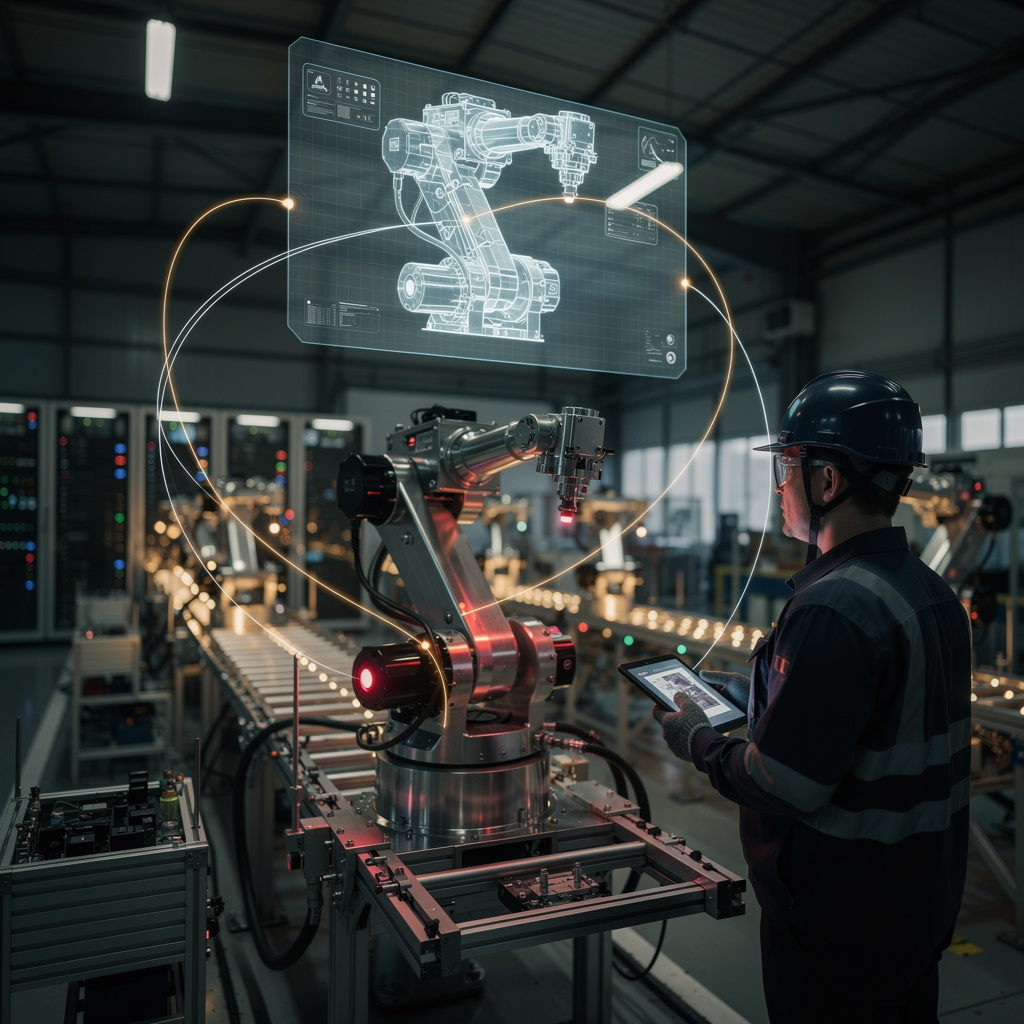
Digital Twin System Architecture is the structured discipline of designing and orchestrating the components that create, maintain, and utilize a digital twin—a virtual representation of a physical object, process, or system that is continuously synchronized with real-time data. Its scope spans multiple layers: physical asset connectivity, edge and cloud data pipelines, semantic models that define the twin's structure and behavior, simulation engines, analytics modules, and user interfaces for human interaction. Core concepts include the digital twin's lifecycle (from creation to retirement), bidirectional data flow, model fidelity, and the feedback loop that enables simulation, prediction, and control.
Today, digital twin architecture is critical across manufacturing, energy, aerospace, healthcare, and smart infrastructure, where organizations use twins to monitor assets, simulate scenarios, and optimize performance without disrupting operations. Recent shifts toward edge computing, AI-driven analytics, and open standards have made digital twins more accessible and powerful, yet they also demand a robust architectural foundation to handle data volume, latency, security, and interoperability. As industries push toward autonomous operations and predictive maintenance, the architecture of these systems determines whether a twin remains a static model or becomes a dynamic, decision-making engine.
Mastering digital twin system architecture builds a unique skill stack that combines software engineering, data science, domain modeling, and systems thinking. Professionals who understand this architecture can bridge the gap between physical operations and digital innovation, enabling them to design solutions that are resilient, scalable, and secure. This expertise is invaluable for roles such as solution architects, IoT platform engineers, industrial data scientists, and technology consultants, as well as for organizations seeking to implement digital twin strategies that align with business goals and regulatory requirements.
Common Questions About Digital Twin System Architecture
Is this digital twin course suitable for beginners without a cloud background?
What hands-on projects are part of this digital twin architecture training?
How does continuous synchronization differentiate a digital twin from a simulation?
What is the role of edge devices in digital twin data acquisition?
Why is the lakehouse model better than separate databases for digital twins?
How do you define a digital twin model using DTDL metamodel classes?
- Interface: the root container
- Property: static attributes
- Telemetry: time-series data streams
- Command: executable operations
- Component: nested interfaces
- Relationship: links to other entities
Is a digital twin just a high-fidelity simulation?
What Will This Course Bring You?
- Analyze the foundational principles and architectural layers that define a digital twin system's structure.
- Design a data acquisition and edge integration strategy for ingesting real-time sensor data into a digital twin.
- Implement data management and storage solutions that handle the volume and variety of digital twin data.
- Apply semantic modeling techniques to create interoperable digital twin representations with meaningful context.
- Evaluate simulation and real-time computation methods for accurately predicting digital twin behavior under dynamic conditions.
- Integrate machine learning and optimization algorithms to enable predictive analytics and decision support in digital twins.
- Develop visualization and human-machine interaction interfaces that facilitate intuitive monitoring and control of digital twins.
- Assess security, privacy, and trust mechanisms to protect digital twin architectures from threats and ensure data integrity.
Curriculum
12 Units1. Foundations of Digital Twins
1 hour
2. Architectural Blueprint and Layers
1 hour
3. Data Acquisition and Edge Integration
1 hour
4. Data Management and Storage
1 hour
5. Digital Twin Modeling and Semantics
1 hour
6. Simulation and Real-Time Computation
1 hour
7. Analytics, Machine Learning, and Optimization
1 hour
8. Visualization and Human-Machine Interaction
1 hour
9. APIs, Middleware, and Communication Patterns
1 hour
10. Security, Privacy, and Trust
1 hour
11. Deployment Architectures and Lifecycle Management
1 hour
12. Standards, Interoperability, and Future Directions
1 hour
Exam – Digital Twin System Architecture
20 Questions • 70% Pass • 30 min
Unlock All Units for Free
Create an account, enroll in the course, and start with the first unit right away.
Exam – Digital Twin System Architecture
20 Questions • Pass: 70% • 30 min
Course Duration
720
Total Minutes
12
Unit
1
Final Exam
~60
Min / Unit
Digital Twin System Architecture Certificate Program
Document Your Skill
Those who pass the 20-question, 30-minute exam with 70% receive the Digital Twin System Architecture Certificate.
Stand Out on Your CV
By adding your certificate to your CV, gain a professional reference in job applications and stand out from the crowd.
Career Advantage
Catch Wisdom certificates are recognized by HR departments and increase career opportunities.
CERTIFICATE FEE
At the end of the course, an online exam consisting of 20 questions with a 30-minute time limit is given. The exam appears automatically after you complete the topics. Anyone who scores at least 70 out of 100 on the certificate exam is awarded the Digital Twin System Architecture Document (certificate of attendance). You can add the certificate you earn to your CV for job applications in the many sectors listed above, and use it as a reference proving that you took this interactive course.
The Certificate of Achievement you receive with the Digital Twin System Architecture course program holds value that proves your personal and professional development in the business world. By adding it to your CV, it can serve as an important reference in your job applications. Moreover, compared with certificates from other private training institutions, Catch Wisdom certificates are offered to our participants at a much more affordable price.
Because HR departments recognize Catch Wisdom as a reputable institution in this field, they value these certificates and may evaluate your job applications favorably. For this reason, a Digital Twin System Architecture course certificate from Catch Wisdom can make your applications more attractive and place you in an advantageous position in the business world.
For more information, we recommend visiting the Support page.
Certificate in 7 Languages
Earning success certificates from our courses is now more meaningful and global. With certificates available in Turkish, English, German, French, Spanish, Arabic, and Russian, we fully unlock the potential of students worldwide.
Why Certificate in 7 Languages?
-
01
Global Skill Development
Receiving your certificates in 7 different languages strengthens your communication skills as you engage with more people worldwide. It lets you operate more confidently and capably on the international stage.
-
02
International Job Opportunities
Employers may see your certificates in multiple languages as a sign of your ability to seize global opportunities. You can open more doors to new jobs and projects.
-
03
Cultural Richness
The chance to earn certificates in different languages helps you build closer ties with various cultures and broadens your worldview. It enriches your global perspective and deepens cultural understanding.
-
04
Ability to Participate in International Projects
Multilingual certificates give you an edge to work more effectively on international projects. They boost your chances of leadership and participation in diverse projects in the business world.
-
05
Prove Yourself on the Global Stage
Certificates in multiple languages let you showcase your skills and knowledge worldwide. You can become an internationally recognized professional.
Language diversity opens worldwide opportunities. If you want to prove yourself in the international arena, join our online Digital Twin System Architecture course program and begin this journey with us.
Frequently Asked Questions (FAQ)
Is this course paid?
How do I join the course?
Can I take the course at my own pace?
How can I get my certificate?
What are the advantages of the Certified Certificate?
Boost Your Career
Take a new career step with the Digital Twin System Architecture course. Add your certificate to your CV, stand out in job applications, and open the door to new opportunities in the industry.
StartStudent Reviews
No reviews yet
Enroll in this course and be the first to leave a review about your experience with Digital Twin System Architecture.
Start