What is Editing Rhythm?
Editing Rhythm Training
The Editing Rhythm certificate program is a focused, hands-on training for editors, filmmakers, and video content creators who want to master the invisible art of pacing and flow. This course takes you from the foundational principles of rhythm in editing—such as shot duration, cutting on action, and the grammar of the cut—through to advanced techniques like montage construction, dialogue-driven pacing, and genre-specific rhythm. By the end, you will have built a complete rhythmic edit from scratch, applying every concept to a real project, and gaining the practical confidence to shape time and emotion in any visual narrative.
The program is structured as a beginner-friendly progression that balances theoretical understanding with immediate, practical application. It builds four core skill areas: technical precision (shot duration, motion cutting), auditory integration (sound and music), emotional storytelling (tension, montage, dialogue), and analytical mastery (studying masterworks and advanced rhythmic techniques). This structure ensures that even if you are new to editing, you will develop a solid foundation, while experienced editors will refine their craft with nuanced, professional-grade insights. Choosing this training now is essential because the demand for rhythmically compelling content has never been higher—across film, streaming, social media, and corporate video—and this program gives you the exact toolkit to stand out in a crowded, fast-paced industry.
What is Editing Rhythm?
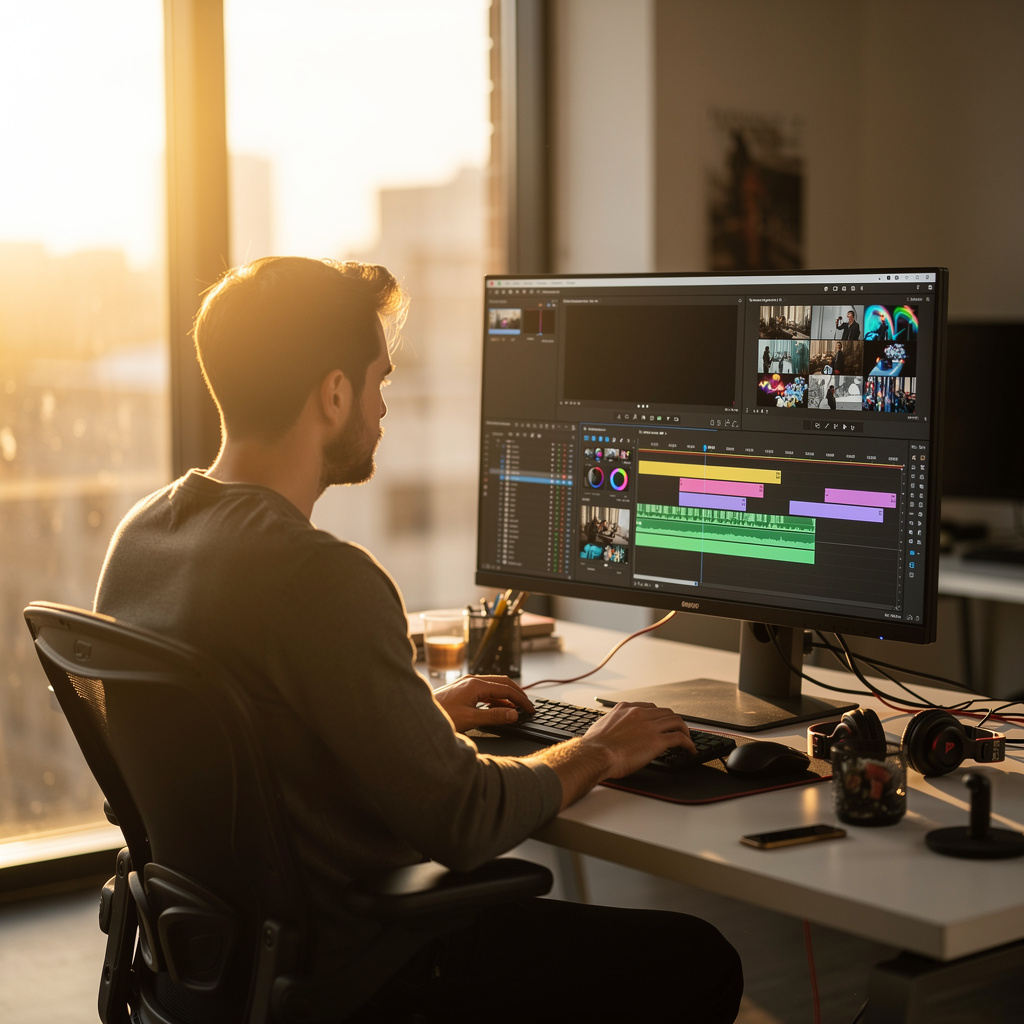
Editing rhythm is the deliberate manipulation of time, motion, and sound within a sequence of shots to create a specific perceptual and emotional response in the viewer. It encompasses the duration of each shot, the timing of cuts, the placement of action and movement, and the interplay of audio cues—all working together to establish a tempo that guides attention and feeling. Core concepts include the grammar of the cut (how edits communicate meaning), the relationship between visual and auditory beats, and the use of pacing to build tension, release, or continuity. Rhythm is not merely a technical skill; it is the underlying pulse that gives a film or video its life and coherence.
In today’s media landscape, editing rhythm matters more than ever because audiences are constantly bombarded with content, and their attention is a scarce resource. From short-form social media clips that must hook viewers in seconds to feature films that sustain emotional arcs over hours, rhythm determines whether a piece feels engaging or flat. The rise of algorithmic platforms has also shifted how rhythm is used—editors now craft micro-rhythms for vertical video, while streaming services demand sophisticated pacing that works across binge-watching sessions. Recent shifts in remote collaboration and AI-assisted editing tools have further emphasized the need for editors who understand rhythm as a creative language, not just a mechanical process.
Mastering editing rhythm builds a versatile skill stack that combines technical precision, auditory sensitivity, and narrative intuition. It equips you to analyze why certain cuts feel seamless or jarring, to design sequences that evoke specific emotions, and to adapt your approach to different genres—from fast-paced action to contemplative drama. This expertise is invaluable for film and video editors, but also for directors, sound designers, and even writers who think in visual terms. In professional contexts, rhythmic editing is what separates a competent cut from a memorable one, and it directly impacts audience retention, emotional impact, and the overall quality of any moving-image project. Whether you work in cinema, television, advertising, or online content, a deep understanding of editing rhythm elevates your craft and opens doors to more creative and strategic roles.
Common Questions About Editing Rhythm
Does the Editing Rhythm certificate boost a junior editor's portfolio?
Is this editing rhythm course suitable for complete beginners?
How does cutting on action create invisible continuity?
Why does beat-sync make cuts feel inevitable?
How do genre-specific rhythm patterns differ between comedy and thriller?
- Movement: constant on-screen motion drives the cut forward.
- Sound: music and effects push the tempo upward.
- Shot length: shorter ASL raises urgency.
- Escalating stakes: each scene raises the cost, pulling the rhythm tighter.
What is the three-ingredient formula for tempo in editing?
Are rhythm and pacing the same thing in film editing?
What Will This Course Bring You?
- Analyze the foundational principles of editing rhythm to identify how timing and pacing shape narrative flow.
- Apply the grammar of the cut to construct sequences that maintain visual continuity and logical coherence.
- Evaluate shot duration and pacing choices to control the tempo of a scene and sustain audience engagement.
- Implement cutting on action and motion to create seamless transitions that preserve spatial and temporal continuity.
- Integrate sound and music cues to reinforce rhythmic patterns and amplify emotional beats in an edit.
- Design emotional rhythm and tension through strategic cut placement to evoke specific audience responses.
- Build montage and rhythmic sequences that compress time and convey thematic meaning through visual parallels.
- Create a rhythmic edit that synthesizes all techniques to achieve a specific narrative or emotional goal.
Curriculum
12 Units1. The Foundations of Editing Rhythm
1 hour
2. The Grammar of the Cut
1 hour
3. Shot Duration and Pacing
1 hour
4. Cutting on Action and Motion
1 hour
5. Sound and Music in Editing Rhythm
1 hour
6. Emotional Rhythm and Tension
1 hour
7. Montage and Rhythmic Sequences
1 hour
8. Dialogue and Rhythm
1 hour
9. Genre-Specific Rhythm
1 hour
10. Advanced Rhythmic Techniques
1 hour
11. Analyzing Rhythm in Masterworks
1 hour
12. Creating a Rhythmic Edit
1 hour
Exam – Editing Rhythm
20 Questions • 70% Pass • 30 min
Unlock All Units for Free
Create an account, enroll in the course, and start with the first unit right away.
Exam – Editing Rhythm
20 Questions • Pass: 70% • 30 min
Course Duration
720
Total Minutes
12
Unit
1
Final Exam
~60
Min / Unit
Editing Rhythm Certificate Program
Document Your Skill
Those who pass the 20-question, 30-minute exam with 70% receive the Editing Rhythm Certificate.
Stand Out on Your CV
By adding your certificate to your CV, gain a professional reference in job applications and stand out from the crowd.
Career Advantage
Catch Wisdom certificates are recognized by HR departments and increase career opportunities.
CERTIFICATE FEE
At the end of the course, an online exam consisting of 20 questions with a 30-minute time limit is given. The exam appears automatically after you complete the topics. Anyone who scores at least 70 out of 100 on the certificate exam is awarded the Editing Rhythm Document (certificate of attendance). You can add the certificate you earn to your CV for job applications in the many sectors listed above, and use it as a reference proving that you took this interactive course.
The Certificate of Achievement you receive with the Editing Rhythm course program holds value that proves your personal and professional development in the business world. By adding it to your CV, it can serve as an important reference in your job applications. Moreover, compared with certificates from other private training institutions, Catch Wisdom certificates are offered to our participants at a much more affordable price.
Because HR departments recognize Catch Wisdom as a reputable institution in this field, they value these certificates and may evaluate your job applications favorably. For this reason, a Editing Rhythm course certificate from Catch Wisdom can make your applications more attractive and place you in an advantageous position in the business world.
For more information, we recommend visiting the Support page.
Certificate in 7 Languages
Earning success certificates from our courses is now more meaningful and global. With certificates available in Turkish, English, German, French, Spanish, Arabic, and Russian, we fully unlock the potential of students worldwide.
Why Certificate in 7 Languages?
-
01
Global Skill Development
Receiving your certificates in 7 different languages strengthens your communication skills as you engage with more people worldwide. It lets you operate more confidently and capably on the international stage.
-
02
International Job Opportunities
Employers may see your certificates in multiple languages as a sign of your ability to seize global opportunities. You can open more doors to new jobs and projects.
-
03
Cultural Richness
The chance to earn certificates in different languages helps you build closer ties with various cultures and broadens your worldview. It enriches your global perspective and deepens cultural understanding.
-
04
Ability to Participate in International Projects
Multilingual certificates give you an edge to work more effectively on international projects. They boost your chances of leadership and participation in diverse projects in the business world.
-
05
Prove Yourself on the Global Stage
Certificates in multiple languages let you showcase your skills and knowledge worldwide. You can become an internationally recognized professional.
Language diversity opens worldwide opportunities. If you want to prove yourself in the international arena, join our online Editing Rhythm course program and begin this journey with us.
Frequently Asked Questions (FAQ)
Is this course paid?
How do I join the course?
Can I take the course at my own pace?
How can I get my certificate?
What are the advantages of the Certified Certificate?
Boost Your Career
Take a new career step with the Editing Rhythm course. Add your certificate to your CV, stand out in job applications, and open the door to new opportunities in the industry.
StartStudent Reviews
No reviews yet
Enroll in this course and be the first to leave a review about your experience with Editing Rhythm.
Start