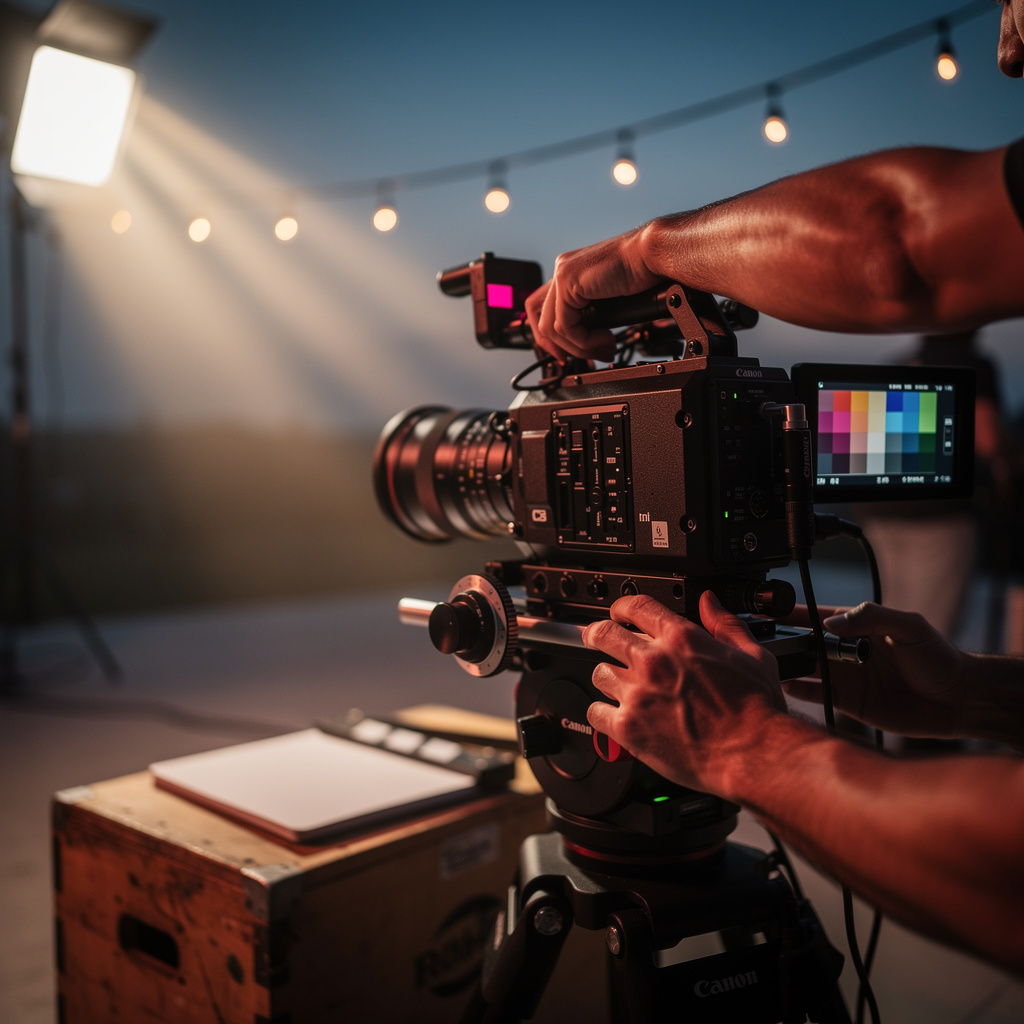
What is Film History Essentials?
Film History Essentials Certificate Program
Film History Essentials certificate program is a structured training in the historical development, formal language, and cultural contexts of cinema from pre-cinematic optical devices through contemporary digital media. The curriculum examines the invention of motion pictures, the rise of narrative film in the silent era, silent comedy and global silent film culture, Soviet montage and German Expressionism, the coming of sound and classical Hollywood, wartime cinema and Italian Neorealism, European art cinema and the French New Wave, New Hollywood and the blockbuster era, global new waves and Third Cinema, documentary, animation, and experimental film, the digital transition, and film preservation, historiography, and canon debates. It is designed for aspiring filmmakers, media and film studies students, critics, programmers, archivists, educators, and serious enthusiasts who want a rigorous historical foundation rather than a scattered list of titles. The main practical outcome is the ability to situate films within industrial, technological, aesthetic, and political contexts and to produce informed analysis, programming rationales, and research-driven arguments about cinema.
The program is organized as a beginner-friendly progression that moves chronologically while repeatedly connecting earlier developments to later debates, so learners can build historical vocabulary before tackling complex movements and theoretical questions. It balances theory and practice through close formal analysis, comparative viewing, contextual reading, and guided writing or presentation tasks that ask learners to interpret films rather than merely summarize plots. Across the lessons, it builds five core skill areas: historical contextualization, formal and stylistic analysis, movement and comparative analysis, research and argumentation, and preservation and canon literacy. Learners choose this program now because streaming catalogs, restoration projects, global film circulation, and ongoing canon debates make historical fluency increasingly valuable for anyone who wants to understand how cinema shapes and reflects culture.
What is Film History Essentials?
Film History Essentials is the study of cinema as a historically evolving art, technology, industry, and cultural institution. Its scope ranges from pre-cinematic visual entertainments and the invention of motion picture apparatuses to narrative development, sound technology, studio systems, national and transnational movements, documentary and experimental practices, digital production and distribution, and archival preservation. Core concepts include film form and style, mise-en-scène, editing, sound, genre, authorship, stardom, exhibition, reception, technological change, and the political economies that shape what gets made, seen, and saved. Rather than treating films as isolated masterpieces, the subject examines how works emerge from specific production conditions, audiences, institutions, and debates about historical significance.
Film history matters today because moving-image literacy is central to media education, cultural criticism, streaming curation, restoration and archival work, and public programming. Contemporary viewers encounter cinema through recommendation algorithms, restored repertory releases, online archives, and global festivals, all of which require historical context to interpret responsibly. Recent shifts toward digital restoration, transnational approaches, decolonial historiography, and expanded canon debates have made the field more attentive to films and filmmakers once marginalized by older narratives. In industry and academia alike, the subject supports informed decision-making about preservation, distribution, exhibition, teaching, and criticism in a media landscape defined by rapid technological and cultural change.
Mastering this subject builds a skill stack that combines visual literacy, historical reasoning, formal analysis, comparative interpretation, research, and argumentation. It also develops preservation awareness and canon literacy, enabling learners to question how film histories are written and which works are treated as central or overlooked. These capabilities are useful in film and media studies, criticism and journalism, festival and cinema programming, production research, archiving and cultural heritage, education, and informed public engagement with visual culture. The subject’s value lies in connecting close attention to films with broader historical inquiry, so that cinema can be understood as both an aesthetic form and a record of social, technological, and political change.
What Will This Course Bring You?
- Analyze key pre-cinema optical devices and early motion-picture technologies to explain how persistence-of-vision and projection innovations shaped film's emergence.
- Trace how silent-era editing, intertitles, slapstick comedy, and serial storytelling established narrative continuity and global audience appeal.
- Compare Soviet montage and German Expressionist techniques by evaluating how editing rhythms, lighting, and set design generate political and psychological meaning.
- Evaluate how synchronized sound altered classical Hollywood narrative, genre conventions, and studio production practices during the 1930s.
- Assess Italian Neorealism's use of location shooting, nonprofessional actors, and postwar social themes to interpret wartime and postwar cinematic responses.
- Apply French New Wave and European art-cinema concepts to analyze narrative ambiguity, authorship, and stylistic experimentation in selected postwar films.
- Compare New Hollywood blockbuster strategies with global new wave, Third Cinema, and documentary, animated, or experimental alternatives by evaluating marketing, genre, and political resistance.
- Construct a historiographical argument about film canon formation using preservation practices, digital restoration, archival evidence, and debates over inclusion in global cinema history.
Curriculum
12 Units1. Pre-Cinema and the Invention of Motion Pictures
1 hour
2. The Silent Era and the Rise of Narrative Film
1 hour
3. Silent Comedy, Serials, and Global Silent Film Culture
1 hour
4. Soviet Montage and German Expressionism
1 hour
5. The Coming of Sound and Classical Hollywood
1 hour
6. Wartime Cinema and Italian Neorealism
1 hour
7. European Art Cinema and the French New Wave
1 hour
8. New Hollywood and the Blockbuster Era
1 hour
9. Global New Waves and Third Cinema
1 hour
10. Documentary, Animation, and Experimental Film
1 hour
11. The Digital Transition and Contemporary Cinema
1 hour
12. Film Preservation, Historiography, and Canon Debates
1 hour
Exam – Film History Essentials
20 Questions • 70% Pass • 30 min
Unlock All Units for Free
Create an account, enroll in the course, and start with the first unit right away.
Exam – Film History Essentials
20 Questions • Pass: 70% • 30 min
Course Duration
720
Total Minutes
12
Unit
1
Final Exam
~60
Min / Unit
Film History Essentials Certificate Program
Document Your Skill
Those who pass the 20-question, 30-minute exam with 70% receive the Film History Essentials Certificate.
Stand Out on Your CV
By adding your certificate to your CV, gain a professional reference in job applications and stand out from the crowd.
Career Advantage
With the verification code, employers can check your certificate instantly — a concrete way to show your growth.
CERTIFICATE FEE
At the end of the course, an online exam consisting of 20 questions with a 30-minute time limit is given. The exam appears automatically after you complete the topics. Anyone who scores at least 70 out of 100 on the certificate exam is awarded the Film History Essentials Document (certificate of attendance). You can add the certificate you earn to your CV for job applications in the many sectors listed above, and use it as a reference proving that you took this interactive course.
The Certificate of Achievement you receive with the Film History Essentials course program holds value that proves your personal and professional development in the business world. By adding it to your CV, it can serve as an important reference in your job applications. Moreover, compared with certificates from other private training institutions, Catch Wisdom certificates are offered to our participants at a much more affordable price.
The Film History Essentials course certificate is a document that proves, with a unique verification code, that you completed the course. Employers can instantly check its authenticity with this code, which helps you show your development concretely in your job applications.
For more information, we recommend visiting the Support page.
Certificate in 7 Languages
Earning success certificates from our courses is now more meaningful and global. With certificates available in Turkish, English, German, French, Spanish, Arabic, and Russian, we fully unlock the potential of students worldwide.
Why Certificate in 7 Languages?
-
01
Global Skill Development
Receiving your certificates in 7 different languages strengthens your communication skills as you engage with more people worldwide. It lets you operate more confidently and capably on the international stage.
-
02
International Job Opportunities
Employers may see your certificates in multiple languages as a sign of your ability to seize global opportunities. You can open more doors to new jobs and projects.
-
03
Cultural Richness
The chance to earn certificates in different languages helps you build closer ties with various cultures and broadens your worldview. It enriches your global perspective and deepens cultural understanding.
-
04
Ability to Participate in International Projects
Multilingual certificates give you an edge to work more effectively on international projects. They boost your chances of leadership and participation in diverse projects in the business world.
-
05
Prove Yourself on the Global Stage
Certificates in multiple languages give you the opportunity to present your skills and knowledge worldwide.
Language diversity opens worldwide opportunities. If you want to prove yourself in the international arena, join our online Film History Essentials course program and begin this journey with us.
Frequently Asked Questions (FAQ)
Is this course paid?
How do I join the course?
Can I take the course at my own pace?
How can I get my certificate?
What are the advantages of the certificate?
Boost Your Career
Take a new career step with the Film History Essentials course. Add your certificate to your CV, stand out in job applications, and open the door to new opportunities in the industry.
StartStudent Reviews
No reviews yet
Enroll in this course and be the first to leave a review about your experience with Film History Essentials.
Start