What is Fundamentals of Solar Energy Systems?
Fundamentals of Solar Energy Systems Training
The Fundamentals of Solar Energy Systems certificate program provides a comprehensive introduction to the science, technology, and practical application of solar energy. Designed for aspiring solar technicians, engineers, project developers, and sustainability professionals, this course equips learners with the knowledge to assess solar resources, design photovoltaic and thermal systems, and understand grid integration. The primary outcome is the ability to confidently size, specify, and evaluate solar energy installations for residential, commercial, and utility-scale projects.
The program follows a beginner-friendly progression, starting with solar radiation fundamentals and moving through photovoltaic cell technology, system components, and energy storage. It balances theoretical principles with real-world design exercises, building core skills in site assessment, system sizing, safety protocols, and economic analysis. With the global solar market expanding rapidly and policy incentives driving adoption, this training offers a timely, practical foundation for entering or advancing in the renewable energy workforce.
What is Fundamentals of Solar Energy Systems?
Fundamentals of Solar Energy Systems is the study of how sunlight is converted into usable electrical or thermal energy. It encompasses the physics of solar radiation, the behavior of photovoltaic cells, and the engineering of complete power systems—from rooftop panels to grid-connected arrays. Core concepts include irradiance measurement, the photovoltaic effect, system topologies (off-grid, grid-tied, hybrid), and the thermodynamics of solar thermal collectors.
Today, solar energy is one of the fastest-growing sources of electricity worldwide, driven by falling costs, climate imperatives, and energy independence goals. It is deployed in residential, commercial, industrial, and utility-scale settings, and increasingly integrated with battery storage and smart grids. Recent shifts include bifacial modules, building-integrated photovoltaics, and advanced power electronics that improve efficiency and reliability.
Mastering this subject builds a versatile skill stack: technical analysis (solar resource assessment, system sizing), practical design (component selection, wiring, and balance-of-system), and strategic thinking (economic feasibility, policy navigation, and lifecycle management). These competencies are valuable for solar installers, energy consultants, project managers, policy analysts, and entrepreneurs seeking to launch or scale solar ventures.
Common Questions About Fundamentals of Solar Energy Systems
Is this solar energy course suitable for complete beginners?
How long does it take to complete the solar fundamentals course?
How do you calculate peak sun hours for a site?
- Obtain historical solar data: Use sources like NREL's PVWatts or local weather stations to get average daily insolation (kWh/m²/day) for your location.
- Convert insolation to PSH: Since 1 peak sun hour equals 1 kWh/m² at 1,000 W/m², the PSH number is numerically equal to the daily insolation value. For example, 5 kWh/m²/day corresponds to 5 PSH.
- Adjust for site conditions: Account for shading, tilt, and orientation using tools like a solar pathfinder. The unit on Solar Radiation and Site Assessment in the curriculum covers these adjustments in detail.
What is the difference between monocrystalline and polycrystalline panels?
What are the key components of a PV system besides panels?
- Inverter: Converts DC electricity from panels into AC electricity for home use or grid export.
- Mounting structure: Secures panels to the roof or ground at the optimal tilt angle.
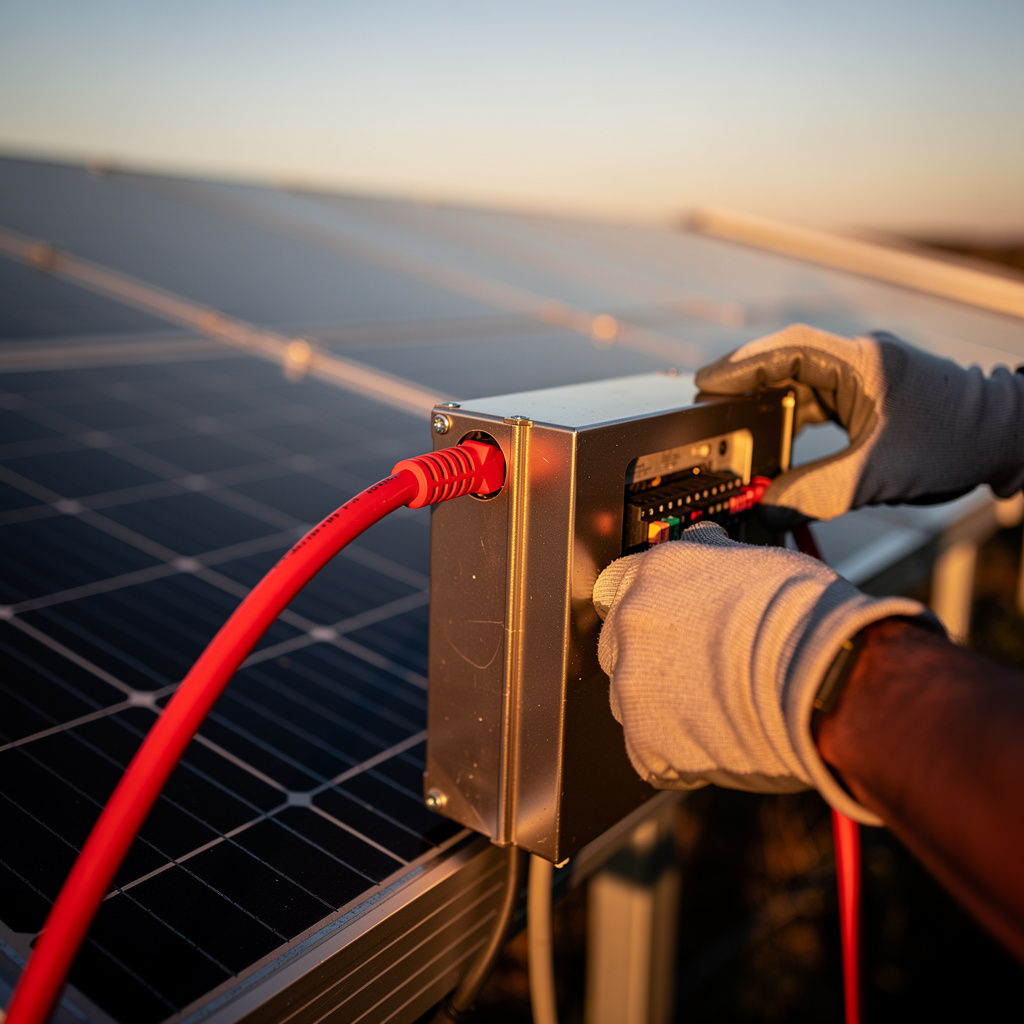
- Wiring and combiner boxes: Connect panels in strings and route power to the inverter.
- Disconnect switches and breakers: Provide safety isolation and overcurrent protection.
- Metering and monitoring: Track energy production and consumption.
- Battery storage (optional): Stores excess energy for use at night or during outages.
What is the role of an inverter in a solar system?
Do solar panels only work in direct sunlight?
What Will This Course Bring You?
- Analyze solar resource data using meteorological datasets to estimate energy potential for a given location.
- Evaluate site-specific solar radiation using tools and shading analysis to assess impact on system performance.
- Compare photovoltaic cell technologies based on efficiency and material properties including monocrystalline, polycrystalline, and thin-film.
- Design a PV system configuration including inverters, wiring, and balance-of-system components for a residential application.
- Apply principles of solar thermal system design for water heating applications including collector selection and heat transfer.
- Calculate system sizing and energy yield for a grid-tied photovoltaic installation using standard design software.
- Select appropriate energy storage and battery systems for off-grid or backup applications based on capacity, depth of discharge, and cycle life.
- Implement safety protocols during installation and commissioning of solar energy systems including lockout/tagout and fall protection.
Curriculum
12 Units1. The Solar Resource and Energy Fundamentals
1 hour
2. Solar Radiation and Site Assessment
1 hour
3. Photovoltaic Cell Technology
1 hour
4. PV System Components and Configurations
1 hour
5. Solar Thermal Systems
1 hour
6. PV System Sizing and Design
1 hour
7. Energy Storage and Battery Systems
1 hour
8. Installation, Safety, and Commissioning
1 hour
9. Operation, Maintenance, and Troubleshooting
1 hour
10. Economic Analysis and Policy Incentives
1 hour
11. Grid Integration and Interconnection
1 hour
12. Emerging Technologies and the Future of Solar
1 hour
Exam – Fundamentals of Solar Energy Systems
20 Questions • 70% Pass • 30 min
Unlock All Units for Free
Create an account, enroll in the course, and start with the first unit right away.
Exam – Fundamentals of Solar Energy Systems
20 Questions • Pass: 70% • 30 min
Course Duration
720
Total Minutes
12
Unit
1
Final Exam
~60
Min / Unit
Fundamentals of Solar Energy Systems Certificate Program
Document Your Skill
Those who pass the 20-question, 30-minute exam with 70% receive the Fundamentals of Solar Energy Systems Certificate.
Stand Out on Your CV
By adding your certificate to your CV, gain a professional reference in job applications and stand out from the crowd.
Career Advantage
With the verification code, employers can check your certificate instantly — a concrete way to show your growth.
CERTIFICATE FEE
At the end of the course, an online exam consisting of 20 questions with a 30-minute time limit is given. The exam appears automatically after you complete the topics. Anyone who scores at least 70 out of 100 on the certificate exam is awarded the Fundamentals of Solar Energy Systems Document (certificate of attendance). You can add the certificate you earn to your CV for job applications in the many sectors listed above, and use it as a reference proving that you took this interactive course.
The Certificate of Achievement you receive with the Fundamentals of Solar Energy Systems course program holds value that proves your personal and professional development in the business world. By adding it to your CV, it can serve as an important reference in your job applications. Moreover, compared with certificates from other private training institutions, Catch Wisdom certificates are offered to our participants at a much more affordable price.
The Fundamentals of Solar Energy Systems course certificate is a document that proves, with a unique verification code, that you completed the course. Employers can instantly check its authenticity with this code, which helps you show your development concretely in your job applications.
For more information, we recommend visiting the Support page.
Certificate in 7 Languages
Earning success certificates from our courses is now more meaningful and global. With certificates available in Turkish, English, German, French, Spanish, Arabic, and Russian, we fully unlock the potential of students worldwide.
Why Certificate in 7 Languages?
-
01
Global Skill Development
Receiving your certificates in 7 different languages strengthens your communication skills as you engage with more people worldwide. It lets you operate more confidently and capably on the international stage.
-
02
International Job Opportunities
Employers may see your certificates in multiple languages as a sign of your ability to seize global opportunities. You can open more doors to new jobs and projects.
-
03
Cultural Richness
The chance to earn certificates in different languages helps you build closer ties with various cultures and broadens your worldview. It enriches your global perspective and deepens cultural understanding.
-
04
Ability to Participate in International Projects
Multilingual certificates give you an edge to work more effectively on international projects. They boost your chances of leadership and participation in diverse projects in the business world.
-
05
Prove Yourself on the Global Stage
Certificates in multiple languages give you the opportunity to present your skills and knowledge worldwide.
Language diversity opens worldwide opportunities. If you want to prove yourself in the international arena, join our online Fundamentals of Solar Energy Systems course program and begin this journey with us.
Frequently Asked Questions (FAQ)
Is this course paid?
How do I join the course?
Can I take the course at my own pace?
How can I get my certificate?
What are the advantages of the certificate?
Boost Your Career
Take a new career step with the Fundamentals of Solar Energy Systems course. Add your certificate to your CV, stand out in job applications, and open the door to new opportunities in the industry.
StartStudent Reviews
No reviews yet
Enroll in this course and be the first to leave a review about your experience with Fundamentals of Solar Energy Systems.
Start