What is Herb Gardening?
Herb Gardening Certificate Program
Herb Gardening certificate program teaches the full cycle of growing herbs—from planning a garden and preparing soil with compost and fertilizers to propagating from seeds and cuttings, transplanting, and managing containers or indoor setups. It is designed for home gardeners, small-scale growers, and anyone who wants to cultivate culinary, medicinal, and aromatic herbs with confidence. Participants learn practical routines for watering, mulching, weed control, pruning, pest management, and harvesting, so the main outcome is a reliable, productive herb garden that fits their space and goals.
The program is organized as a beginner-friendly progression: it starts with an introduction and garden planning, then builds foundational skills in soil, compost, fertilizers, and essential tools before moving to propagation, planting, and transplanting. Learners practice both theory and hands-on routines across five core skill areas—garden design and site planning, soil and fertility management, propagation and planting, ongoing care and pest control, and harvesting and preservation—while also covering container and indoor herb gardening. Later lessons apply these skills to popular culinary herbs and to medicinal and aromatic herbs, so learners see how the same principles adapt to different plants and purposes. Choosing this program now makes sense as interest in home food production, indoor growing, and low-waste preservation continues to rise, and as gardeners look for structured, practical guidance rather than scattered tips.
What is Herb Gardening?
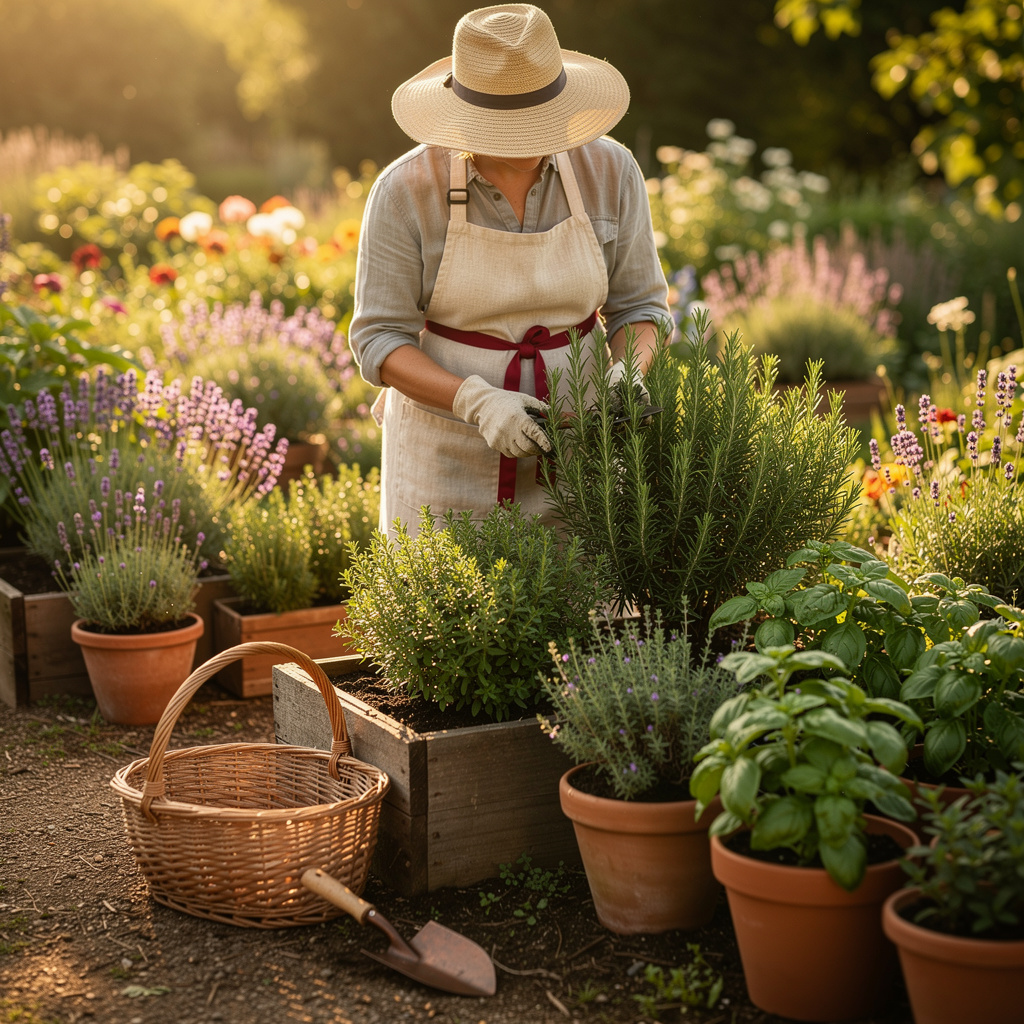
Herb Gardening is the practice of cultivating plants valued for flavor, fragrance, medicine, or aroma, typically in garden beds, containers, or indoor spaces. Its scope ranges from planning a site and building healthy soil to propagating, planting, watering, pruning, and harvesting herbs at the right time. Core concepts include understanding herb types—culinary, medicinal, and aromatic—matching plants to light, water, and soil conditions, and managing fertility through compost and fertilizers. It also involves practical routines such as mulching, weed control, pest management, and preservation, which together turn a patch or pot into a sustained supply of useful herbs.
Herb Gardening matters today because more households and community gardens are growing at least some of their own food and flavorings, and herbs are among the most accessible entry points. In real life, herbs reduce grocery costs, add freshness to cooking, and support home remedies and natural aromatics; in industry, they feed demand for local produce, specialty ingredients, and plant-based products. Recent shifts toward container growing, indoor gardening under lights, organic soil management, and water-wise practices have made herb cultivation relevant in small urban spaces as well as larger gardens. Academic and extension programs also emphasize sustainable horticulture, pollinator-friendly planting, and preservation methods, keeping herb gardening connected to broader conversations about food resilience and environmental care.
Mastering Herb Gardening builds a practical skill stack that combines site assessment, soil building, propagation, plant care, pest monitoring, and post-harvest handling. These skills transfer to personal contexts such as home kitchens, balcony gardens, school projects, and community plots, where reliable herbs support cooking, wellness, and shared growing spaces. Professionally, the same knowledge applies to market gardens, nursery work, landscaping, herbal product development, and educational workshops that teach sustainable growing practices. Because the subject connects planning, biology, and hands-on maintenance, it offers a durable foundation for anyone who wants to grow herbs well rather than simply try a few seasonal plants.
What Will This Course Bring You?
- Design a seasonal herb garden plan that matches site conditions, available space, and intended culinary or medicinal uses.
- Evaluate soil texture, drainage, and nutrient needs to select appropriate compost and fertilizer amendments for specific herb varieties.
- Select and maintain essential herb-gardening tools while demonstrating safe seed-sowing and stem-cutting propagation techniques.
- Implement proper planting and transplanting procedures for herbs in garden beds, containers, and indoor growing environments.
- Apply watering, mulching, and weed-control practices that conserve moisture and reduce competition in herb garden beds and containers.
- Develop a maintenance routine that includes pruning, pest monitoring, and integrated control strategies for common herb-garden problems.
- Demonstrate harvesting and preservation methods that maintain flavor, aroma, and quality for culinary and medicinal herb uses.
- Compare cultivation requirements for popular culinary herbs and medicinal or aromatic herbs to recommend suitable species for a home garden.
Curriculum
12 Units1. Introduction to Herb Gardening
1 hour
2. Planning Your Herb Garden
1 hour
3. Soil, Compost, and Fertilizers for Herbs
1 hour
4. Essential Tools and Equipment for Herb Gardening
1 hour
5. Propagating Herbs: Seeds and Cuttings
1 hour
6. Planting and Transplanting Herbs
1 hour
7. Container and Indoor Herb Gardening
1 hour
8. Watering, Mulching, and Weed Control
1 hour
9. Pruning, Maintenance, and Pest Control
1 hour
10. Harvesting and Preserving Herbs
1 hour
11. Growing Popular Culinary Herbs
1 hour
12. Growing Medicinal and Aromatic Herbs
1 hour
Exam – Herb Gardening
20 Questions • 70% Pass • 30 min
Unlock All Units for Free
Create an account, enroll in the course, and start with the first unit right away.
Exam – Herb Gardening
20 Questions • Pass: 70% • 30 min
Course Duration
720
Total Minutes
12
Unit
1
Final Exam
~60
Min / Unit
Herb Gardening Certificate Program
Document Your Skill
Those who pass the 20-question, 30-minute exam with 70% receive the Herb Gardening Certificate.
Stand Out on Your CV
By adding your certificate to your CV, gain a professional reference in job applications and stand out from the crowd.
Career Advantage
With the verification code, employers can check your certificate instantly — a concrete way to show your growth.
CERTIFICATE FEE
At the end of the course, an online exam consisting of 20 questions with a 30-minute time limit is given. The exam appears automatically after you complete the topics. Anyone who scores at least 70 out of 100 on the certificate exam is awarded the Herb Gardening Document (certificate of attendance). You can add the certificate you earn to your CV for job applications in the many sectors listed above, and use it as a reference proving that you took this interactive course.
The Certificate of Achievement you receive with the Herb Gardening course program holds value that proves your personal and professional development in the business world. By adding it to your CV, it can serve as an important reference in your job applications. Moreover, compared with certificates from other private training institutions, Catch Wisdom certificates are offered to our participants at a much more affordable price.
The Herb Gardening course certificate is a document that proves, with a unique verification code, that you completed the course. Employers can instantly check its authenticity with this code, which helps you show your development concretely in your job applications.
For more information, we recommend visiting the Support page.
Certificate in 7 Languages
Earning success certificates from our courses is now more meaningful and global. With certificates available in Turkish, English, German, French, Spanish, Arabic, and Russian, we fully unlock the potential of students worldwide.
Why Certificate in 7 Languages?
-
01
Global Skill Development
Receiving your certificates in 7 different languages strengthens your communication skills as you engage with more people worldwide. It lets you operate more confidently and capably on the international stage.
-
02
International Job Opportunities
Employers may see your certificates in multiple languages as a sign of your ability to seize global opportunities. You can open more doors to new jobs and projects.
-
03
Cultural Richness
The chance to earn certificates in different languages helps you build closer ties with various cultures and broadens your worldview. It enriches your global perspective and deepens cultural understanding.
-
04
Ability to Participate in International Projects
Multilingual certificates give you an edge to work more effectively on international projects. They boost your chances of leadership and participation in diverse projects in the business world.
-
05
Prove Yourself on the Global Stage
Certificates in multiple languages give you the opportunity to present your skills and knowledge worldwide.
Language diversity opens worldwide opportunities. If you want to prove yourself in the international arena, join our online Herb Gardening course program and begin this journey with us.
Frequently Asked Questions (FAQ)
Is this course paid?
How do I join the course?
Can I take the course at my own pace?
How can I get my certificate?
What are the advantages of the certificate?
Boost Your Career
Take a new career step with the Herb Gardening course. Add your certificate to your CV, stand out in job applications, and open the door to new opportunities in the industry.
StartStudent Reviews
No reviews yet
Enroll in this course and be the first to leave a review about your experience with Herb Gardening.
Start