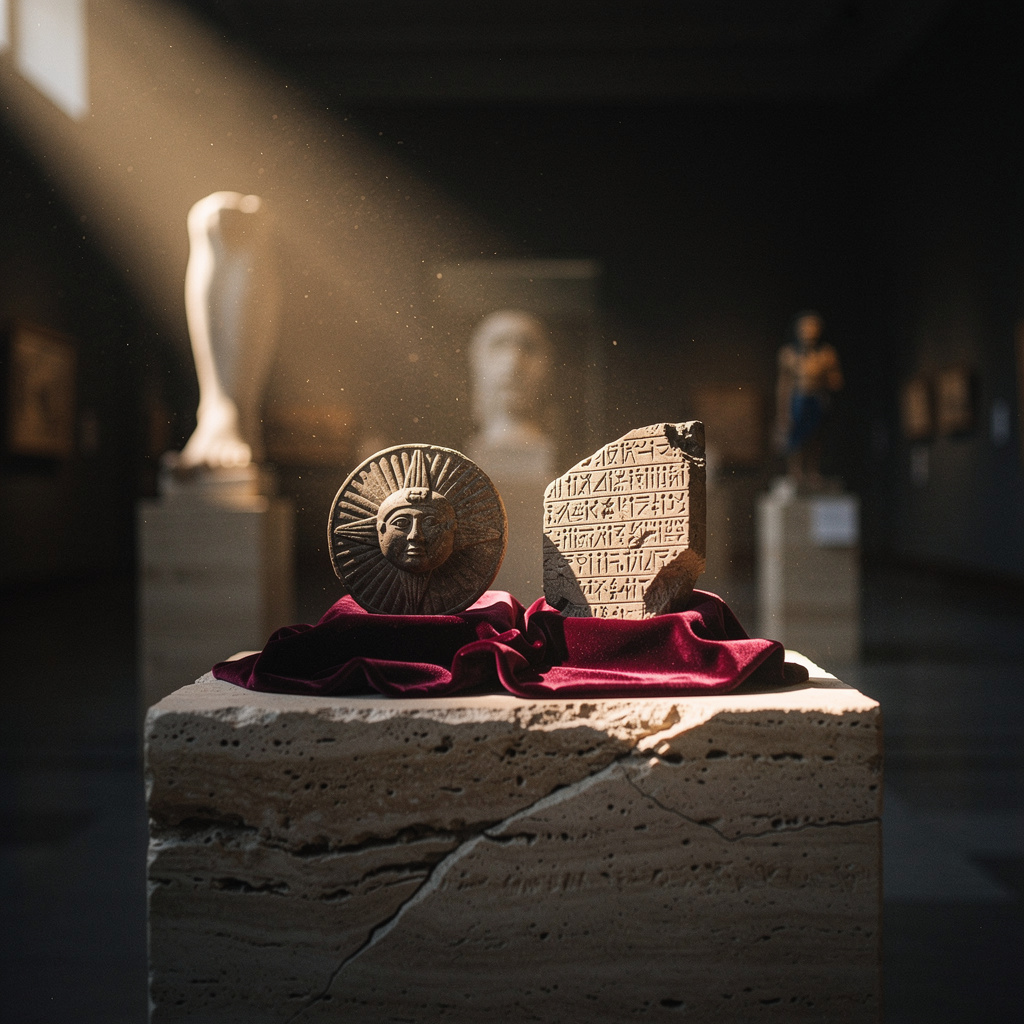
What is History of Civilizations?
History of Civilizations Training
The History of Civilizations certificate program offers a comprehensive journey through the rise and fall of human societies, from early hunter-gatherer communities to the interconnected world of the Age of Exploration. Designed for lifelong learners, students, and professionals seeking a deeper understanding of our shared past, this course transforms historical knowledge into practical analytical skills. By the end of the program, participants will be able to identify recurring patterns in societal development, evaluate primary and secondary sources, and articulate how ancient decisions continue to shape modern geopolitics and culture.
The program is structured to be accessible to beginners while offering depth for those with prior historical interest, progressing from the first cities of Mesopotamia to the empires of the Americas and Africa. Each lesson balances narrative storytelling with critical inquiry, building four core skill areas: chronological reasoning, comparative analysis, source interpretation, and cross-cultural empathy. With global conflicts and cultural clashes dominating today’s headlines, this training provides the historical context needed to navigate contemporary issues with nuance and evidence-based confidence, making it an essential choice for anyone who wants to understand why civilizations thrive or collapse.
What is History of Civilizations?
History of Civilizations is the study of how human societies have organized themselves over time, examining the emergence of cities, states, religions, trade networks, and technological innovations. Its core concepts include the transition from nomadic to sedentary life, the role of geography in shaping cultures, the development of writing and law, and the dynamics of power, conquest, and resistance. This field spans the ancient river valleys of Mesopotamia, Egypt, the Indus, and China, through classical Mediterranean civilizations, to the complex societies of the Americas, Africa, and medieval Europe, offering a panoramic view of humanity's collective achievements and failures.
Today, the subject matters more than ever as globalization forces us to confront diverse cultural legacies and historical grievances. In academia, it informs disciplines like anthropology, political science, and archaeology, while in real-world contexts, it guides policymakers, diplomats, and business leaders who must navigate cross-cultural negotiations and understand the historical roots of regional conflicts. Recent shifts toward decolonizing curricula and incorporating indigenous perspectives have revitalized the field, making it a dynamic space for reinterpreting the past through multiple lenses. The study of civilizations also provides critical context for pressing issues such as climate change, migration, and the rise of new global powers, all of which have historical precedents.
Mastering this subject builds a skill stack that includes rigorous research, contextual thinking, and the ability to synthesize complex narratives from fragmented evidence. These competencies are directly applicable in careers such as education, museum curation, international relations, journalism, and cultural heritage management, as well as in personal growth by fostering a more informed and empathetic worldview. For professionals in any field, understanding the arc of civilizations enhances strategic foresight—recognizing that current events are not isolated but part of long-term patterns of human behavior. The knowledge gained here empowers learners to engage with the world not as passive observers but as thoughtful participants who appreciate the depth and interconnectedness of human history.
Common Questions About History of Civilizations
Is this history of civilizations course suitable for complete beginners?
How does the certificate from this history of civilizations course boost my resume?
What was the Neolithic Revolution and how did it change human society?
How did Mesopotamia's geography influence the rise of its first cities?
Why is Ancient Egypt often called the Gift of the Nile?
What led to the decline of the Indus Valley civilization?
- Climate change: shifting monsoon patterns reduced rainfall.
- River shifts: the Ghaggar-Hakra system dried up.
- Economic disruption: trade with Mesopotamia declined.
Were the pyramids of Egypt really built by slaves?
What Will This Course Bring You?
- Analyze the transition from hunter-gatherer societies to urban civilizations, identifying key environmental and social factors.
- Evaluate the contributions of Mesopotamian legal codes, such as Hammurabi's, to subsequent legal systems.
- Compare the political and religious structures of Ancient Egypt and the Indus Valley civilization.
- Assess the impact of Greek philosophy and Hellenistic culture on the development of Western thought.
- Analyze the administrative and engineering innovations of the Roman Empire that enabled its longevity.
- Compare the ethical frameworks of Axial Age religions such as Buddhism and Confucianism and their societal influences.
- Evaluate the role of feudalism and the Catholic Church in shaping medieval European social hierarchy.
- Analyze the consequences of the Age of Exploration on indigenous civilizations and global trade networks.
Curriculum
12 Units1. From Hunter-Gatherers to the First Cities
1 hour
2. Mesopotamia: Cradle of Civilization
1 hour
3. Ancient Egypt: The Gift of the Nile
1 hour
4. Indus Valley and Early China: Parallel Civilizations
1 hour
5. Classical Greece and the Hellenistic World
1 hour
6. The Roman Republic and Empire
1 hour
7. The Axial Age: Religions and Philosophies
1 hour
8. Byzantine Empire and the Rise of Islam
1 hour
9. Medieval Europe: Feudalism and Christendom
1 hour
10. Civilizations of the Americas: Maya, Aztec, Inca
1 hour
11. African Kingdoms and Empires
1 hour
12. Global Encounters: The Age of Exploration and Its Consequences
1 hour
Exam – History of Civilizations
20 Questions • 70% Pass • 30 min
Unlock All Units for Free
Create an account, enroll in the course, and start with the first unit right away.
Exam – History of Civilizations
20 Questions • Pass: 70% • 30 min
Course Duration
720
Total Minutes
12
Unit
1
Final Exam
~60
Min / Unit
History of Civilizations Certificate Program
Document Your Skill
Those who pass the 20-question, 30-minute exam with 70% receive the History of Civilizations Certificate.
Stand Out on Your CV
By adding your certificate to your CV, gain a professional reference in job applications and stand out from the crowd.
Career Advantage
Catch Wisdom certificates are recognized by HR departments and increase career opportunities.
CERTIFICATE FEE
At the end of the course, an online exam consisting of 20 questions with a 30-minute time limit is given. The exam appears automatically after you complete the topics. Anyone who scores at least 70 out of 100 on the certificate exam is awarded the History of Civilizations Document (certificate of attendance). You can add the certificate you earn to your CV for job applications in the many sectors listed above, and use it as a reference proving that you took this interactive course.
The Certificate of Achievement you receive with the History of Civilizations course program holds value that proves your personal and professional development in the business world. By adding it to your CV, it can serve as an important reference in your job applications. Moreover, compared with certificates from other private training institutions, Catch Wisdom certificates are offered to our participants at a much more affordable price.
Because HR departments recognize Catch Wisdom as a reputable institution in this field, they value these certificates and may evaluate your job applications favorably. For this reason, a History of Civilizations course certificate from Catch Wisdom can make your applications more attractive and place you in an advantageous position in the business world.
For more information, we recommend visiting the Support page.
Certificate in 7 Languages
Earning success certificates from our courses is now more meaningful and global. With certificates available in Turkish, English, German, French, Spanish, Arabic, and Russian, we fully unlock the potential of students worldwide.
Why Certificate in 7 Languages?
-
01
Global Skill Development
Receiving your certificates in 7 different languages strengthens your communication skills as you engage with more people worldwide. It lets you operate more confidently and capably on the international stage.
-
02
International Job Opportunities
Employers may see your certificates in multiple languages as a sign of your ability to seize global opportunities. You can open more doors to new jobs and projects.
-
03
Cultural Richness
The chance to earn certificates in different languages helps you build closer ties with various cultures and broadens your worldview. It enriches your global perspective and deepens cultural understanding.
-
04
Ability to Participate in International Projects
Multilingual certificates give you an edge to work more effectively on international projects. They boost your chances of leadership and participation in diverse projects in the business world.
-
05
Prove Yourself on the Global Stage
Certificates in multiple languages let you showcase your skills and knowledge worldwide. You can become an internationally recognized professional.
Language diversity opens worldwide opportunities. If you want to prove yourself in the international arena, join our online History of Civilizations course program and begin this journey with us.
Frequently Asked Questions (FAQ)
Is this course paid?
How do I join the course?
Can I take the course at my own pace?
How can I get my certificate?
What are the advantages of the Certified Certificate?
Boost Your Career
Take a new career step with the History of Civilizations course. Add your certificate to your CV, stand out in job applications, and open the door to new opportunities in the industry.
StartStudent Reviews
No reviews yet
Enroll in this course and be the first to leave a review about your experience with History of Civilizations.
Start