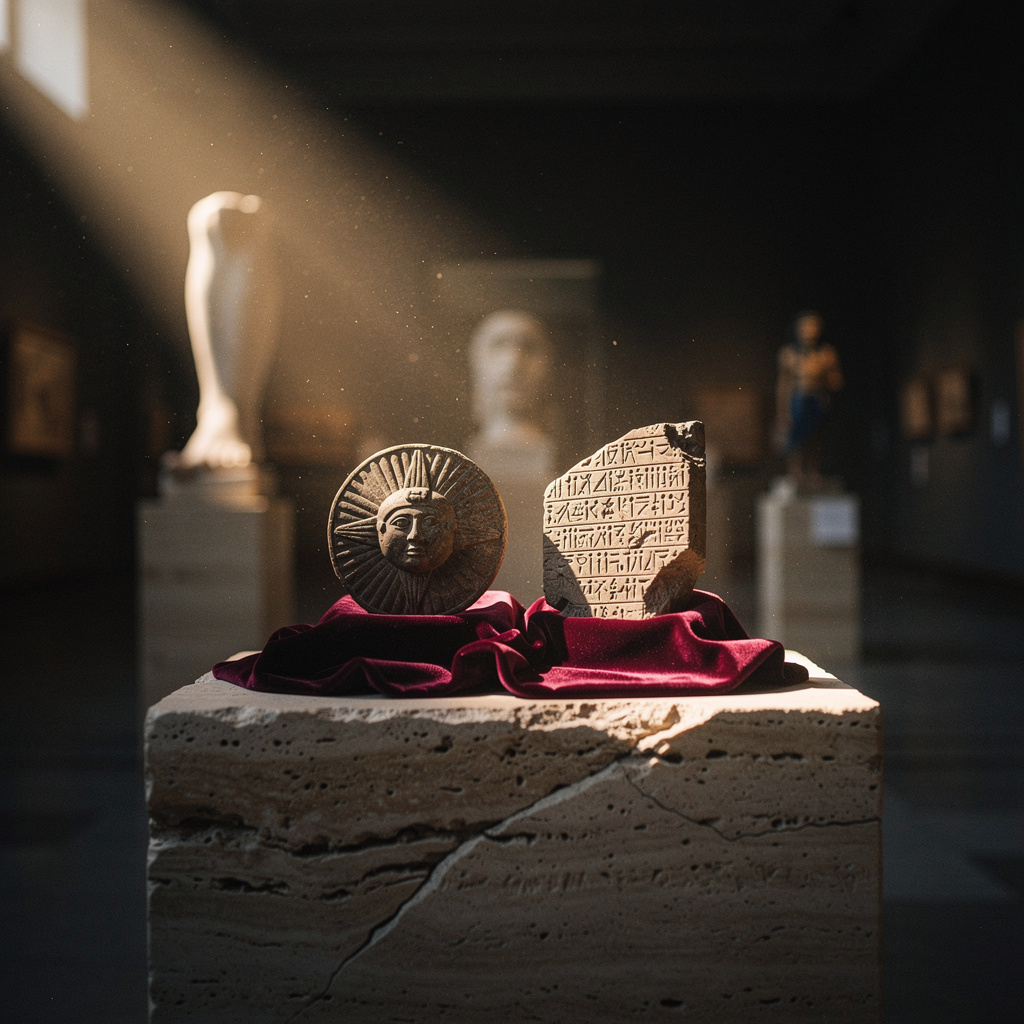
What is Architecture History Essentials?
Architecture History Essentials Certificate Program
Architecture History Essentials certificate program introduces learners to the methods, vocabulary, and long chronology of the built environment, moving from prehistoric and ancient Near Eastern traditions through Greek, Roman, Byzantine, Romanesque, Gothic, Islamic, South and East Asian, Renaissance, Baroque, revivalist, modernist, postmodern, and contemporary architecture. It is designed for students, design professionals, preservation advocates, educators, and curious generalists who want a structured framework for reading buildings and cities rather than a loose survey of monuments. The program emphasizes how construction techniques, ritual needs, urban form, patronage, and technological change shape architectural expression across cultures. Its main practical outcome is the ability to identify, compare, and contextualize buildings and architectural movements with confidence and appropriate historical vocabulary.
The curriculum is organized as a beginner-friendly progression: early lessons establish shared methods, vocabulary, and chronology, and later lessons build comparative depth across regions, periods, and modern global practice. Theory is balanced with practice through visual analysis, plan and section reading, comparative case studies, and evidence-based interpretation, so learners connect historical knowledge to real buildings and design debates. Across the program, learners develop five core skill areas: historical chronology, architectural vocabulary, visual and spatial analysis, cross-cultural comparison, and critical historiography. This program is worth choosing now because contemporary practice faces preservation decisions, climate adaptation, digital documentation, and global design questions that all require a grounded historical perspective.
What is Architecture History Essentials?
Architecture History Essentials is the study of how buildings, settlements, and designed landscapes have been conceived, constructed, used, and transformed across time and geography. Its scope ranges from prehistoric shelters and ancient civic complexes to religious monuments, colonial and industrial cities, modernist housing, and digitally designed contemporary projects. Core concepts include chronology, typology, construction and materials, spatial organization, ornament and representation, patronage, urban morphology, and the relationship between architecture and belief, power, economy, and environment. The subject also teaches a critical vocabulary for describing form, structure, and context without reducing buildings to style labels alone.
Architecture history matters today because every renovation, adaptive reuse project, heritage designation, and new intervention in an existing neighborhood depends on understanding what is historically significant and why. In industry, architects, planners, conservators, developers, and policymakers use historical analysis to assess building performance, cultural value, and design precedents; in academia, it anchors research in art history, archaeology, urban studies, and environmental humanities. Recent shifts toward global and decolonial perspectives, sustainability, digital documentation, and inclusive heritage have widened the field beyond a narrow canon of monuments. These changes make historical literacy essential for interpreting contested narratives and making responsible decisions about the built environment.
Mastering this subject builds a skill stack that combines chronological knowledge, close visual reading, comparative analysis, research synthesis, and historically informed argumentation. These capabilities support professional contexts such as architecture and design, preservation and heritage management, urban planning, museum and curatorial work, education, and cultural tourism. They also benefit personal contexts by enriching travel, civic engagement, and the ability to read everyday buildings and neighborhoods as evidence of social and technological change. Ultimately, architecture history turns observation into interpretation and gives learners a durable framework for asking better questions about the built world.
What Will This Course Bring You?
- Apply architectural vocabulary and chronological frameworks to classify major buildings and movements from prehistory through the contemporary era.
- Analyze how ancient Near Eastern and classical Greek and Roman buildings use materials, structural systems, and the classical orders to express civic and religious authority.
- Compare the spatial and structural strategies of Early Christian, Byzantine, Romanesque, and Gothic architecture in shaping communal worship and sacred experience.
- Evaluate how mosque, madrasa, and urban-form design in Islamic architecture responds to ritual needs, climate, and local building traditions.
- Interpret key architectural principles and site strategies in South and East Asian traditions, including temple, palace, and garden design.
- Distinguish Renaissance and Baroque design strategies by analyzing proportion, perspective, ornament, and spatial drama in representative buildings.
- Assess how revivalism, industrialization, and early modernism generated new architectural styles, materials, and functional planning approaches.
- Synthesize preservation, historiographical, and global perspectives to evaluate contemporary architecture's sustainability, digital tools, and cross-cultural practice.
Curriculum
12 Units1. Foundations: Methods, Vocabulary, and Chronology
1 hour
2. Prehistoric and Ancient Near Eastern Architecture
1 hour
3. Greek and Roman Architecture: Classical Orders and Engineering
1 hour
4. Early Christian, Byzantine, Romanesque, and Gothic Architecture
1 hour
5. Islamic Architecture: Mosques, Madrasas, and Urban Form
1 hour
6. Architecture of South and East Asia
1 hour
7. Renaissance and Baroque Architecture
1 hour
8. Revivals, Industrialization, and the Search for a New Style
1 hour
9. Early Modernism: Function, Technology, and the New Vision
1 hour
10. Postwar Modernism, Brutalism, and Postmodernism
1 hour
11. Contemporary Architecture: Sustainability, Digital Tools, and Global Practice
1 hour
12. Synthesis: Preservation, Historiography, and Global Perspectives
1 hour
Exam – Architecture History Essentials
20 Questions • 70% Pass • 30 min
Unlock All Units for Free
Create an account, enroll in the course, and start with the first unit right away.
Exam – Architecture History Essentials
20 Questions • Pass: 70% • 30 min
Course Duration
720
Total Minutes
12
Unit
1
Final Exam
~60
Min / Unit
Architecture History Essentials Certificate Program
Document Your Skill
Those who pass the 20-question, 30-minute exam with 70% receive the Architecture History Essentials Certificate.
Stand Out on Your CV
By adding your certificate to your CV, gain a professional reference in job applications and stand out from the crowd.
Career Advantage
With the verification code, employers can check your certificate instantly — a concrete way to show your growth.
CERTIFICATE FEE
At the end of the course, an online exam consisting of 20 questions with a 30-minute time limit is given. The exam appears automatically after you complete the topics. Anyone who scores at least 70 out of 100 on the certificate exam is awarded the Architecture History Essentials Document (certificate of attendance). You can add the certificate you earn to your CV for job applications in the many sectors listed above, and use it as a reference proving that you took this interactive course.
The Certificate of Achievement you receive with the Architecture History Essentials course program holds value that proves your personal and professional development in the business world. By adding it to your CV, it can serve as an important reference in your job applications. Moreover, compared with certificates from other private training institutions, Catch Wisdom certificates are offered to our participants at a much more affordable price.
The Architecture History Essentials course certificate is a document that proves, with a unique verification code, that you completed the course. Employers can instantly check its authenticity with this code, which helps you show your development concretely in your job applications.
For more information, we recommend visiting the Support page.
Certificate in 7 Languages
Earning success certificates from our courses is now more meaningful and global. With certificates available in Turkish, English, German, French, Spanish, Arabic, and Russian, we fully unlock the potential of students worldwide.
Why Certificate in 7 Languages?
-
01
Global Skill Development
Receiving your certificates in 7 different languages strengthens your communication skills as you engage with more people worldwide. It lets you operate more confidently and capably on the international stage.
-
02
International Job Opportunities
Employers may see your certificates in multiple languages as a sign of your ability to seize global opportunities. You can open more doors to new jobs and projects.
-
03
Cultural Richness
The chance to earn certificates in different languages helps you build closer ties with various cultures and broadens your worldview. It enriches your global perspective and deepens cultural understanding.
-
04
Ability to Participate in International Projects
Multilingual certificates give you an edge to work more effectively on international projects. They boost your chances of leadership and participation in diverse projects in the business world.
-
05
Prove Yourself on the Global Stage
Certificates in multiple languages give you the opportunity to present your skills and knowledge worldwide.
Language diversity opens worldwide opportunities. If you want to prove yourself in the international arena, join our online Architecture History Essentials course program and begin this journey with us.
Frequently Asked Questions (FAQ)
Is this course paid?
How do I join the course?
Can I take the course at my own pace?
How can I get my certificate?
What are the advantages of the certificate?
Boost Your Career
Take a new career step with the Architecture History Essentials course. Add your certificate to your CV, stand out in job applications, and open the door to new opportunities in the industry.
StartStudent Reviews
No reviews yet
Enroll in this course and be the first to leave a review about your experience with Architecture History Essentials.
Start