What is Home Composting?
Home Composting Training
The Home Composting certificate program is a comprehensive, hands-on training designed for beginners and experienced gardeners alike who want to turn kitchen scraps and yard waste into nutrient-rich soil. This course teaches the entire composting journey—from understanding the biological process of decomposition to building, maintaining, and harvesting your own compost pile, with dedicated lessons on vermicomposting and small-space solutions. By the end, you will have the practical skills to produce finished compost that improves soil health, reduces household waste, and supports sustainable gardening, whether you have a backyard, balcony, or indoor worm bin.
The program is structured as a beginner-friendly progression that balances scientific theory with immediate, actionable practice. You will start with the fundamentals of composting benefits and the science of decomposition, then move through method selection, pile construction, maintenance, and troubleshooting, culminating in advanced techniques like community composting. Core skill areas include feedstock management (greens and browns), moisture and aeration control, decomposition acceleration, and compost application—each reinforced through real-world examples and problem-solving scenarios. Choosing this program now is essential because composting is rapidly becoming a cornerstone of urban sustainability, and this course equips you with the confidence to reduce your environmental footprint while producing free, high-quality fertilizer for your plants.
What is Home Composting?
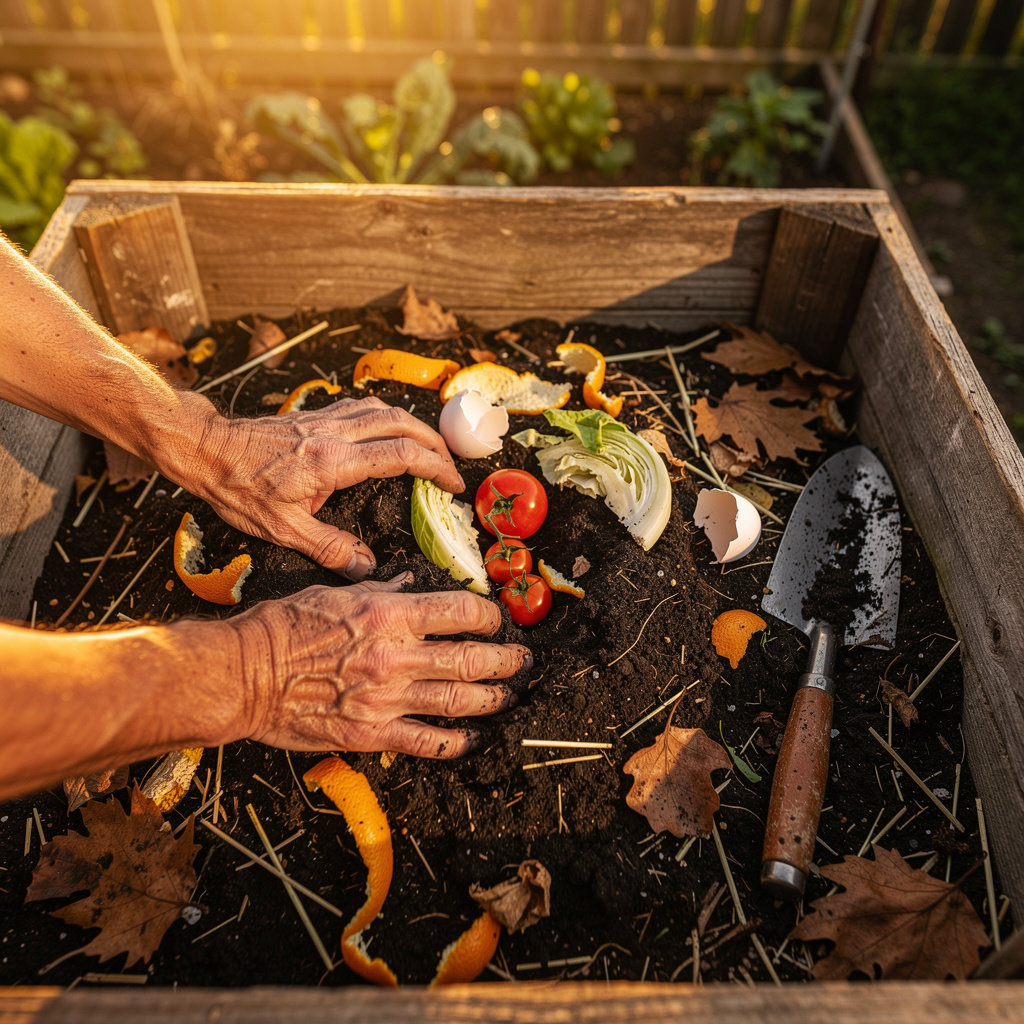
Home composting is the controlled aerobic decomposition of organic materials—such as fruit and vegetable scraps, leaves, grass clippings, and shredded paper—into a stable, humus-like substance called compost. The core concepts involve balancing carbon-rich "browns" and nitrogen-rich "greens," maintaining adequate moisture and oxygen, and fostering a thriving microbial ecosystem that breaks down matter over time. This practice transforms what would otherwise be landfill waste into a valuable soil amendment that improves soil structure, water retention, and nutrient availability for plants.
Today, home composting matters more than ever as communities and municipalities grapple with overflowing landfills and the environmental impact of organic waste, which accounts for nearly a third of household trash. In real life, composting is used by home gardeners, urban farmers, schools, and community gardens to close the loop on food waste, while academic research in soil science and microbiology continues to refine best practices. Recent shifts toward zero-waste living and climate-conscious gardening have elevated composting from a niche hobby to a mainstream sustainability practice, with many cities offering subsidized bins and educational programs to encourage household participation.
Mastering home composting builds a skill stack that includes biological literacy, resource management, and practical problem-solving—abilities that are directly applicable in personal gardening, community organizing, and even professional roles in environmental services or agricultural education. For individuals, it fosters self-sufficiency and a deeper connection to the natural cycles that sustain life, while for communities, it reduces waste management costs and creates a shared resource for green spaces. Whether you are a homeowner seeking to enrich your vegetable beds or an urban dweller exploring indoor worm composting, the knowledge gained from this subject empowers you to turn everyday organic waste into a tangible, beneficial asset.
Common Questions About Home Composting
Does the home composting certificate add a strong line to my CV?
Is this home composting training suitable for a complete beginner?
How does the C:N ratio affect the speed of home compost decomposition?
- Too much carbon (browns): the pile becomes dry and slow, as microbes lack nitrogen to build proteins.
- Too much nitrogen (greens): the pile turns slimy and releases ammonia, because excess nitrogen is lost as gas.
What is the correct moisture level for a home compost pile using the squeeze test?
Why do red wigglers work better than regular worms in vermicomposting?
What is the best way to layer greens and browns when building a compost pile?
- Base layer: spread a coarse brown layer like twigs or straw to allow airflow.
- Green layer: add a thin layer of nitrogen-rich greens such as kitchen scraps or grass clippings.
- Brown layer: cover with a similar layer of carbon-rich browns like leaves or cardboard.
- Repeat: continue alternating until the pile reaches about 1 to 1.5 meters in height.
Is it true that a home compost pile always produces a foul odor?
What Will This Course Bring You?
- Analyze the benefits and process of home composting to determine its environmental impact.
- Apply the science of decomposition to balance carbon and nitrogen ratios in a compost pile.
- Evaluate different composting methods to select the most suitable for your living situation.
- Build a layered compost pile using appropriate greens and browns for optimal decomposition.
- Implement a maintenance routine to monitor moisture, aeration, and temperature for efficient composting.
- Design strategies to speed up decomposition by adjusting particle size, moisture, and aeration.
- Harvest and apply finished compost to improve soil health in gardens or potted plants.
- Troubleshoot common compost problems such as odors, pests, or slow decomposition using diagnostic techniques.
Curriculum
12 Units1. Composting Basics: Benefits and Process
1 hour
2. The Science of Decomposition
1 hour
3. Choosing a Composting Method
1 hour
4. What to Compost: Greens and Browns
1 hour
5. Building Your Compost Pile
1 hour
6. Maintaining Your Compost Pile
1 hour
7. Speeding Up Decomposition
1 hour
8. Harvesting and Using Finished Compost
1 hour
9. Vermicomposting: Worm Composting Indoors
1 hour
10. Troubleshooting Common Compost Problems
1 hour
11. Composting in Small Spaces
1 hour
12. Advanced Techniques and Community Composting
1 hour
Exam – Home Composting
20 Questions • 70% Pass • 30 min
Unlock All Units for Free
Create an account, enroll in the course, and start with the first unit right away.
Exam – Home Composting
20 Questions • Pass: 70% • 30 min
Course Duration
720
Total Minutes
12
Unit
1
Final Exam
~60
Min / Unit
Home Composting Certificate Program
Document Your Skill
Those who pass the 20-question, 30-minute exam with 70% receive the Home Composting Certificate.
Stand Out on Your CV
By adding your certificate to your CV, gain a professional reference in job applications and stand out from the crowd.
Career Advantage
Catch Wisdom certificates are recognized by HR departments and increase career opportunities.
CERTIFICATE FEE
At the end of the course, an online exam consisting of 20 questions with a 30-minute time limit is given. The exam appears automatically after you complete the topics. Anyone who scores at least 70 out of 100 on the certificate exam is awarded the Home Composting Document (certificate of attendance). You can add the certificate you earn to your CV for job applications in the many sectors listed above, and use it as a reference proving that you took this interactive course.
The Certificate of Achievement you receive with the Home Composting course program holds value that proves your personal and professional development in the business world. By adding it to your CV, it can serve as an important reference in your job applications. Moreover, compared with certificates from other private training institutions, Catch Wisdom certificates are offered to our participants at a much more affordable price.
Because HR departments recognize Catch Wisdom as a reputable institution in this field, they value these certificates and may evaluate your job applications favorably. For this reason, a Home Composting course certificate from Catch Wisdom can make your applications more attractive and place you in an advantageous position in the business world.
For more information, we recommend visiting the Support page.
Certificate in 7 Languages
Earning success certificates from our courses is now more meaningful and global. With certificates available in Turkish, English, German, French, Spanish, Arabic, and Russian, we fully unlock the potential of students worldwide.
Why Certificate in 7 Languages?
-
01
Global Skill Development
Receiving your certificates in 7 different languages strengthens your communication skills as you engage with more people worldwide. It lets you operate more confidently and capably on the international stage.
-
02
International Job Opportunities
Employers may see your certificates in multiple languages as a sign of your ability to seize global opportunities. You can open more doors to new jobs and projects.
-
03
Cultural Richness
The chance to earn certificates in different languages helps you build closer ties with various cultures and broadens your worldview. It enriches your global perspective and deepens cultural understanding.
-
04
Ability to Participate in International Projects
Multilingual certificates give you an edge to work more effectively on international projects. They boost your chances of leadership and participation in diverse projects in the business world.
-
05
Prove Yourself on the Global Stage
Certificates in multiple languages let you showcase your skills and knowledge worldwide. You can become an internationally recognized professional.
Language diversity opens worldwide opportunities. If you want to prove yourself in the international arena, join our online Home Composting course program and begin this journey with us.
Frequently Asked Questions (FAQ)
Is this course paid?
How do I join the course?
Can I take the course at my own pace?
How can I get my certificate?
What are the advantages of the Certified Certificate?
Boost Your Career
Take a new career step with the Home Composting course. Add your certificate to your CV, stand out in job applications, and open the door to new opportunities in the industry.
StartStudent Reviews
No reviews yet
Enroll in this course and be the first to leave a review about your experience with Home Composting.
Start