What is Home Energy Saving?
Home Energy Saving Certificate Program
Home Energy Saving certificate program teaches homeowners, renters, facility caretakers, and early-career energy advisors how to understand a home’s energy use and turn that understanding into practical savings. The course covers baseline energy use, bill and tariff reading, heating and cooling efficiency, insulation and air sealing, windows, doors, ventilation, water heating, lighting, plug loads, appliance efficiency, solar and renewable options, behavior and scheduling, retrofit planning, costs and incentives, and measurement of savings. It is designed for people who want a structured, non-technical path into home energy assessment and improvement, including those managing their own households and staff supporting energy programs. The main practical outcome is the ability to diagnose where energy is wasted, prioritize cost-effective improvements, and verify whether changes actually reduce consumption.
The program is structured as a beginner-friendly progression from foundational energy use and baseline measurement through bill analysis, building envelope and systems efficiency, renewable options, and finally retrofit planning and savings verification. Each stage balances explanatory theory with practical exercises such as interpreting usage patterns, evaluating heating and cooling performance, assessing insulation and air sealing opportunities, and comparing appliance and hot water choices. Across the lessons, learners build five core skill areas: energy accounting and bill interpretation, building envelope and HVAC efficiency, water and appliance load management, renewable and retrofit decision-making, and behavior-based savings and measurement. This program is worth choosing now because rising energy costs, incentive programs, and greater attention to home comfort and resilience make practical energy-saving knowledge immediately useful for households, property managers, and community energy initiatives.
What is Home Energy Saving?
Home energy saving is the practice of reducing the amount of energy a household consumes while maintaining or improving comfort, safety, and daily function. Its scope includes the building envelope, heating and cooling systems, water heating, lighting, appliances, plug loads, renewable generation, and the occupancy behaviors that shape how equipment is used. Core concepts include energy baselines, usage patterns, tariffs, thermal performance, air leakage, equipment efficiency, load profiles, cost-effectiveness, and measurement and verification. It also involves planning improvements in a sensible sequence so that low-cost operational changes and larger retrofits work together rather than against each other.
Home energy saving matters today because household energy costs, grid reliability concerns, and climate goals all intersect in the way homes use electricity, gas, and other fuels. In real life, it is used by homeowners comparing bills and upgrade quotes, by contractors and assessors prioritizing efficiency work, by housing providers managing portfolios, and by utilities and public agencies designing efficiency and incentive programs. In industry and academia, it supports building performance analysis, energy modeling, program evaluation, and research on occupant behavior and retrofit economics. Recent shifts toward electrification, heat pumps, smart meters, time-varying tariffs, solar and storage, and verified savings have made energy-saving decisions more data-rich and more consequential than simply changing a few light bulbs.
Mastering home energy saving builds a skill stack that combines energy literacy, building science awareness, financial prioritization, and evidence-based follow-through. That stack includes reading consumption data, recognizing efficiency opportunities, comparing technologies and tariffs, estimating costs and incentives, and checking whether interventions deliver the intended results. These capabilities are useful in personal household management, property and facilities roles, energy advising, contractor coordination, community sustainability work, and early-stage building performance analysis. The subject therefore connects technical understanding with practical decision-making, helping people act confidently on energy use without treating every upgrade as an isolated purchase.
What Will This Course Bring You?
- Build a home energy baseline by inventorying major appliances, lighting, and heating and cooling systems and recording typical usage patterns.
- Analyze utility bills and tariff structures to identify seasonal usage patterns, peak-rate periods, and cost-saving opportunities for a specific household.
- Evaluate heating and cooling efficiency by comparing equipment options, thermostat settings, and maintenance practices against a home's baseline consumption.
- Design an insulation and air-sealing plan that prioritizes attic, wall, and foundation leakage areas based on observed comfort and energy-loss symptoms.
- Apply window, door, and ventilation strategies to reduce drafts and moisture problems while maintaining adequate indoor air quality in a home.
- Calculate water-heating and appliance energy use, then recommend temperature, insulation, fixture, and appliance-setting changes that reduce hot-water and kitchen-laundry consumption.
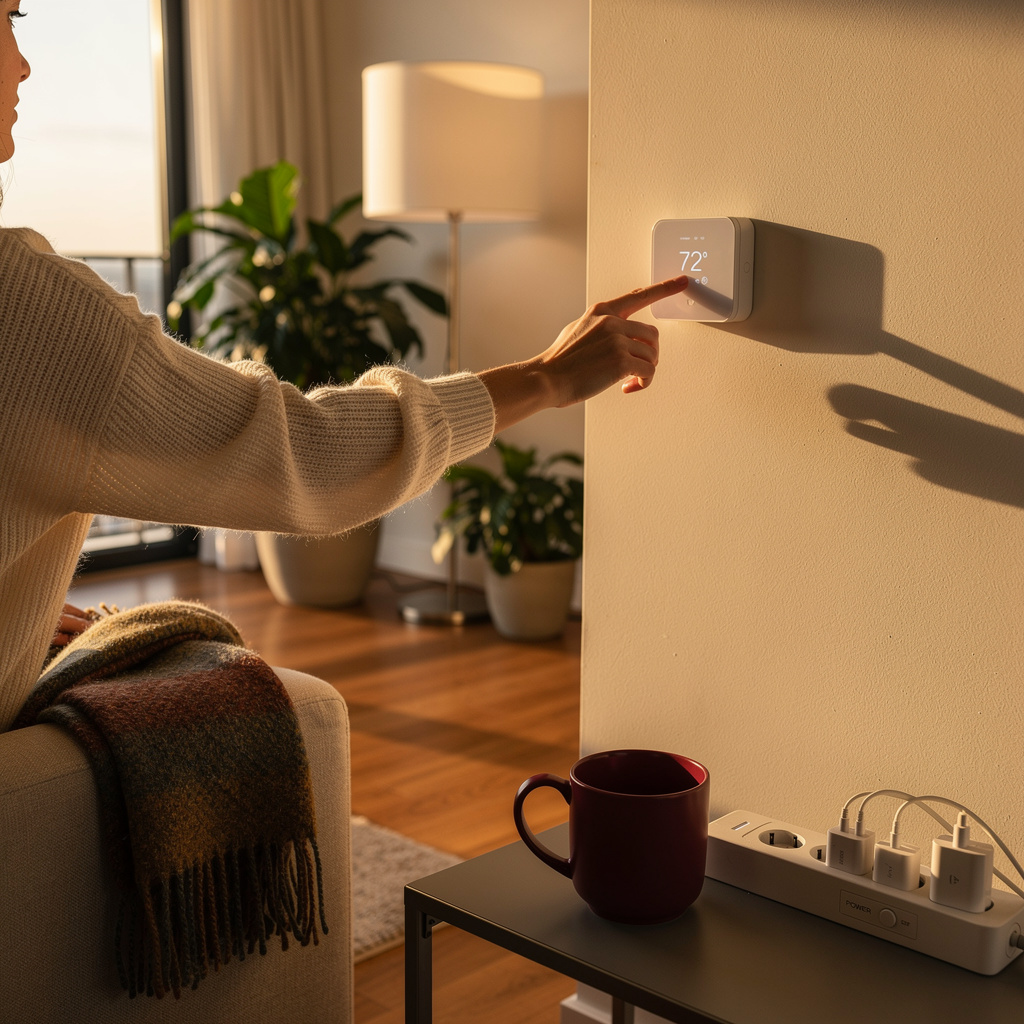
- Implement lighting, plug-load, and occupancy scheduling strategies, such as LEDs, smart strips, and timed routines, to cut unnecessary electricity use.
- Design a phased retrofit plan that compares solar and renewable options, estimates costs and incentives, and defines metrics for verifying long-term savings.
Curriculum
12 Units1. Home Energy Use Fundamentals and Baseline
1 hour
2. Reading Bills, Tariffs, and Usage Patterns
1 hour
3. Heating and Cooling Efficiency
1 hour
4. Insulation and Air Sealing
1 hour
5. Windows, Doors, and Ventilation
1 hour
6. Water Heating and Hot Water Use
1 hour
7. Lighting and Plug Loads
1 hour
8. Kitchen and Laundry Appliance Efficiency
1 hour
9. Home Solar and Renewable Options
1 hour
10. Behavior, Scheduling, and Occupancy Strategies
1 hour
11. Retrofit Planning, Costs, and Incentives
1 hour
12. Measuring Savings and Maintaining Results
1 hour
Exam – Home Energy Saving
20 Questions • 70% Pass • 30 min
Unlock All Units for Free
Create an account, enroll in the course, and start with the first unit right away.
Exam – Home Energy Saving
20 Questions • Pass: 70% • 30 min
Course Duration
720
Total Minutes
12
Unit
1
Final Exam
~60
Min / Unit
Home Energy Saving Certificate Program
Document Your Skill
Those who pass the 20-question, 30-minute exam with 70% receive the Home Energy Saving Certificate.
Stand Out on Your CV
By adding your certificate to your CV, gain a professional reference in job applications and stand out from the crowd.
Career Advantage
With the verification code, employers can check your certificate instantly — a concrete way to show your growth.
CERTIFICATE FEE
At the end of the course, an online exam consisting of 20 questions with a 30-minute time limit is given. The exam appears automatically after you complete the topics. Anyone who scores at least 70 out of 100 on the certificate exam is awarded the Home Energy Saving Document (certificate of attendance). You can add the certificate you earn to your CV for job applications in the many sectors listed above, and use it as a reference proving that you took this interactive course.
The Certificate of Achievement you receive with the Home Energy Saving course program holds value that proves your personal and professional development in the business world. By adding it to your CV, it can serve as an important reference in your job applications. Moreover, compared with certificates from other private training institutions, Catch Wisdom certificates are offered to our participants at a much more affordable price.
The Home Energy Saving course certificate is a document that proves, with a unique verification code, that you completed the course. Employers can instantly check its authenticity with this code, which helps you show your development concretely in your job applications.
For more information, we recommend visiting the Support page.
Certificate in 7 Languages
Earning success certificates from our courses is now more meaningful and global. With certificates available in Turkish, English, German, French, Spanish, Arabic, and Russian, we fully unlock the potential of students worldwide.
Why Certificate in 7 Languages?
-
01
Global Skill Development
Receiving your certificates in 7 different languages strengthens your communication skills as you engage with more people worldwide. It lets you operate more confidently and capably on the international stage.
-
02
International Job Opportunities
Employers may see your certificates in multiple languages as a sign of your ability to seize global opportunities. You can open more doors to new jobs and projects.
-
03
Cultural Richness
The chance to earn certificates in different languages helps you build closer ties with various cultures and broadens your worldview. It enriches your global perspective and deepens cultural understanding.
-
04
Ability to Participate in International Projects
Multilingual certificates give you an edge to work more effectively on international projects. They boost your chances of leadership and participation in diverse projects in the business world.
-
05
Prove Yourself on the Global Stage
Certificates in multiple languages give you the opportunity to present your skills and knowledge worldwide.
Language diversity opens worldwide opportunities. If you want to prove yourself in the international arena, join our online Home Energy Saving course program and begin this journey with us.
Frequently Asked Questions (FAQ)
Is this course paid?
How do I join the course?
Can I take the course at my own pace?
How can I get my certificate?
What are the advantages of the certificate?
Boost Your Career
Take a new career step with the Home Energy Saving course. Add your certificate to your CV, stand out in job applications, and open the door to new opportunities in the industry.
StartStudent Reviews
No reviews yet
Enroll in this course and be the first to leave a review about your experience with Home Energy Saving.
Start