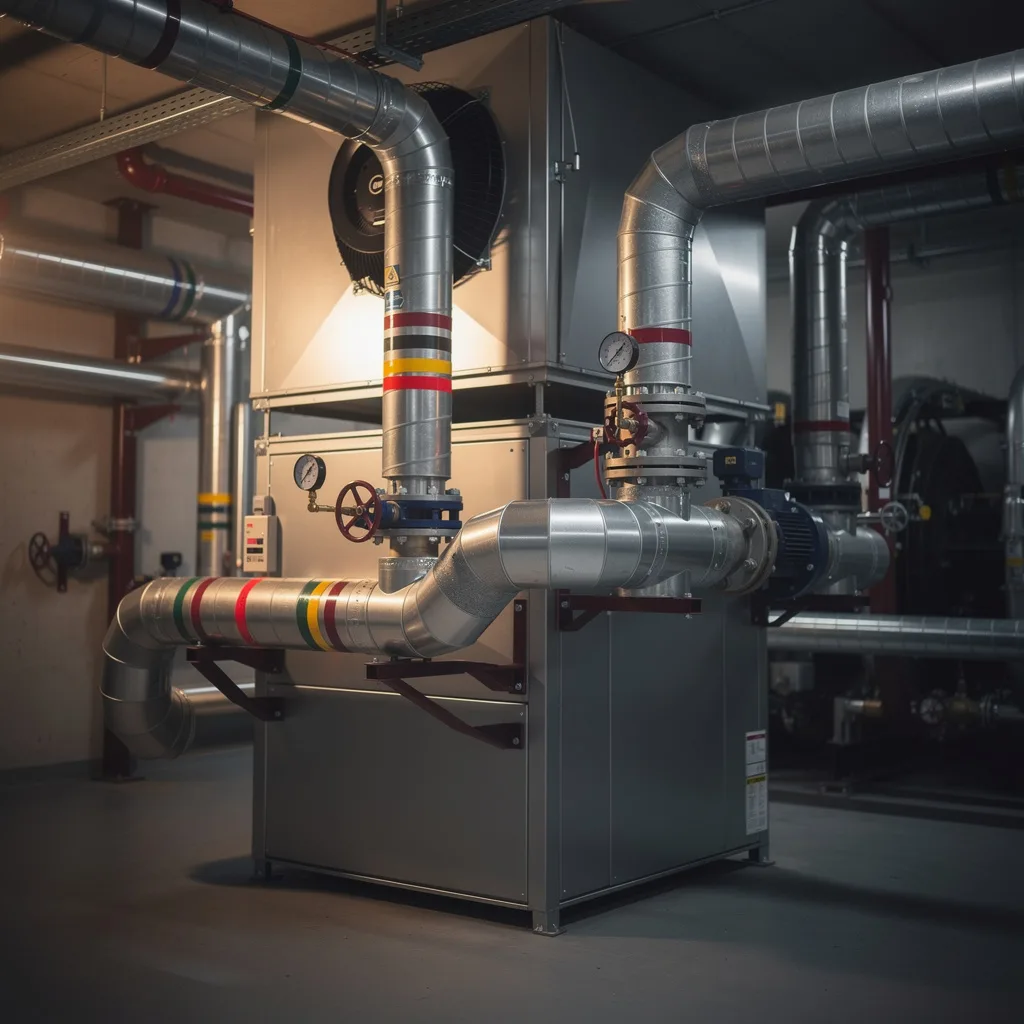
What is HVAC Refrigeration Basics?
HVAC Refrigeration Basics Training
The HVAC Refrigeration Basics certificate program teaches the core principles of mechanical refrigeration as applied to heating, ventilation, and air conditioning systems. This course is designed for aspiring technicians, maintenance professionals, and career changers who need a solid foundation in refrigeration theory and hands-on practice. The main practical outcome is the ability to safely install, troubleshoot, and maintain residential and light commercial refrigeration systems using industry-standard tools and diagnostic methods.
The program follows a beginner-friendly progression that starts with the fundamentals of heat transfer and refrigerant properties, then moves through each component of the refrigeration cycle—compressors, condensers, evaporators, and expansion devices. It balances theoretical knowledge with practical skills across four core areas: system operation, electrical fundamentals, troubleshooting and diagnostics, and installation and maintenance. With the growing demand for energy-efficient cooling and the phase-down of high-GWP refrigerants, this training equips learners with the up-to-date expertise needed to enter or advance in the HVAC field right now.
What is HVAC Refrigeration Basics?
HVAC Refrigeration Basics is the study of how heat is moved from one place to another using a refrigerant in a closed loop. Its core concepts include the vapor-compression cycle, the thermodynamic properties of refrigerants, and the function of key components such as compressors, condensers, expansion devices, and evaporators. The subject also covers system accessories, controls, and the electrical circuits that power and regulate refrigeration equipment.
Today, refrigeration is essential across nearly every sector—from food preservation and cold storage to comfort cooling in homes, offices, and data centers. Recent shifts toward low-global-warming-potential refrigerants and stricter energy-efficiency regulations have made a thorough understanding of refrigeration basics more critical than ever. Technicians must now navigate new refrigerants, variable-speed compressors, and electronic expansion valves, all of which build on the same fundamental principles taught in this subject.
Mastering HVAC Refrigeration Basics builds a skill stack that includes thermodynamic reasoning, electrical diagnostics, and mechanical system analysis. These competencies are directly applicable to roles such as HVAC service technician, refrigeration installer, building maintenance engineer, and energy auditor. Even professionals in related fields—like facility management or green building design—benefit from understanding how refrigeration systems operate, fail, and can be optimized for performance and sustainability.
Common Questions About HVAC Refrigeration Basics
Can someone with no experience take this HVAC refrigeration course?
Does this course cover everything needed for EPA Section 608 certification?
How does the refrigeration cycle actually move heat uphill?
- Compression: The compressor increases refrigerant pressure and temperature, making it hotter than the outside air.
- Condensation: The hot refrigerant releases heat to the outdoors and condenses into a liquid.
- Expansion: The expansion device drops pressure, cooling the refrigerant below the indoor air temperature.
- Evaporation: The cold refrigerant absorbs heat from the indoor space, evaporating back to a vapor.
What is the difference between superheat and subcooling?
Why do compressors need oil in a refrigeration system?
How does a thermostatic expansion valve control superheat?
Is it true that bigger refrigerant charge always cools better?
What Will This Course Bring You?
- Analyze the fundamental principles of thermodynamics and heat transfer as applied to refrigeration systems.
- Evaluate the properties and environmental impacts of common refrigerants to select appropriate ones for specific applications.
- Diagram and explain the four main components of the refrigeration cycle and their functions.
- Compare different types of compressors, condensers, evaporators, and expansion devices to determine their suitability for various systems.
- Apply electrical fundamentals to interpret wiring diagrams and troubleshoot control circuits in HVAC systems.
- Implement systematic diagnostic procedures to identify and resolve common refrigeration system faults.
- Demonstrate safe installation and maintenance practices in compliance with industry regulations and standards.
- Calculate heating and cooling loads for a given space using standard methods to design an appropriate system.
Curriculum
12 Units1. Fundamentals of Refrigeration
1 hour
2. Refrigerants and Their Properties
1 hour
3. The Refrigeration Cycle
1 hour
4. Compressors
1 hour
5. Condensers and Evaporators
1 hour
6. Expansion Devices
1 hour
7. System Accessories and Controls
1 hour
8. Electrical Fundamentals for HVAC
1 hour
9. Troubleshooting and Diagnostics
1 hour
10. System Installation and Maintenance
1 hour
11. Safety and Regulations
1 hour
12. System Design and Load Calculations
1 hour
Exam – HVAC Refrigeration Basics
20 Questions • 70% Pass • 30 min
Unlock All Units for Free
Create an account, enroll in the course, and start with the first unit right away.
Exam – HVAC Refrigeration Basics
20 Questions • Pass: 70% • 30 min
Course Duration
720
Total Minutes
12
Unit
1
Final Exam
~60
Min / Unit
HVAC Refrigeration Basics Certificate Program
Document Your Skill
Those who pass the 20-question, 30-minute exam with 70% receive the HVAC Refrigeration Basics Certificate.
Stand Out on Your CV
By adding your certificate to your CV, gain a professional reference in job applications and stand out from the crowd.
Career Advantage
Catch Wisdom certificates are recognized by HR departments and increase career opportunities.
CERTIFICATE FEE
At the end of the course, an online exam consisting of 20 questions with a 30-minute time limit is given. The exam appears automatically after you complete the topics. Anyone who scores at least 70 out of 100 on the certificate exam is awarded the HVAC Refrigeration Basics Document (certificate of attendance). You can add the certificate you earn to your CV for job applications in the many sectors listed above, and use it as a reference proving that you took this interactive course.
The Certificate of Achievement you receive with the HVAC Refrigeration Basics course program holds value that proves your personal and professional development in the business world. By adding it to your CV, it can serve as an important reference in your job applications. Moreover, compared with certificates from other private training institutions, Catch Wisdom certificates are offered to our participants at a much more affordable price.
Because HR departments recognize Catch Wisdom as a reputable institution in this field, they value these certificates and may evaluate your job applications favorably. For this reason, a HVAC Refrigeration Basics course certificate from Catch Wisdom can make your applications more attractive and place you in an advantageous position in the business world.
For more information, we recommend visiting the Support page.
Certificate in 7 Languages
Earning success certificates from our courses is now more meaningful and global. With certificates available in Turkish, English, German, French, Spanish, Arabic, and Russian, we fully unlock the potential of students worldwide.
Why Certificate in 7 Languages?
-
01
Global Skill Development
Receiving your certificates in 7 different languages strengthens your communication skills as you engage with more people worldwide. It lets you operate more confidently and capably on the international stage.
-
02
International Job Opportunities
Employers may see your certificates in multiple languages as a sign of your ability to seize global opportunities. You can open more doors to new jobs and projects.
-
03
Cultural Richness
The chance to earn certificates in different languages helps you build closer ties with various cultures and broadens your worldview. It enriches your global perspective and deepens cultural understanding.
-
04
Ability to Participate in International Projects
Multilingual certificates give you an edge to work more effectively on international projects. They boost your chances of leadership and participation in diverse projects in the business world.
-
05
Prove Yourself on the Global Stage
Certificates in multiple languages let you showcase your skills and knowledge worldwide. You can become an internationally recognized professional.
Language diversity opens worldwide opportunities. If you want to prove yourself in the international arena, join our online HVAC Refrigeration Basics course program and begin this journey with us.
Frequently Asked Questions (FAQ)
Is this course paid?
How do I join the course?
Can I take the course at my own pace?
How can I get my certificate?
What are the advantages of the Certified Certificate?
Boost Your Career
Take a new career step with the HVAC Refrigeration Basics course. Add your certificate to your CV, stand out in job applications, and open the door to new opportunities in the industry.
StartStudent Reviews
No reviews yet
Enroll in this course and be the first to leave a review about your experience with HVAC Refrigeration Basics.
Start