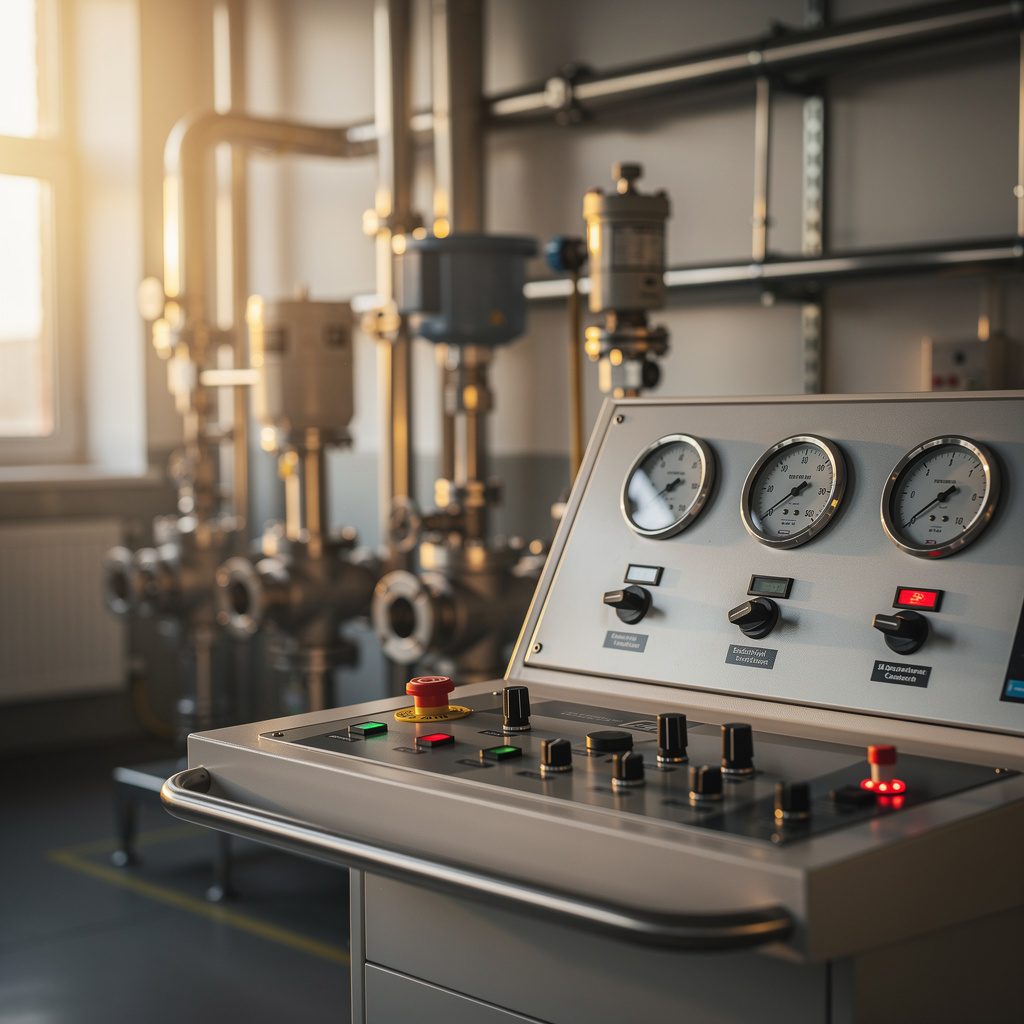
What is Industrial Instrumentation Fundamentals?
Industrial Instrumentation Fundamentals Training
The Industrial Instrumentation Fundamentals certificate program provides a practical foundation in how process plants measure, transmit, and act on variables such as pressure, temperature, level, flow, and composition. It is designed for instrument technicians, maintenance personnel, process operators, and early-career engineers who need to work confidently around field instruments and control loops. Learners examine measurement performance and calibration, signal transmission and field wiring, hazardous-area installation practices, control valves and positioners, and PLC/DCS/HMI interfaces. The main practical outcome is the ability to specify, install, calibrate, and troubleshoot common instrumentation loops using safe, documented, and industry-aligned methods.
The program follows a beginner-friendly progression from process-control fundamentals and measurement principles through specific instrument families to installation, integration, and loop documentation. Each topic balances underlying theory—such as accuracy, rangeability, and calibration error—with field-oriented practice in wiring, configuration, verification, and fault finding. Across the twelve lessons, learners build four core skill areas: measurement and calibration, installation and signal integrity, control hardware and interfaces, and documentation plus troubleshooting. This structure suits people entering the field or cross-skilling from adjacent roles, especially as plants adopt smarter instruments, tighter safety requirements, and digital maintenance workflows.
What is Industrial Instrumentation Fundamentals?
Industrial instrumentation fundamentals is the discipline of measuring process variables and transmitting reliable signals so that control systems can monitor, decide, and actuate. Its scope covers sensing elements, transmitters, signal standards, wiring practices, final control elements, and the documentation that ties a loop together. Core concepts include measurement accuracy, range and span, calibration tolerance, signal conditioning, loop integrity, and safe installation in classified areas. The subject connects physical process behavior to control-room information, making it central to stable, efficient, and safe operations.
Instrumentation matters today because modern plants depend on dense, trustworthy measurement for quality control, energy efficiency, emissions monitoring, and safety interlocks. It is used across oil and gas, chemicals, pharmaceuticals, water treatment, power generation, food processing, and manufacturing, where small measurement errors can cascade into product loss or hazards. Recent shifts toward smart transmitters, digital field protocols, remote diagnostics, and data-driven reliability have raised the value of professionals who understand both the sensor and the signal path. Regulatory pressure on hazardous-area compliance and functional safety also keeps instrumentation knowledge in steady demand.
Mastering the subject builds a skill stack that spans instrument selection, installation review, calibration, signal verification, loop documentation, and systematic troubleshooting. These capabilities are valuable in commissioning, maintenance, reliability engineering, operations support, and project engineering, where decisions depend on interpreting field data and loop drawings accurately. The knowledge also supports personal career growth for technicians moving into specialist roles and for engineers who need to communicate with instrument teams. Because instrumentation sits between the process and the control system, that skill stack remains portable across industries and plant generations.
What Will This Course Bring You?
- Analyze the role of industrial instrumentation within process control loops and explain how sensors, transmitters, and final elements interact to maintain process variables.
- Evaluate measurement performance specifications and apply calibration procedures to industrial transmitters using traceable reference standards and documented test results.
- Select and interpret pressure and temperature measurement instruments by matching range, accuracy, and process conditions to specified industrial applications.
- Compare level and flow measurement technologies and justify instrument selection based on fluid properties, vessel geometry, and required measurement accuracy.
- Apply analytical and gas detection instrument fundamentals to specify sensor types, sampling methods, and alarm setpoints for common industrial safety monitoring tasks.
- Implement signal transmission and field wiring practices in hazardous areas by selecting appropriate wiring methods, barriers, and enclosure protections for industrial instruments.
- Analyze control valve, actuator, and positioner operation to select and configure final control elements that meet process flow and safety requirements.
- Use PLC, DCS, and HMI interface concepts to perform loop checks and document troubleshooting findings for instrument control systems.
Curriculum
12 Units1. Instrumentation in Process Control
1 hour
2. Measurement Performance and Calibration
1 hour
3. Pressure Measurement Instruments
1 hour
4. Temperature Measurement Instruments
1 hour
5. Level Measurement Instruments
1 hour
6. Flow Measurement Instruments
1 hour
7. Analytical and Gas Detection Instruments
1 hour
8. Signal Transmission and Field Wiring
1 hour
9. Installation and Hazardous Area Practices
1 hour
10. Control Valves, Actuators, and Positioners
1 hour
11. PLC, DCS, and HMI Interfaces
1 hour
12. Documentation, Loop Checks, and Troubleshooting
1 hour
Exam – Industrial Instrumentation Fundamentals
20 Questions • 70% Pass • 30 min
Unlock All Units for Free
Create an account, enroll in the course, and start with the first unit right away.
Exam – Industrial Instrumentation Fundamentals
20 Questions • Pass: 70% • 30 min
Course Duration
720
Total Minutes
12
Unit
1
Final Exam
~60
Min / Unit
Industrial Instrumentation Fundamentals Certificate Program
Document Your Skill
Those who pass the 20-question, 30-minute exam with 70% receive the Industrial Instrumentation Fundamentals Certificate.
Stand Out on Your CV
By adding your certificate to your CV, gain a professional reference in job applications and stand out from the crowd.
Career Advantage
With the verification code, employers can check your certificate instantly — a concrete way to show your growth.
CERTIFICATE FEE
At the end of the course, an online exam consisting of 20 questions with a 30-minute time limit is given. The exam appears automatically after you complete the topics. Anyone who scores at least 70 out of 100 on the certificate exam is awarded the Industrial Instrumentation Fundamentals Document (certificate of attendance). You can add the certificate you earn to your CV for job applications in the many sectors listed above, and use it as a reference proving that you took this interactive course.
The Certificate of Achievement you receive with the Industrial Instrumentation Fundamentals course program holds value that proves your personal and professional development in the business world. By adding it to your CV, it can serve as an important reference in your job applications. Moreover, compared with certificates from other private training institutions, Catch Wisdom certificates are offered to our participants at a much more affordable price.
The Industrial Instrumentation Fundamentals course certificate is a document that proves, with a unique verification code, that you completed the course. Employers can instantly check its authenticity with this code, which helps you show your development concretely in your job applications.
For more information, we recommend visiting the Support page.
Certificate in 7 Languages
Earning success certificates from our courses is now more meaningful and global. With certificates available in Turkish, English, German, French, Spanish, Arabic, and Russian, we fully unlock the potential of students worldwide.
Why Certificate in 7 Languages?
-
01
Global Skill Development
Receiving your certificates in 7 different languages strengthens your communication skills as you engage with more people worldwide. It lets you operate more confidently and capably on the international stage.
-
02
International Job Opportunities
Employers may see your certificates in multiple languages as a sign of your ability to seize global opportunities. You can open more doors to new jobs and projects.
-
03
Cultural Richness
The chance to earn certificates in different languages helps you build closer ties with various cultures and broadens your worldview. It enriches your global perspective and deepens cultural understanding.
-
04
Ability to Participate in International Projects
Multilingual certificates give you an edge to work more effectively on international projects. They boost your chances of leadership and participation in diverse projects in the business world.
-
05
Prove Yourself on the Global Stage
Certificates in multiple languages give you the opportunity to present your skills and knowledge worldwide.
Language diversity opens worldwide opportunities. If you want to prove yourself in the international arena, join our online Industrial Instrumentation Fundamentals course program and begin this journey with us.
Frequently Asked Questions (FAQ)
Is this course paid?
How do I join the course?
Can I take the course at my own pace?
How can I get my certificate?
What are the advantages of the certificate?
Boost Your Career
Take a new career step with the Industrial Instrumentation Fundamentals course. Add your certificate to your CV, stand out in job applications, and open the door to new opportunities in the industry.
StartStudent Reviews
No reviews yet
Enroll in this course and be the first to leave a review about your experience with Industrial Instrumentation Fundamentals.
Start