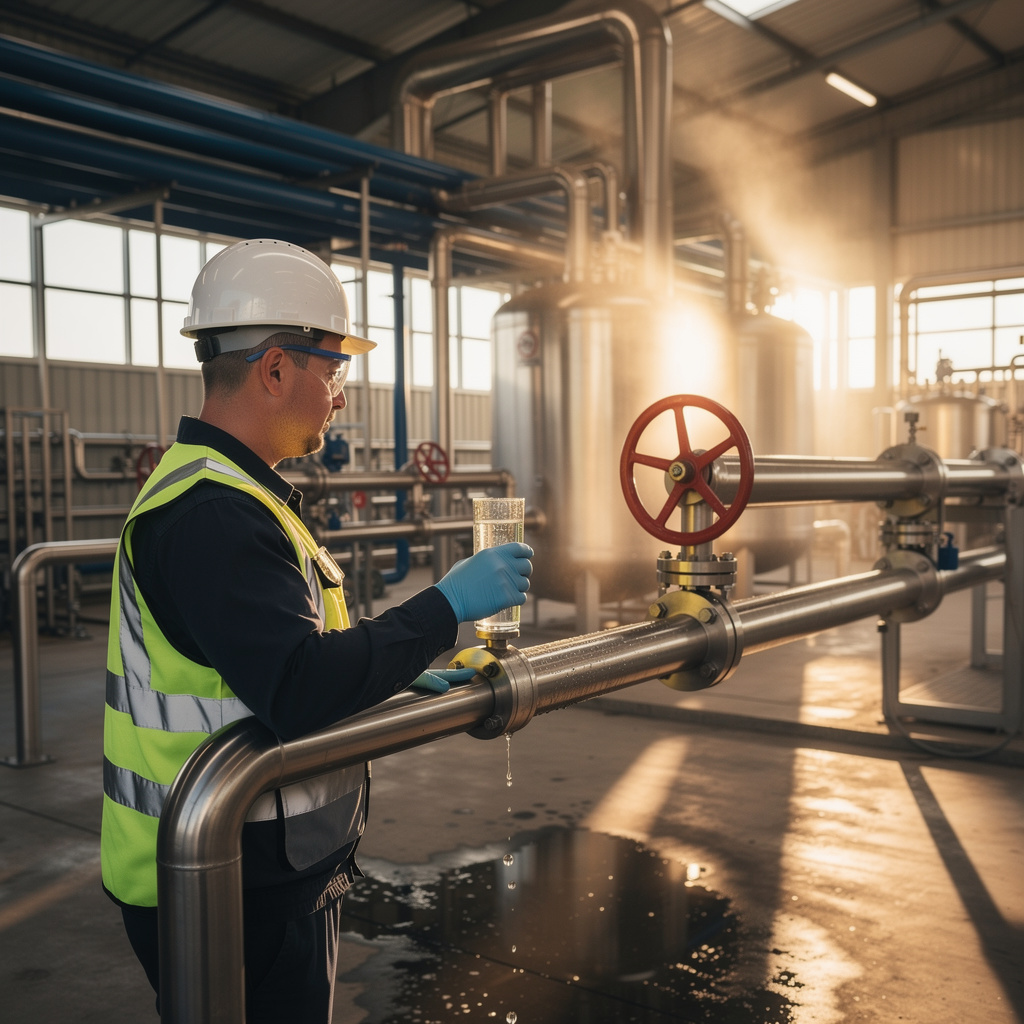
What is Industrial Water Footprint Reduction?
Industrial Water Footprint Reduction Training
The Industrial Water Footprint Reduction certificate program equips engineers, sustainability managers, and operations leaders with a practical framework for quantifying, minimizing, and governing water use across industrial systems. This course moves beyond theory, guiding participants through the full lifecycle of water stewardship—from measuring baseline footprints to implementing reuse loops and engaging supply chain partners. By the end, you will have a concrete reduction roadmap tailored to your facility’s processes, complete with benchmarking targets and digital monitoring strategies.
The program is structured for progressive mastery, starting with foundational concepts like the Water Footprint Network’s metrics and moving through hands-on modules on process efficiency, grey water management, and alternative sourcing. It balances technical depth with strategic thinking, building four core skill areas: measurement and benchmarking, conservation engineering, supply chain collaboration, and stewardship program design. With global water stress intensifying and regulatory pressure rising, this training positions you to turn compliance into competitive advantage—while future-proofing your operations against resource volatility.
What is Industrial Water Footprint Reduction? — in en
Industrial water footprint reduction is the systematic practice of assessing and lowering the total volume of freshwater consumed and polluted across an industrial value chain. It encompasses direct operational use—cooling, washing, processing—as well as indirect impacts embedded in raw materials, energy, and logistics. Core concepts include green, blue, and grey water footprints, which respectively account for rainwater, surface/groundwater withdrawal, and the freshwater required to dilute pollutants to safe standards.
Today, this discipline is critical as industries face unprecedented water scarcity, stricter discharge regulations, and investor scrutiny over environmental, social, and governance (ESG) performance. Real-world applications span manufacturing, food and beverage, textiles, chemicals, and energy, where companies like Unilever and Intel have used footprint analysis to cut water use by 30–50% in high-risk basins. Recent shifts include the adoption of digital twin simulations, real-time sensor analytics, and circular water models that treat effluent as a resource rather than waste.
Mastering this subject builds a versatile skill stack combining hydrology, process engineering, data analytics, and stakeholder engagement. Professionals who grasp water footprint reduction can drive cost savings, secure operational licenses, and lead corporate sustainability initiatives—whether in plant management, environmental consulting, or supply chain strategy. For organizations, the knowledge translates into resilience against droughts, reduced treatment liabilities, and stronger reputational capital in a water-constrained world.
Common Questions About Industrial Water Footprint Reduction
How does the Industrial Water Footprint Reduction certificate boost my career?
Is this water footprint course suitable for someone with no engineering background?
What is the difference between blue water and grey water in a water footprint?
- Blue water: visible surface and groundwater consumption
- Green water: soil moisture from rainfall used by vegetation
- Grey water: the dilution volume needed to neutralize pollutants
Why is cooling tower optimization the biggest water saving target?
How does SCADA enable real-time industrial water management?
What is the organisational water footprint method for companies?
Does reducing water footprint always require expensive new equipment?
What Will This Course Bring You?
- Analyze the green, blue, and grey water components to quantify the industrial water footprint.
- Apply water footprint assessment methods to measure direct and indirect water use in industrial operations.
- Benchmark water intensity against industry standards to set achievable and measurable reduction targets.
- Design process efficiency improvements to minimize water consumption in manufacturing lines and auxiliary systems.
- Evaluate the technical and economic feasibility of closed-loop water reuse systems for industrial processes.
- Assess supply chain water risks and develop mitigation strategies for upstream suppliers and logistics.
- Implement grey water treatment solutions to reduce pollution load and meet discharge standards for safe reuse.
- Design a strategy for integrating alternative water sources like rainwater harvesting and reclaimed wastewater.
Curriculum
12 Units1. Water Footprint: Concepts and Metrics
1 hour
2. Industrial Water Use and Impact
1 hour
3. Measuring Your Water Footprint
1 hour
4. Benchmarking and Setting Reduction Targets
1 hour
5. Process Efficiency and Water Conservation
1 hour
6. Water Reuse and Recycling Systems
1 hour
7. Supply Chain Water Footprint
1 hour
8. Managing Grey Water and Pollution
1 hour
9. Alternative Water Sources
1 hour
10. Data and Digital Tools for Water Management
1 hour
11. Building a Water Stewardship Program
1 hour
12. Case Studies and Emerging Trends
1 hour
Exam – Industrial Water Footprint Reduction
20 Questions • 70% Pass • 30 min
Unlock All Units for Free
Create an account, enroll in the course, and start with the first unit right away.
Exam – Industrial Water Footprint Reduction
20 Questions • Pass: 70% • 30 min
Course Duration
720
Total Minutes
12
Unit
1
Final Exam
~60
Min / Unit
Industrial Water Footprint Reduction Certificate Program
Document Your Skill
Those who pass the 20-question, 30-minute exam with 70% receive the Industrial Water Footprint Reduction Certificate.
Stand Out on Your CV
By adding your certificate to your CV, gain a professional reference in job applications and stand out from the crowd.
Career Advantage
Catch Wisdom certificates are recognized by HR departments and increase career opportunities.
CERTIFICATE FEE
At the end of the course, an online exam consisting of 20 questions with a 30-minute time limit is given. The exam appears automatically after you complete the topics. Anyone who scores at least 70 out of 100 on the certificate exam is awarded the Industrial Water Footprint Reduction Document (certificate of attendance). You can add the certificate you earn to your CV for job applications in the many sectors listed above, and use it as a reference proving that you took this interactive course.
The Certificate of Achievement you receive with the Industrial Water Footprint Reduction course program holds value that proves your personal and professional development in the business world. By adding it to your CV, it can serve as an important reference in your job applications. Moreover, compared with certificates from other private training institutions, Catch Wisdom certificates are offered to our participants at a much more affordable price.
Because HR departments recognize Catch Wisdom as a reputable institution in this field, they value these certificates and may evaluate your job applications favorably. For this reason, a Industrial Water Footprint Reduction course certificate from Catch Wisdom can make your applications more attractive and place you in an advantageous position in the business world.
For more information, we recommend visiting the Support page.
Certificate in 7 Languages
Earning success certificates from our courses is now more meaningful and global. With certificates available in Turkish, English, German, French, Spanish, Arabic, and Russian, we fully unlock the potential of students worldwide.
Why Certificate in 7 Languages?
-
01
Global Skill Development
Receiving your certificates in 7 different languages strengthens your communication skills as you engage with more people worldwide. It lets you operate more confidently and capably on the international stage.
-
02
International Job Opportunities
Employers may see your certificates in multiple languages as a sign of your ability to seize global opportunities. You can open more doors to new jobs and projects.
-
03
Cultural Richness
The chance to earn certificates in different languages helps you build closer ties with various cultures and broadens your worldview. It enriches your global perspective and deepens cultural understanding.
-
04
Ability to Participate in International Projects
Multilingual certificates give you an edge to work more effectively on international projects. They boost your chances of leadership and participation in diverse projects in the business world.
-
05
Prove Yourself on the Global Stage
Certificates in multiple languages let you showcase your skills and knowledge worldwide. You can become an internationally recognized professional.
Language diversity opens worldwide opportunities. If you want to prove yourself in the international arena, join our online Industrial Water Footprint Reduction course program and begin this journey with us.
Frequently Asked Questions (FAQ)
Is this course paid?
How do I join the course?
Can I take the course at my own pace?
How can I get my certificate?
What are the advantages of the Certified Certificate?
Boost Your Career
Take a new career step with the Industrial Water Footprint Reduction course. Add your certificate to your CV, stand out in job applications, and open the door to new opportunities in the industry.
StartStudent Reviews
No reviews yet
Enroll in this course and be the first to leave a review about your experience with Industrial Water Footprint Reduction.
Start