What is Jewelry Making Basics?
Jewelry Making Basics Certificate Program
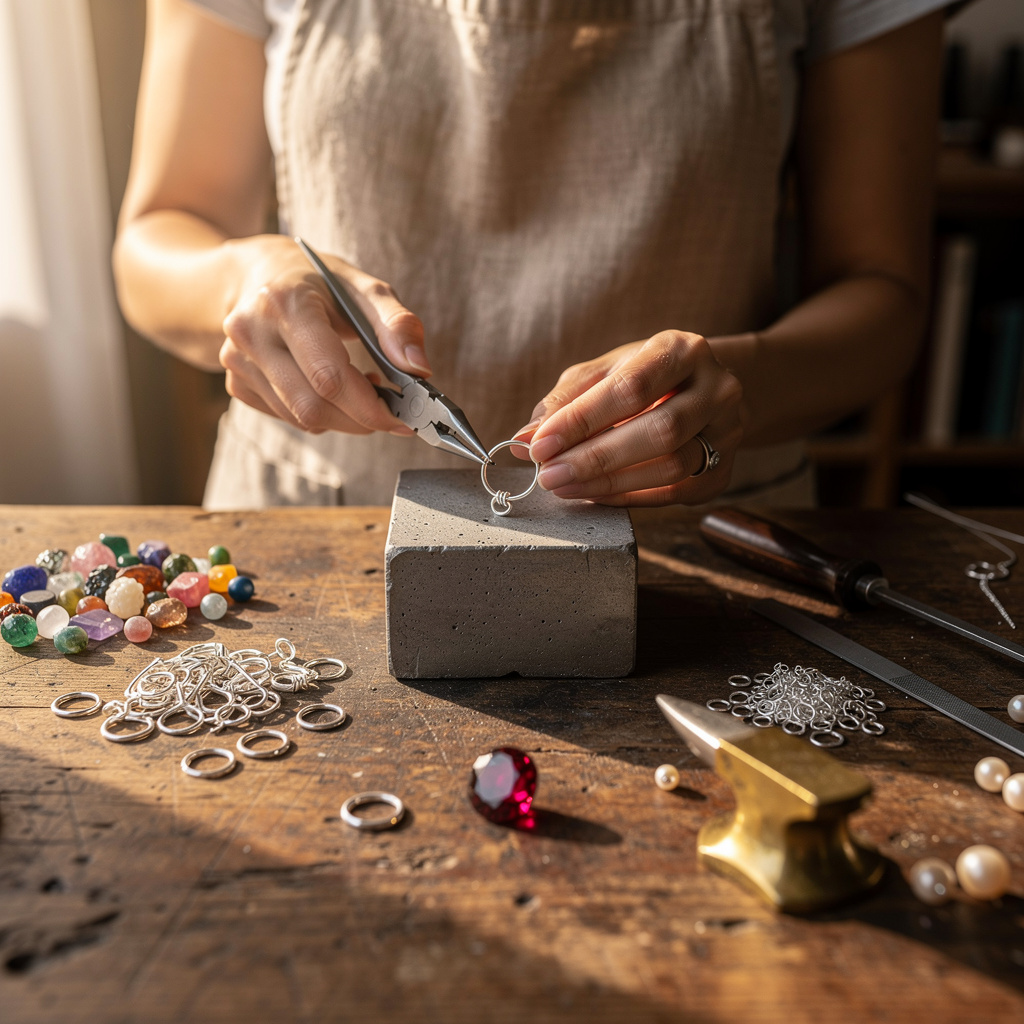
Jewelry Making Basics certificate program is a hands-on introduction to the foundational skills needed to design and construct wearable art. The curriculum covers essential topics such as tool selection, material properties, and safety protocols, before advancing to wirework, bead stringing, basic metal sawing and filing, soldering, cold connections like rivets and wire wrapping, metal shaping through hammering and texturing, stone setting with bezels, chain making, and professional finishing with findings and clasps. This program is designed for absolute beginners, hobbyists, and aspiring artisans who want a structured, practical path into jewelry fabrication. The main practical outcome is the ability to independently plan and complete a finished jewelry project, from initial design concept to a polished, wearable piece.
The program is structured as a beginner-friendly progression, starting with safety and tool familiarity before moving through each core technique in logical order. It balances theoretical knowledge—such as design principles and color theory—with extensive hands-on practice, ensuring learners understand both the "why" and the "how" behind each method. The four core skill areas built are: wire and beadwork fundamentals, metalwork and joining (including soldering and cold connections), metal shaping and stone setting, and professional finishing and design integration. A capstone project at the end ties all these skills together into a single completed piece. Someone would choose this program now because the demand for handmade, customizable, and sustainably produced jewelry continues to grow, and these foundational skills open doors to personal enrichment, gift-making, or a small creative business.
What is Jewelry Making Basics?
Jewelry making basics refers to the foundational set of techniques, material knowledge, and design principles used to create personal adornments such as necklaces, bracelets, earrings, and pendants. Its scope ranges from simple bead stringing and wire loops to more advanced metal fabrication including sawing, soldering, forming, and stone setting. Core concepts include understanding material properties (metals, wires, beads, stones), safe and effective tool use, various joining and connection methods, and the relationship between form, function, and wearability. Mastery of these basics provides a versatile framework that applies to nearly any jewelry style, from delicate minimalist pieces to bold statement designs.
In today's market, jewelry making basics matter because of a strong cultural shift toward handmade, artisanal, and personalized goods. Consumers increasingly value unique, ethically sourced, and locally crafted items over mass-produced accessories, creating opportunities for small-scale makers and independent designers. The rise of online marketplaces, social media showcases, and craft fairs has made it easier than ever for skilled beginners to reach an audience. Recent shifts include greater access to affordable tools and materials, a surge in online learning communities, and a growing emphasis on sustainable practices like recycling metals and using responsibly sourced stones. Beyond commerce, jewelry making also serves as a therapeutic creative outlet and a way to preserve traditional craft techniques.
Mastering jewelry making basics builds a transferable skill stack that includes fine manual dexterity, spatial reasoning, material literacy, problem-solving, and design thinking. These competencies are valuable in professional contexts such as bench jewelry, product design for accessories, craft instruction, and small business ownership, where the ability to prototype and produce original pieces is essential. On a personal level, the skill set supports meaningful hobbies, thoughtful gift creation, and a deeper appreciation for the objects we wear. The combination of technical precision and creative expression makes jewelry making a uniquely rewarding discipline that bridges art, engineering, and personal style.
Common Questions About Jewelry Making Basics
Is Jewelry Making Basics suitable if I have never made jewelry before?
How is the Jewelry Making Basics course structured for busy beginners?
Why does a higher wire gauge number mean thinner wire in jewelry work?
What is the most common mistake when making a simple wire loop?
Which beading wire should I choose for a necklace that needs to last?
Why does annealing make metal easier to hammer and shape?
- Work hardening: hammering and bending make the metal stronger but less willing to move.
- Annealing: controlled heating and cooling softens the metal so it can be shaped again.
- Process control: anneal before the metal gets too springy, then continue hammering and planishing.
Do I really need a torch to make strong jewelry connections?
What Will This Course Bring You?
- Apply safe workshop practices by selecting appropriate jewelry tools, handling chemicals, and using protective equipment during basic fabrication tasks.
- Construct basic wire components by forming simple loops, wrapped loops, and jump rings with consistent size and secure closures.
- Implement stringing and beadwork fundamentals by arranging beads, using crimps, and finishing strand ends for durable wearable pieces.
- Demonstrate basic metalwork by sawing sheet metal, filing edges, and finishing surfaces to prepare components for assembly.
- Execute soldering and joining techniques to connect metal components using proper flux, hear, and solder flow while maintaining clean seams.
- Build cold connections using rivets, screws, and wire wrapping to join components without heat and preserve material integrity.
- Set a cabochon in a basic bezel by fitting, adjusting, and securing the stone while maintaining a clean metal edge.
- Plan and complete a capstone jewelry project by integrating shaping, chain making, findings, professional finishing, design principles, and color theory into a cohesive piece.
Curriculum
12 Units1. Tools, Materials, and Safety in Jewelry Making
1 hour
2. Basic Wirework and Simple Loops
1 hour
3. Stringing and Beadwork Fundamentals
1 hour
4. Basic Metalwork: Sawing, Filing, and Finishing
1 hour
5. Soldering and Joining Metal Components
1 hour
6. Cold Connections: Rivets, Screws, and Wire Wrapping
1 hour
7. Shaping Metal: Hammering, Texturing, and Forming
1 hour
8. Stone Setting Basics: Bezels and Cabochons
1 hour
9. Chain Making and Linked Components
1 hour
10. Findings, Clasps, and Professional Finishing
1 hour
11. Design Principles and Color Theory for Jewelry
1 hour
12. Capstone: Planning and Completing a Jewelry Project
1 hour
Exam – Jewelry Making Basics
20 Questions • 70% Pass • 30 min
Unlock All Units for Free
Create an account, enroll in the course, and start with the first unit right away.
Exam – Jewelry Making Basics
20 Questions • Pass: 70% • 30 min
Course Duration
720
Total Minutes
12
Unit
1
Final Exam
~60
Min / Unit
Jewelry Making Basics Certificate Program
Document Your Skill
Those who pass the 20-question, 30-minute exam with 70% receive the Jewelry Making Basics Certificate.
Stand Out on Your CV
By adding your certificate to your CV, gain a professional reference in job applications and stand out from the crowd.
Career Advantage
With the verification code, employers can check your certificate instantly — a concrete way to show your growth.
CERTIFICATE FEE
At the end of the course, an online exam consisting of 20 questions with a 30-minute time limit is given. The exam appears automatically after you complete the topics. Anyone who scores at least 70 out of 100 on the certificate exam is awarded the Jewelry Making Basics Document (certificate of attendance). You can add the certificate you earn to your CV for job applications in the many sectors listed above, and use it as a reference proving that you took this interactive course.
The Certificate of Achievement you receive with the Jewelry Making Basics course program holds value that proves your personal and professional development in the business world. By adding it to your CV, it can serve as an important reference in your job applications. Moreover, compared with certificates from other private training institutions, Catch Wisdom certificates are offered to our participants at a much more affordable price.
The Jewelry Making Basics course certificate is a document that proves, with a unique verification code, that you completed the course. Employers can instantly check its authenticity with this code, which helps you show your development concretely in your job applications.
For more information, we recommend visiting the Support page.
Certificate in 7 Languages
Earning success certificates from our courses is now more meaningful and global. With certificates available in Turkish, English, German, French, Spanish, Arabic, and Russian, we fully unlock the potential of students worldwide.
Why Certificate in 7 Languages?
-
01
Global Skill Development
Receiving your certificates in 7 different languages strengthens your communication skills as you engage with more people worldwide. It lets you operate more confidently and capably on the international stage.
-
02
International Job Opportunities
Employers may see your certificates in multiple languages as a sign of your ability to seize global opportunities. You can open more doors to new jobs and projects.
-
03
Cultural Richness
The chance to earn certificates in different languages helps you build closer ties with various cultures and broadens your worldview. It enriches your global perspective and deepens cultural understanding.
-
04
Ability to Participate in International Projects
Multilingual certificates give you an edge to work more effectively on international projects. They boost your chances of leadership and participation in diverse projects in the business world.
-
05
Prove Yourself on the Global Stage
Certificates in multiple languages give you the opportunity to present your skills and knowledge worldwide.
Language diversity opens worldwide opportunities. If you want to prove yourself in the international arena, join our online Jewelry Making Basics course program and begin this journey with us.
Frequently Asked Questions (FAQ)
Is this course paid?
How do I join the course?
Can I take the course at my own pace?
How can I get my certificate?
What are the advantages of the certificate?
Boost Your Career
Take a new career step with the Jewelry Making Basics course. Add your certificate to your CV, stand out in job applications, and open the door to new opportunities in the industry.
StartStudent Reviews
No reviews yet
Enroll in this course and be the first to leave a review about your experience with Jewelry Making Basics.
Start