What is Leather Crafting?
Leather Crafting Training
This Leather Crafting certificate program is a hands-on journey into the art of transforming raw hides into refined, functional goods. Designed for complete beginners, hobbyists, and makers seeking a structured creative outlet, the course guides you from understanding leather types and tannage through to assembling polished projects like a card holder, belt, and zippered pouch. The main practical outcome is a portfolio of finished, professional-grade leather items built entirely by your own hands, along with the confidence to design and craft custom pieces independently.
The program follows a deliberate, beginner-friendly progression that balances material theory with workshop practice. You will first build a foundation in leather selection, workspace setup, and essential tool use, then move through four core skill areas: precision cutting and stitching, edge finishing and surface coloring, decorative tooling and carving, and hardware installation. Each technique is immediately applied in a guided project, ensuring that abstract knowledge becomes tangible skill. With the rising demand for sustainable, handcrafted goods and the mindful satisfaction of slow craftsmanship, there has never been a better time to invest in a skill that blends tradition with personal expression.
What is Leather Crafting?
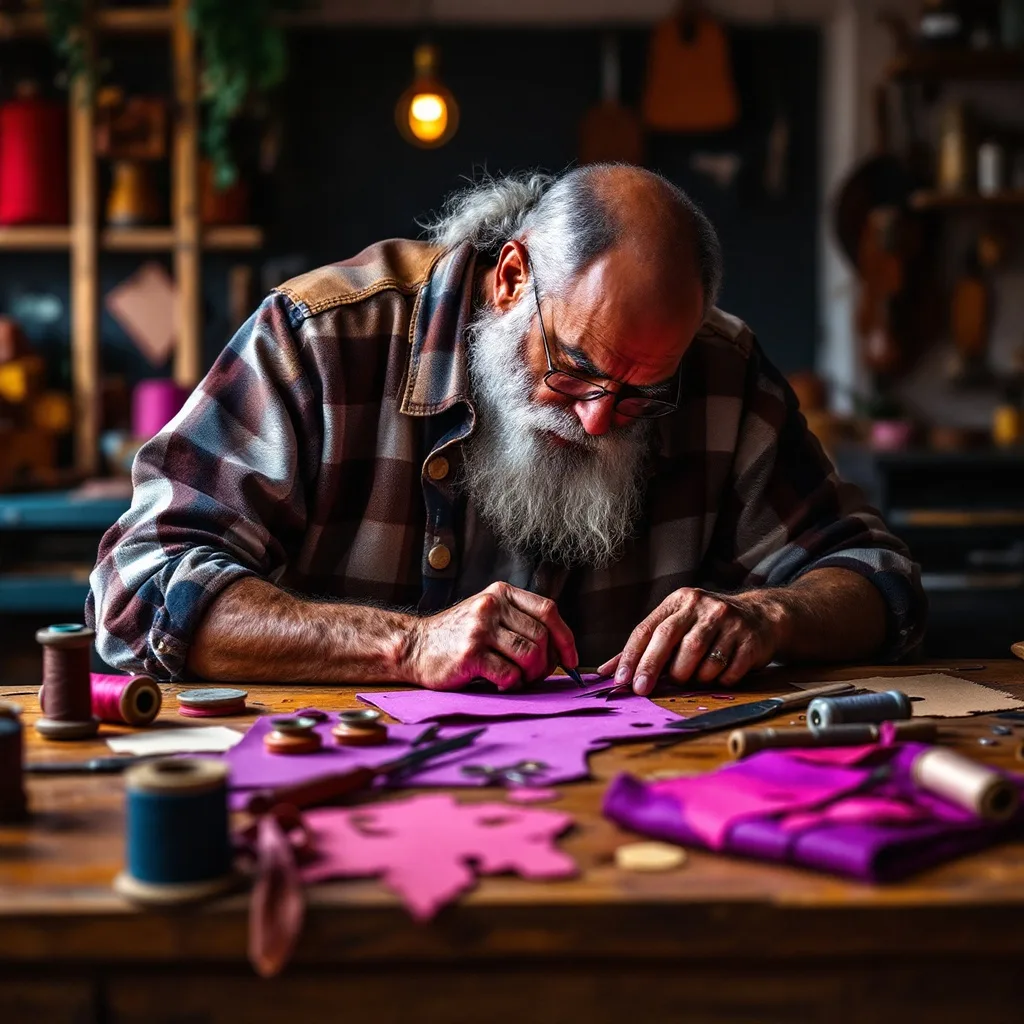
Leather crafting is the skilled practice of cutting, shaping, stitching, and finishing animal hides to create durable and often beautiful objects. Its scope spans from utilitarian items like belts, wallets, and bags to intricate decorative work such as tooled patterns, carved reliefs, and sculpted forms. At its core, the craft rests on a deep understanding of the material itself—how different tannages affect flexibility, grain, and workability—and a command of hand tools that have remained largely unchanged for centuries. It is both a technical discipline and an art form, where precision in cutting and stitching meets the creative freedom of dyeing, burnishing, and surface design.
In today’s world, leather crafting holds renewed relevance as a counterbalance to mass production and disposable fashion. The slow, deliberate process of hand-making leather goods aligns with growing movements around sustainability, repair culture, and the value of heirloom-quality possessions. Beyond the hobbyist’s bench, these skills are applied in bespoke shoemaking, saddlery, automotive upholstery, and luxury accessory design, where the demand for hand-finished detail remains high. Recent shifts have also seen a surge in small-batch artisan businesses and online maker communities, making leather crafting a viable path for both personal fulfillment and micro-entrepreneurship.
Mastering leather crafting builds a unique skill stack that merges material science, fine motor coordination, and design thinking. The ability to assess a hide, transfer a pattern, execute a saddle stitch, and finish an edge to a glassy smoothness develops patience, problem-solving, and an eye for quality that transfers to many other making disciplines. Whether pursued as a mindful hobby, a means to create custom gifts and personal accessories, or a foundation for a craft-based business, the knowledge of leather crafting empowers individuals to turn a raw, natural material into lasting works of functional art.
Common Questions About Leather Crafting
Is the leather crafting course suitable for absolute beginners?
What certificate do I earn after completing the leather crafting course?
What is the difference between full grain and top grain leather?
What tools are needed for cutting and skiving leather?
- Cutting knives: A sharp utility knife or craft knife for straight cuts.
- Strap cutter: For cutting uniform leather strips.
- Shears: For curved cuts.
- Skiving knife or French edger: For thinning edges.
How to achieve a perfect saddle stitch every time?
- Prepare the thread: Use waxed thread and cut about 3-4 times the seam length.
- Stitch evenly: Maintain consistent tension and stitch length by using a stitching chisel or pricking iron to mark holes.
- Cross the needles: Pass each needle through the same hole from opposite sides, then pull tight.
What is the best method for burnishing leather edges?
Is vegetable tanned leather always superior to chrome tanned?
What Will This Course Bring You?
- Analyze leather types, tannage processes, and grain characteristics to select the most suitable hide for a project based on durability, flexibility, and finish.
- Organize a functional leather crafting workspace and demonstrate the correct use and care of essential tools, including knives, awls, and edge bevelers.
- Transfer patterns accurately onto leather and execute clean cuts and precise skiving to reduce bulk and prepare pieces for seamless assembly.
- Apply saddle stitching techniques to produce strong, uniform hand-sewn seams, maintaining consistent tension and stitch spacing throughout.
- Finish and burnish leather edges to a smooth, glossy surface using sanding, edge beveling, and burnishing agents like gum tragacanth or beeswax.
- Apply dyes, stains, and antique finishes to leather surfaces using various application methods, achieving even coverage and desired color effects.
- Create decorative tooled designs on leather using swivel knives, stamping tools, and modeling techniques to add texture and personalization.
- Install hardware components such as rivets, snaps, buckles, and zippers securely, and assemble multi-part leather items with professional-quality construction.
Curriculum
12 Units1. Understanding Leather: Types, Tannage, and Selection
1 hour
2. The Leather Crafting Workspace and Essential Tools
1 hour
3. Cutting, Skiving, and Pattern Transfer
1 hour
4. Hand Stitching Fundamentals
1 hour
5. Edge Finishing and Burnishing
1 hour
6. Dyeing and Surface Coloring Techniques
1 hour
7. Leather Tooling and Basic Carving
1 hour
8. Hardware Installation and Assembly Methods
1 hour
9. Project: Simple Card Holder or Key Fob
1 hour
10. Project: Handcrafted Leather Belt
1 hour
11. Project: Zippered Pouch or Clutch
1 hour
12. Advanced Techniques and Design Principles
1 hour
Exam – Leather Crafting
20 Questions • 70% Pass • 30 min
Unlock All Units for Free
Create an account, enroll in the course, and start with the first unit right away.
Exam – Leather Crafting
20 Questions • Pass: 70% • 30 min
Course Duration
720
Total Minutes
12
Unit
1
Final Exam
~60
Min / Unit
Leather Crafting Certificate Program
Document Your Skill
Those who pass the 20-question, 30-minute exam with 70% receive the Leather Crafting Certificate.
Stand Out on Your CV
By adding your certificate to your CV, gain a professional reference in job applications and stand out from the crowd.
Career Advantage
With the verification code, employers can check your certificate instantly — a concrete way to show your growth.
CERTIFICATE FEE
At the end of the course, an online exam consisting of 20 questions with a 30-minute time limit is given. The exam appears automatically after you complete the topics. Anyone who scores at least 70 out of 100 on the certificate exam is awarded the Leather Crafting Document (certificate of attendance). You can add the certificate you earn to your CV for job applications in the many sectors listed above, and use it as a reference proving that you took this interactive course.
The Certificate of Achievement you receive with the Leather Crafting course program holds value that proves your personal and professional development in the business world. By adding it to your CV, it can serve as an important reference in your job applications. Moreover, compared with certificates from other private training institutions, Catch Wisdom certificates are offered to our participants at a much more affordable price.
The Leather Crafting course certificate is a document that proves, with a unique verification code, that you completed the course. Employers can instantly check its authenticity with this code, which helps you show your development concretely in your job applications.
For more information, we recommend visiting the Support page.
Certificate in 7 Languages
Earning success certificates from our courses is now more meaningful and global. With certificates available in Turkish, English, German, French, Spanish, Arabic, and Russian, we fully unlock the potential of students worldwide.
Why Certificate in 7 Languages?
-
01
Global Skill Development
Receiving your certificates in 7 different languages strengthens your communication skills as you engage with more people worldwide. It lets you operate more confidently and capably on the international stage.
-
02
International Job Opportunities
Employers may see your certificates in multiple languages as a sign of your ability to seize global opportunities. You can open more doors to new jobs and projects.
-
03
Cultural Richness
The chance to earn certificates in different languages helps you build closer ties with various cultures and broadens your worldview. It enriches your global perspective and deepens cultural understanding.
-
04
Ability to Participate in International Projects
Multilingual certificates give you an edge to work more effectively on international projects. They boost your chances of leadership and participation in diverse projects in the business world.
-
05
Prove Yourself on the Global Stage
Certificates in multiple languages give you the opportunity to present your skills and knowledge worldwide.
Language diversity opens worldwide opportunities. If you want to prove yourself in the international arena, join our online Leather Crafting course program and begin this journey with us.
Frequently Asked Questions (FAQ)
Is this course paid?
How do I join the course?
Can I take the course at my own pace?
How can I get my certificate?
What are the advantages of the certificate?
Boost Your Career
Take a new career step with the Leather Crafting course. Add your certificate to your CV, stand out in job applications, and open the door to new opportunities in the industry.
StartStudent Reviews
No reviews yet
Enroll in this course and be the first to leave a review about your experience with Leather Crafting.
Start