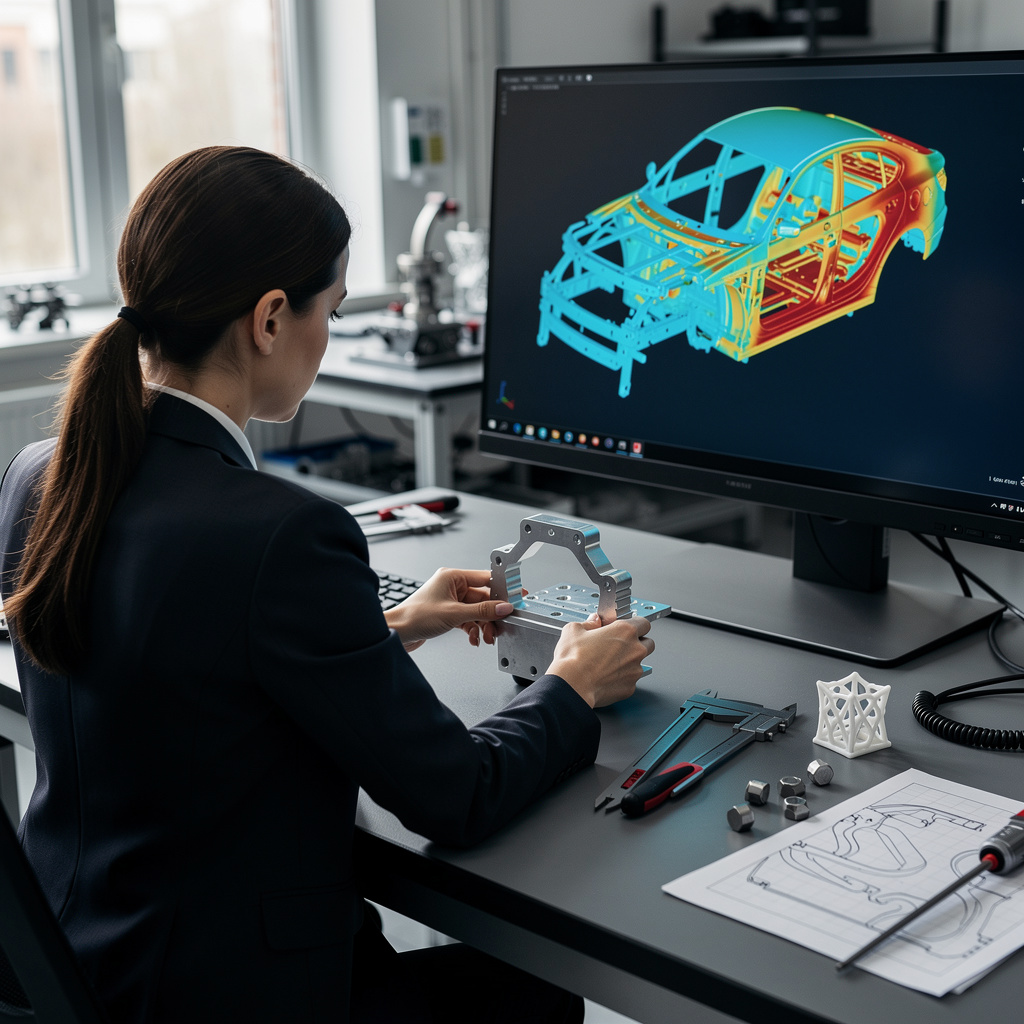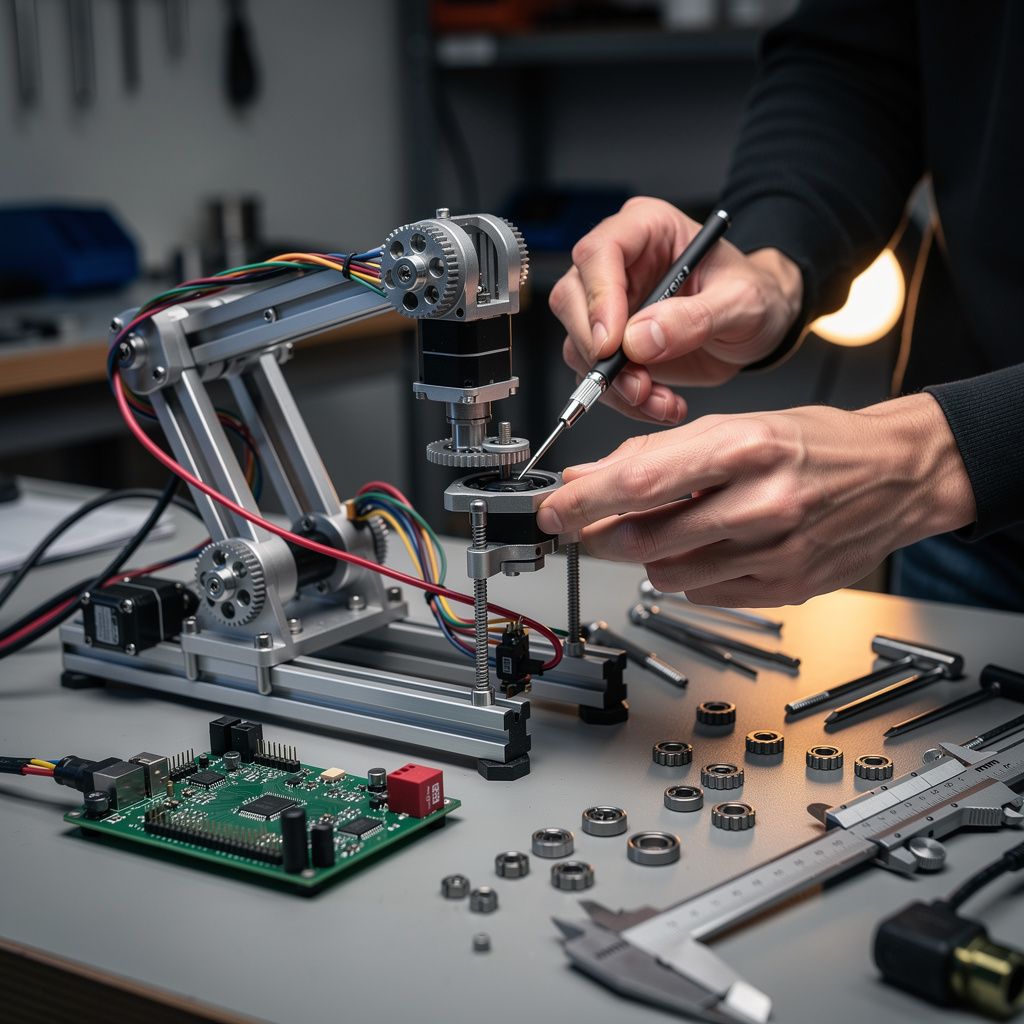
What is Mechatronics Fundamentals?
Mechatronics Fundamentals Certificate Program
Mechatronics Fundamentals certificate program equips learners with a practical foundation in integrating mechanical components, electrical circuits, electronic devices, digital logic, microcontrollers, embedded I/O, sensors, actuators, closed-loop control, system modeling, subsystem communication, and capstone lifecycle design. It is designed for early-career technicians, engineering students, product-development professionals, and makers who need to understand how mechanical, electrical, electronic, and software elements work together in real machines. The curriculum moves from engineering design foundations and motion principles through power, signal conditioning, and microcontroller architecture before addressing measurement, drive systems, feedback control, simulation, and integration. The main practical outcome is the ability to analyze and prototype small mechatronic systems, select appropriate components, and document an integrated design through a capstone project.
The program is structured as a beginner-friendly progression that starts with interdisciplinary systems and basic mechanical and electrical principles, then builds toward embedded programming, closed-loop control, and full subsystem integration. Each stage balances concise theory with hands-on exercises, so learners connect circuit behavior, sensor readings, actuator response, and code logic to physical system performance rather than treating these topics as isolated subjects. Across the twelve lessons, the program builds five core skill areas: mechanical motion and power, electrical and electronic fundamentals, digital and embedded implementation, sensing and actuation, and control, modeling, and system integration. Learners choose this program now because mechatronics underpins robotics, automated manufacturing, smart devices, and electromechanical products, and employers increasingly value people who can bridge mechanical, electrical, and software disciplines.
What is Mechatronics Fundamentals?
Mechatronics fundamentals is the study of how mechanical, electrical, electronic, and software/control subsystems combine to create intelligent, controllable machines and products. Its scope spans motion and power transmission, circuit and power behavior, signal conditioning, digital logic and microcontroller execution, embedded input/output, sensor measurement, actuator drive, feedback control, and system modeling. Core concepts include interdisciplinary design trade-offs, real-time interaction between hardware and software, measurement uncertainty, actuator sizing, stability and response in closed-loopsystems, and the communication interfaces that let subsystems cooperate. Rather than treating mechanics, electronics, and computing as separate tracks, the subject emphasizes how these domains constrain and enable one another in a complete system.
Mechatronics fundamentals matters today because products and production systems increasingly depend on tightly coupled mechanical, electronic, and embedded control functions, from collaborative robots and electric drives to medical devices, agricultural equipment, and consumer appliances. In industry, it supports automation, predictive maintenance, product development, and prototype validation; in academia, it connects mechanical engineering, electrical engineering, and computer science through project-based design work. Recent shifts toward affordable microcontrollers, low-cost sensors, simulation tools, and networked subsystems have made mechatronic thinking relevant beyond specialized robotics teams and into mainstream engineering and maker environments. At the same time, the growth of electrification and smart automation raises the value of professionals who can reason across domains instead of optimizing a single component in isolation.
Mastery of mechatronics fundamentals builds a skill stack that connects mechanical reasoning, electrical safety and measurement, electronic signal interpretation, embedded programming, sensor/actuator selection, and closed-loop control tuning. That stack is useful in professional contexts such as equipment design, test engineering, automation support, robotics integration, technical sales, and product lifecycle documentation, as well as in personal projects that require reliable electromechanical behavior. It also strengthens the ability to communicate across engineering disciplines, read system-level requirements, and diagnose faults that cross mechanical, electrical, and software boundaries. The subject therefore serves as a durable foundation for further specialization without tying learners to a single vendor, platform, or narrow product category.
What Will This Course Bring You?
- Analyze the roles of mechanical, electrical, and embedded subsystems within an interdisciplinary mechatronic design process from concept to specification.
- Apply motion principles and mechanical component selection to configure gears, bearings, and linkages that meet specified load and speed requirements.
- Design and analyze basic electrical circuits and power supplies to deliver regulated voltage and current to mechatronic loads.
- Implement embedded programs on microcontrollers that read sensor inputs and drive real-time actuator outputs using interrupts and timers.
- Evaluate sensor and actuator characteristics, including resolution, range, and response time, to select components for a closed-loop control application.
- Build and tune a closed-loop controller for a physical mechatronic system, then justify stability and performance using modeling and simulation results.
- Integrate subsystems through standard communication protocols and verify end-to-end system behavior during capstone prototyping and lifecycle testing.
Curriculum
12 Units1. Interdisciplinary Systems and Engineering Design Foundations
1 hour
2. Mechanical Components and Motion Principles
1 hour
3. Electrical Circuits and Power Fundamentals
1 hour
4. Electronic Devices and Signal Conditioning
1 hour
5. Digital Logic and Microcontroller Architecture
1 hour
6. Embedded Programming and Real-Time Input/Output
1 hour
7. Sensors and Measurement Systems
1 hour
8. Actuators and Drive Systems
1 hour
9. Closed-Loop Control Fundamentals
1 hour
10. System Modeling and Simulation
1 hour
11. Subsystem Integration and Communication
1 hour
12. Capstone Design and System Lifecycle
1 hour
Exam – Mechatronics Fundamentals
20 Questions • 70% Pass • 30 min
Unlock All Units for Free
Create an account, enroll in the course, and start with the first unit right away.
Exam – Mechatronics Fundamentals
20 Questions • Pass: 70% • 30 min
Course Duration
720
Total Minutes
12
Unit
1
Final Exam
~60
Min / Unit
Mechatronics Fundamentals Certificate Program
Document Your Skill
Those who pass the 20-question, 30-minute exam with 70% receive the Mechatronics Fundamentals Certificate.
Stand Out on Your CV
By adding your certificate to your CV, gain a professional reference in job applications and stand out from the crowd.
Career Advantage
With the verification code, employers can check your certificate instantly — a concrete way to show your growth.
CERTIFICATE FEE
At the end of the course, an online exam consisting of 20 questions with a 30-minute time limit is given. The exam appears automatically after you complete the topics. Anyone who scores at least 70 out of 100 on the certificate exam is awarded the Mechatronics Fundamentals Document (certificate of attendance). You can add the certificate you earn to your CV for job applications in the many sectors listed above, and use it as a reference proving that you took this interactive course.
The Certificate of Achievement you receive with the Mechatronics Fundamentals course program holds value that proves your personal and professional development in the business world. By adding it to your CV, it can serve as an important reference in your job applications. Moreover, compared with certificates from other private training institutions, Catch Wisdom certificates are offered to our participants at a much more affordable price.
The Mechatronics Fundamentals course certificate is a document that proves, with a unique verification code, that you completed the course. Employers can instantly check its authenticity with this code, which helps you show your development concretely in your job applications.
For more information, we recommend visiting the Support page.
Certificate in 7 Languages
Earning success certificates from our courses is now more meaningful and global. With certificates available in Turkish, English, German, French, Spanish, Arabic, and Russian, we fully unlock the potential of students worldwide.
Why Certificate in 7 Languages?
-
01
Global Skill Development
Receiving your certificates in 7 different languages strengthens your communication skills as you engage with more people worldwide. It lets you operate more confidently and capably on the international stage.
-
02
International Job Opportunities
Employers may see your certificates in multiple languages as a sign of your ability to seize global opportunities. You can open more doors to new jobs and projects.
-
03
Cultural Richness
The chance to earn certificates in different languages helps you build closer ties with various cultures and broadens your worldview. It enriches your global perspective and deepens cultural understanding.
-
04
Ability to Participate in International Projects
Multilingual certificates give you an edge to work more effectively on international projects. They boost your chances of leadership and participation in diverse projects in the business world.
-
05
Prove Yourself on the Global Stage
Certificates in multiple languages give you the opportunity to present your skills and knowledge worldwide.
Language diversity opens worldwide opportunities. If you want to prove yourself in the international arena, join our online Mechatronics Fundamentals course program and begin this journey with us.
Frequently Asked Questions (FAQ)
Is this course paid?
How do I join the course?
Can I take the course at my own pace?
How can I get my certificate?
What are the advantages of the certificate?
Boost Your Career
Take a new career step with the Mechatronics Fundamentals course. Add your certificate to your CV, stand out in job applications, and open the door to new opportunities in the industry.
StartStudent Reviews
No reviews yet
Enroll in this course and be the first to leave a review about your experience with Mechatronics Fundamentals.
Start