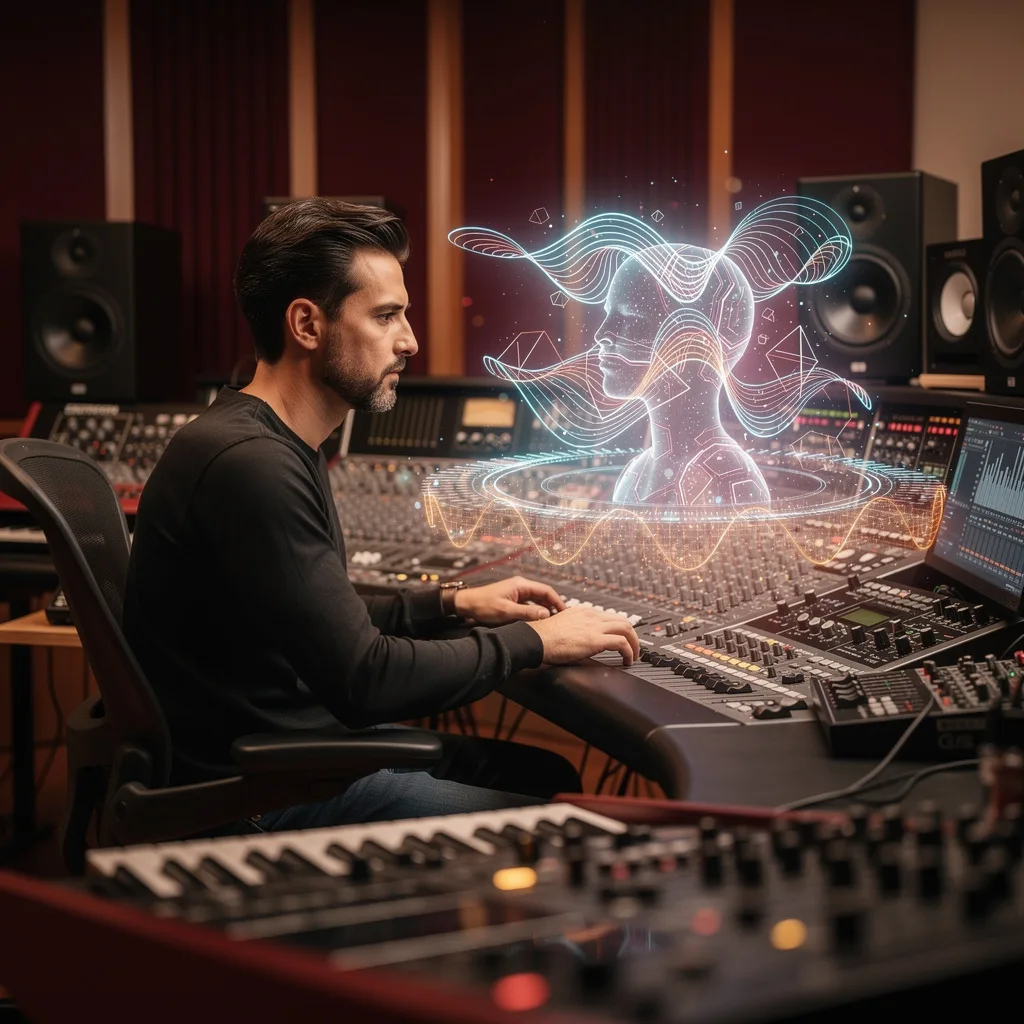
What is Music Theory Fundamentals?
Music Theory Fundamentals Certificate Program
The Music Theory Fundamentals certificate program provides a comprehensive grounding in the essential language of music, from the physics of sound and pitch notation on the musical staff to advanced topics like seventh chords and diatonic harmony. It is designed for absolute beginners, self-taught musicians, songwriters, and producers who want to move beyond intuition and understand how music actually works. By the end of the program, learners gain the practical ability to read, write, analyze, and compose music with confidence, applying concepts such as major and minor scales, intervals, cadences, and musical form to real creative projects.
The curriculum unfolds in a carefully sequenced, beginner-friendly progression that balances theoretical study with hands-on practice at every stage. Early lessons establish foundational skills in rhythm, meter, and pitch recognition, then gradually build toward complex topics like chord construction, Roman numeral analysis, and phrase structure. Across the twelve lessons, the program develops four core skill areas: notation and ear training, scale and mode fluency, harmonic analysis, and compositional application. Learners choose this program now because modern music production tools and streaming platforms reward creators who can communicate musical ideas precisely, and a solid theoretical foundation is the fastest way to unlock that fluency.
What is Music Theory Fundamentals?
Music theory fundamentals is the systematic study of the building blocks that make music intelligible, including pitch, rhythm, melody, harmony, texture, and form. Its core concepts range from the physics of sound and the notation of pitch on a staff to the construction of scales, intervals, triads, and seventh chords. The subject also examines how chords function within keys through diatonic harmony, Roman numerals, and cadences, and how phrases and motifs combine into larger musical structures. In essence, it provides a shared vocabulary and analytical framework for describing what happens in a piece of music and why it sounds the way it does.
Today, music theory fundamentals matter more than ever because the tools of music creation have become widely accessible, yet the ability to understand and articulate musical structure remains a differentiator. In songwriting, film scoring, game audio, and contemporary production, professionals rely on theoretical knowledge to craft compelling melodies, choose effective chord progressions, and arrange parts that support a narrative. Academic programs in musicology, composition, and performance still treat these fundamentals as prerequisite knowledge, while online collaboration and AI-assisted composition tools increasingly demand clear, symbolic representations of musical ideas. Recent shifts toward remote learning and DAW-based workflows have also made self-directed theory study both practical and highly relevant for independent artists.
Mastering music theory fundamentals builds a durable skill stack that includes analytical listening, accurate notation, fluent score reading, and the ability to compose or arrange with intentionality. These skills benefit a wide range of professional contexts, from performing and teaching to producing, conducting, and sound design, where understanding harmonic function and formal structure leads to more efficient and expressive work. For personal enrichment, the subject transforms passive listening into active engagement, allowing enthusiasts to hear and appreciate layers of detail in familiar music. Whether the goal is to write a first song, prepare for advanced conservatory study, or communicate more effectively in a band or production team, a firm grasp of these fundamentals provides the essential foundation.
What Will This Course Bring You?
- Notate pitches accurately on treble and bass staves by identifying clefs, ledger lines, and the relationship between sound frequency and staff position.
- Construct major scales and key signatures in all fifteen major keys by applying the whole-whole-half-whole-whole-whole-half interval pattern.
- Perform rhythmic patterns in simple, compound, and irregular meters while counting beats and conducting standard meter signatures accurately.
- Differentiate natural, harmonic, and melodic minor scales and the seven church modes by comparing their interval structures and characteristic sounds.
- Identify intervals and chord qualities by ear and on the staff, then sing or play them back to strengthen aural recognition.
- Build triads and seventh chords from any root, labeling inversions and interpreting common chord symbols in lead-sheet notation.
- Analyze diatonic progressions with Roman numerals, identifying harmonic function and cadences that establish or disrupt tonal centers.
- Compose a short melody using motifs, phrases, and formal sections, then evaluate how its structure supports the intended musical expression.
Curriculum
12 Units1. Sound, Pitch, and the Musical Staff
1 hour
2. Rhythm, Beat, and Meter
1 hour
3. Major Scales and Key Signatures
1 hour
4. Minor Scales and Modes
1 hour
5. Intervals and Ear Training
1 hour
6. Triads and Chord Construction
1 hour
7. Seventh Chords and Chord Symbols
1 hour
8. Diatonic Harmony and Roman Numerals
1 hour
9. Cadences, Phrases, and Harmonic Function
1 hour
10. Melody, Motif, and Phrase Structure
1 hour
11. Musical Form and Analysis
1 hour
12. Applying Music Theory: Composition and Analysis
1 hour
Exam – Music Theory Fundamentals
20 Questions • 70% Pass • 30 min
Unlock All Units for Free
Create an account, enroll in the course, and start with the first unit right away.
Exam – Music Theory Fundamentals
20 Questions • Pass: 70% • 30 min
Course Duration
720
Total Minutes
12
Unit
1
Final Exam
~60
Min / Unit
Music Theory Fundamentals Certificate Program
Document Your Skill
Those who pass the 20-question, 30-minute exam with 70% receive the Music Theory Fundamentals Certificate.
Stand Out on Your CV
By adding your certificate to your CV, gain a professional reference in job applications and stand out from the crowd.
Career Advantage
Catch Wisdom certificates are recognized by HR departments and increase career opportunities.
CERTIFICATE FEE
At the end of the course, an online exam consisting of 20 questions with a 30-minute time limit is given. The exam appears automatically after you complete the topics. Anyone who scores at least 70 out of 100 on the certificate exam is awarded the Music Theory Fundamentals Document (certificate of attendance). You can add the certificate you earn to your CV for job applications in the many sectors listed above, and use it as a reference proving that you took this interactive course.
The Certificate of Achievement you receive with the Music Theory Fundamentals course program holds value that proves your personal and professional development in the business world. By adding it to your CV, it can serve as an important reference in your job applications. Moreover, compared with certificates from other private training institutions, Catch Wisdom certificates are offered to our participants at a much more affordable price.
Because HR departments recognize Catch Wisdom as a reputable institution in this field, they value these certificates and may evaluate your job applications favorably. For this reason, a Music Theory Fundamentals course certificate from Catch Wisdom can make your applications more attractive and place you in an advantageous position in the business world.
For more information, we recommend visiting the Support page.
Certificate in 7 Languages
Earning success certificates from our courses is now more meaningful and global. With certificates available in Turkish, English, German, French, Spanish, Arabic, and Russian, we fully unlock the potential of students worldwide.
Why Certificate in 7 Languages?
-
01
Global Skill Development
Receiving your certificates in 7 different languages strengthens your communication skills as you engage with more people worldwide. It lets you operate more confidently and capably on the international stage.
-
02
International Job Opportunities
Employers may see your certificates in multiple languages as a sign of your ability to seize global opportunities. You can open more doors to new jobs and projects.
-
03
Cultural Richness
The chance to earn certificates in different languages helps you build closer ties with various cultures and broadens your worldview. It enriches your global perspective and deepens cultural understanding.
-
04
Ability to Participate in International Projects
Multilingual certificates give you an edge to work more effectively on international projects. They boost your chances of leadership and participation in diverse projects in the business world.
-
05
Prove Yourself on the Global Stage
Certificates in multiple languages let you showcase your skills and knowledge worldwide. You can become an internationally recognized professional.
Language diversity opens worldwide opportunities. If you want to prove yourself in the international arena, join our online Music Theory Fundamentals course program and begin this journey with us.
Frequently Asked Questions (FAQ)
Is this course paid?
How do I join the course?
Can I take the course at my own pace?
How can I get my certificate?
What are the advantages of the Certified Certificate?
Boost Your Career
Take a new career step with the Music Theory Fundamentals course. Add your certificate to your CV, stand out in job applications, and open the door to new opportunities in the industry.
StartStudent Reviews
No reviews yet
Enroll in this course and be the first to leave a review about your experience with Music Theory Fundamentals.
Start