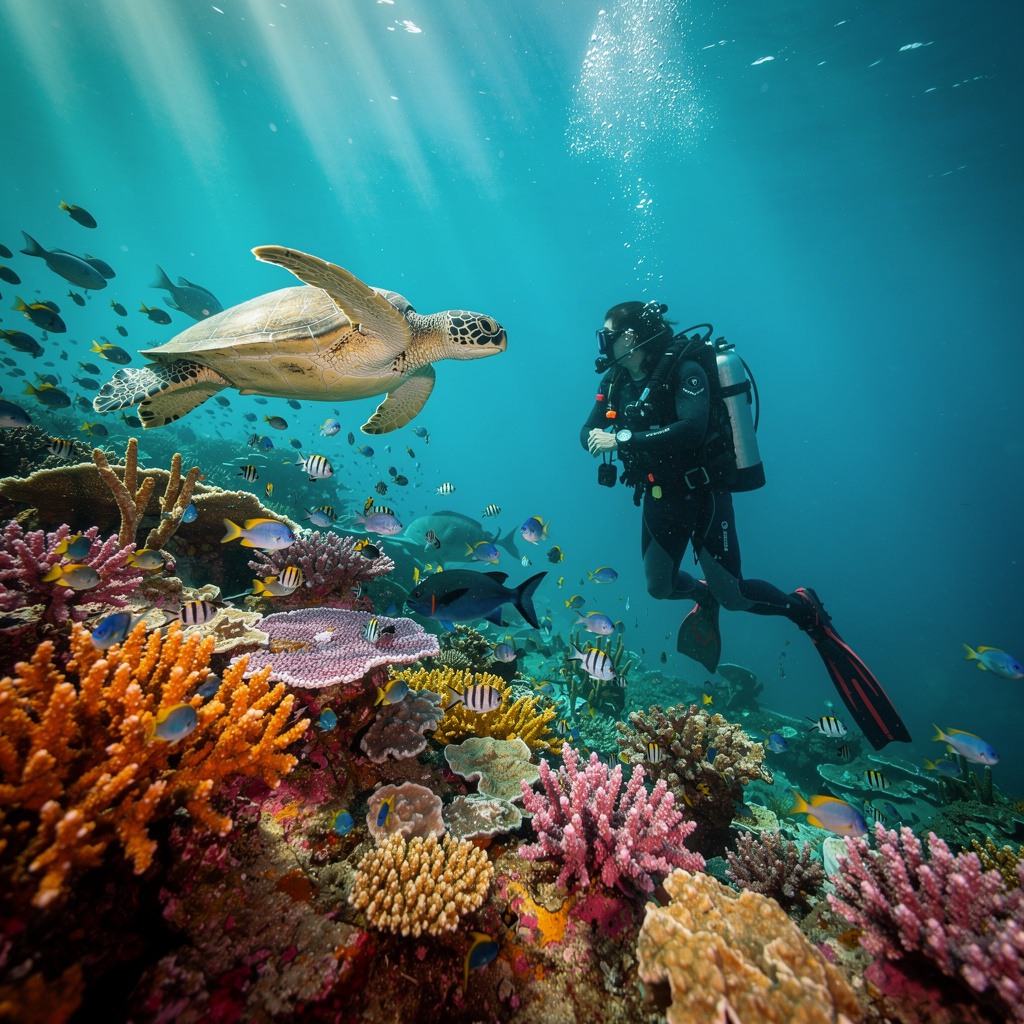
What is Oceans and Marine Life Basics?
Oceans and Marine Life Basics Training
The Oceans and Marine Life Basics certificate program introduces learners to the scientific foundations of the global ocean and the organisms that inhabit it, from the physical properties of seawater and ocean circulation to the classification and ecology of marine life. It is designed for students, educators, conservation volunteers, and professionals entering marine science, environmental education, or coastal management who need a structured, accessible overview rather than a specialized research degree. Across twelve lessons, participants examine ocean zones and habitats, plankton and algae, invertebrates, fishes, reptiles and birds, and marine mammals, connecting each group to the ecosystems they form. The main practical outcome is the ability to interpret basic oceanographic and marine biological information, explain how physical ocean processes shape habitats, and communicate foundational marine conservation concepts with confidence.
The program is structured as a beginner-friendly progression: it begins with the world's oceans and the physical properties of ocean water, then builds into circulation and currents before moving to ocean zones and habitats. From there, learners move through marine life systematically—microorganisms and plankton, plants and algae, invertebrates, fishes, reptiles and birds, and marine mammals—before finishing with marine ecosystems and conservation. This balance of theory and applied context develops five core skill areas: ocean literacy, physical oceanography interpretation, habitat and zone recognition, marine organism identification, and ecosystem-based conservation reasoning. Learners choose this program now because ocean issues—warming, acidification, plastic pollution, and biodiversity loss—are increasingly central to environmental policy, education, and industry, and a shared baseline of ocean and marine life knowledge is becoming essential for informed action.
What is Oceans and Marine Life Basics?
Oceans and Marine Life Basics is the study of the world ocean as a physical, chemical, and biological system, together with the diversity of life it supports. Its scope ranges from the properties of seawater—temperature, salinity, density, and light penetration—to large-scale circulation patterns, ocean zones, and the ecological roles of organisms from microscopic plankton to marine mammals. Core concepts include the relationship between ocean physics and habitat structure, the flow of energy through marine food webs, and the interdependence of marine species within ecosystems. The subject provides a foundational map of how the ocean works as a connected system rather than a collection of isolated facts.
This subject matters today because the ocean regulates climate, supplies food and oxygen, and absorbs a significant share of human-produced carbon and heat, yet it is changing faster than at any point in recorded human history. In industry, ocean literacy informs fisheries management, shipping, offshore energy, tourism, and coastal planning; in academia, it underpins marine biology, oceanography, climate science, and conservation research. Recent shifts toward ecosystem-based management, blue economy frameworks, and global biodiversity targets have made baseline ocean knowledge relevant far beyond specialist circles. Public understanding of marine issues also shapes policy support for marine protected areas, pollution reduction, and climate adaptation.
Mastering this subject builds a skill stack that combines observational literacy—recognizing ocean zones, currents, and organism groups—with systems thinking about how physical and biological processes interact. It also develops communication skills for translating marine science into education, conservation messaging, and community engagement, plus a practical grounding in conservation reasoning that applies to local and global marine issues. These skills benefit professionals in environmental education, coastal and marine management, sustainable tourism, science communication, and policy support, as well as divers, sailors, fishers, and citizen scientists who want a more rigorous understanding of the ocean. The subject ultimately equips learners to participate in marine stewardship with a shared vocabulary and a systems-level perspective.
What Will This Course Bring You?
- Analyze how ocean basin structure and the physical properties of seawater regulate global climate and marine conditions.
- Evaluate how temperature, salinity, and density differences drive ocean circulation patterns and surface and deep currents.
- Classify major ocean zones and match each habitat to its light, pressure, temperature, and depth conditions.
- Differentiate marine microorganisms and plankton by their ecological roles, sizes, and contributions to ocean food webs.
- Compare structural and behavioral adaptations that marine plants, algae, invertebrates, and fishes use to survive in ocean habitats.
- Analyze how marine reptiles, birds, and mammals meet respiration, thermoregulation, and reproduction challenges in marine environments.
- Evaluate conservation strategies for marine ecosystems by weighing human threats, ecosystem interactions, and evidence-based management approaches.
Curriculum
12 Units1. Introduction to the World's Oceans
1 hour
2. Physical Properties of Ocean Water
1 hour
3. Ocean Circulation and Currents
1 hour
4. Ocean Zones and Habitats
1 hour
5. Introduction to Marine Life
1 hour
6. Marine Microorganisms and Plankton
1 hour
7. Marine Plants and Algae
1 hour
8. Marine Invertebrates
1 hour
9. Marine Fishes
1 hour
10. Marine Reptiles and Birds
1 hour
11. Marine Mammals
1 hour
12. Marine Ecosystems and Conservation
1 hour
Exam – Oceans and Marine Life Basics
20 Questions • 70% Pass • 30 min
Unlock All Units for Free
Create an account, enroll in the course, and start with the first unit right away.
Exam – Oceans and Marine Life Basics
20 Questions • Pass: 70% • 30 min
Course Duration
720
Total Minutes
12
Unit
1
Final Exam
~60
Min / Unit
Oceans and Marine Life Basics Certificate Program
Document Your Skill
Those who pass the 20-question, 30-minute exam with 70% receive the Oceans and Marine Life Basics Certificate.
Stand Out on Your CV
By adding your certificate to your CV, gain a professional reference in job applications and stand out from the crowd.
Career Advantage
With the verification code, employers can check your certificate instantly — a concrete way to show your growth.
CERTIFICATE FEE
At the end of the course, an online exam consisting of 20 questions with a 30-minute time limit is given. The exam appears automatically after you complete the topics. Anyone who scores at least 70 out of 100 on the certificate exam is awarded the Oceans and Marine Life Basics Document (certificate of attendance). You can add the certificate you earn to your CV for job applications in the many sectors listed above, and use it as a reference proving that you took this interactive course.
The Certificate of Achievement you receive with the Oceans and Marine Life Basics course program holds value that proves your personal and professional development in the business world. By adding it to your CV, it can serve as an important reference in your job applications. Moreover, compared with certificates from other private training institutions, Catch Wisdom certificates are offered to our participants at a much more affordable price.
The Oceans and Marine Life Basics course certificate is a document that proves, with a unique verification code, that you completed the course. Employers can instantly check its authenticity with this code, which helps you show your development concretely in your job applications.
For more information, we recommend visiting the Support page.
Certificate in 7 Languages
Earning success certificates from our courses is now more meaningful and global. With certificates available in Turkish, English, German, French, Spanish, Arabic, and Russian, we fully unlock the potential of students worldwide.
Why Certificate in 7 Languages?
-
01
Global Skill Development
Receiving your certificates in 7 different languages strengthens your communication skills as you engage with more people worldwide. It lets you operate more confidently and capably on the international stage.
-
02
International Job Opportunities
Employers may see your certificates in multiple languages as a sign of your ability to seize global opportunities. You can open more doors to new jobs and projects.
-
03
Cultural Richness
The chance to earn certificates in different languages helps you build closer ties with various cultures and broadens your worldview. It enriches your global perspective and deepens cultural understanding.
-
04
Ability to Participate in International Projects
Multilingual certificates give you an edge to work more effectively on international projects. They boost your chances of leadership and participation in diverse projects in the business world.
-
05
Prove Yourself on the Global Stage
Certificates in multiple languages give you the opportunity to present your skills and knowledge worldwide.
Language diversity opens worldwide opportunities. If you want to prove yourself in the international arena, join our online Oceans and Marine Life Basics course program and begin this journey with us.
Frequently Asked Questions (FAQ)
Is this course paid?
How do I join the course?
Can I take the course at my own pace?
How can I get my certificate?
What are the advantages of the certificate?
Boost Your Career
Take a new career step with the Oceans and Marine Life Basics course. Add your certificate to your CV, stand out in job applications, and open the door to new opportunities in the industry.
StartStudent Reviews
No reviews yet
Enroll in this course and be the first to leave a review about your experience with Oceans and Marine Life Basics.
Start