What is Smart Irrigation and Water Budgeting?
Smart Irrigation and Water Budgeting Training
The Smart Irrigation and Water Budgeting certificate program equips agricultural professionals, landscape managers, and sustainability practitioners with the technical skills to design, implement, and maintain water-efficient irrigation systems. Through twelve focused lessons—from the fundamentals of irrigation and water conservation to advanced sensor technologies and data integration—participants gain hands-on expertise in soil moisture monitoring, evapotranspiration modeling, and smart controller programming. The main practical outcome is the ability to reduce water use by 20–40% while maintaining crop health and landscape quality, directly addressing global water scarcity challenges.
Structured for a beginner-friendly progression, the program balances theoretical principles with real-world applications, building four core skill areas: water budgeting calculations, sensor-based decision-making, irrigation scheduling, and system optimization. Each module builds on the previous, starting with the soil-plant-atmosphere continuum and culminating in case studies and best practices from diverse climates. Choosing this program now is critical as climate change intensifies drought risks and regulatory pressures on water usage grow—making certified expertise in smart irrigation a high-demand competency for careers in agtech, urban landscaping, and environmental consulting.
What is Smart Irrigation and Water Budgeting?
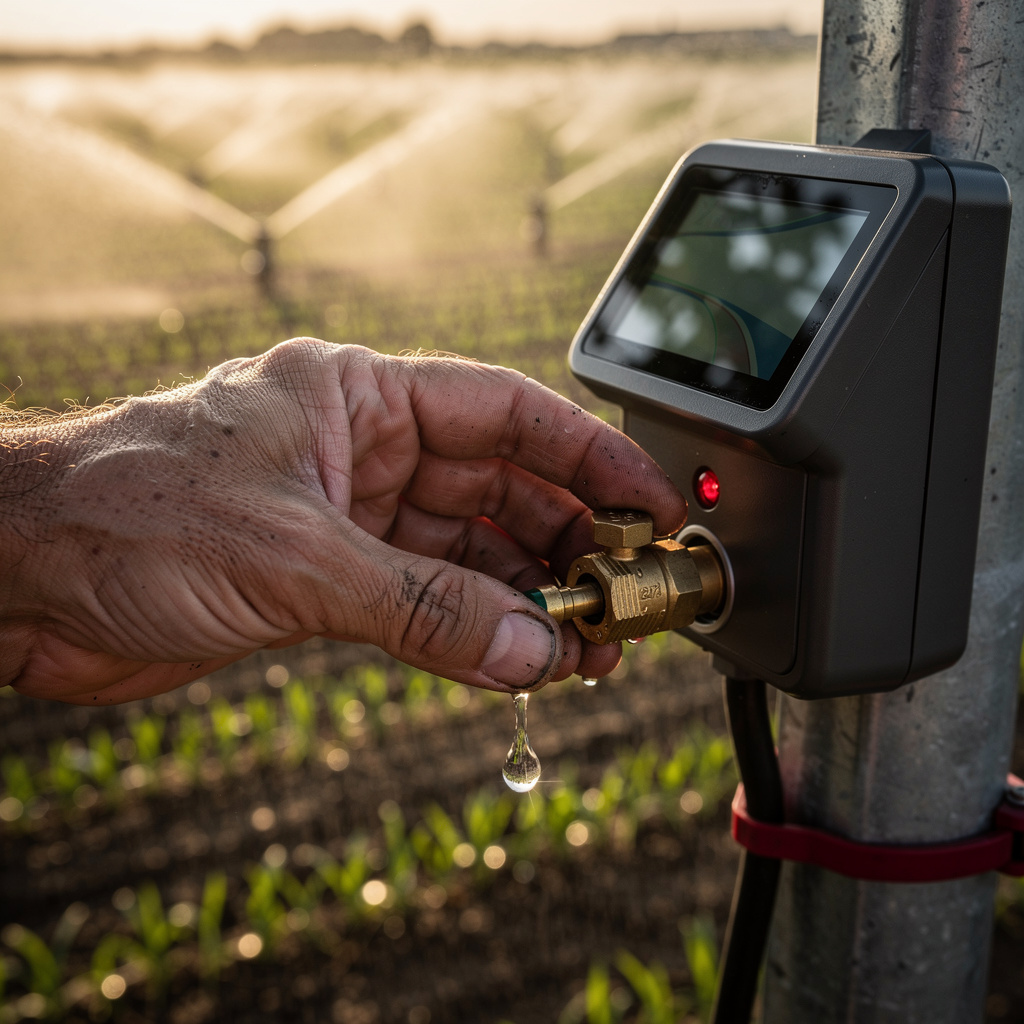
Smart irrigation and water budgeting is an interdisciplinary field that combines hydrology, agronomy, and data science to optimize the timing and amount of water applied to crops or landscapes. Its core concepts include evapotranspiration (the combined loss of water from soil and plants), soil moisture dynamics, and the water balance equation—where inputs (rainfall, irrigation) are matched against outputs (evapotranspiration, runoff, deep percolation). The discipline leverages sensors, weather data, and automated controllers to replace traditional fixed schedules with adaptive, precision-based watering that responds to actual plant needs and environmental conditions.
Today, this subject is central to addressing global water scarcity, as agriculture consumes roughly 70% of freshwater withdrawals worldwide. Smart irrigation is deployed in precision farming, vineyard and orchard management, golf courses, municipal parks, and residential smart-home systems. Recent shifts include the integration of IoT (Internet of Things) platforms, satellite-based evapotranspiration estimates, and machine learning algorithms that predict irrigation demands from historical and real-time data. These innovations have transformed water budgeting from a manual, spreadsheet-based exercise into a dynamic, cloud-connected practice that supports sustainable resource management and climate resilience.
Mastering this subject builds a robust skill stack that includes quantitative analysis (calculating water budgets and irrigation schedules), sensor technology literacy, data interpretation, and system design for hydraulic efficiency. Professionals who understand smart irrigation can reduce operational costs, comply with water-use regulations, and contribute to environmental stewardship. Beyond agriculture, this expertise benefits urban planners, civil engineers, and policy makers seeking to implement water-saving strategies in public infrastructure. For learners, the subject bridges theoretical knowledge of plant physiology and soil physics with practical, technology-driven solutions—preparing them for roles in agtech startups, irrigation consulting firms, and water management agencies.
Common Questions About Smart Irrigation and Water Budgeting
What career paths does a smart irrigation and water budgeting certification open up?
Is this smart irrigation course suitable for someone with no prior agriculture experience?
How do you calculate the water balance equation for a specific landscape area?
What is the role of evapotranspiration in smart irrigation scheduling?
How do soil moisture sensors help in setting wet and dry thresholds for irrigation?
What are the main differences between ET-based and sensor-based smart irrigation controllers?
- ET-based controllers calculate evapotranspiration from weather data and adjust schedules predictively.
- Sensor-based controllers measure soil moisture directly and react to real-time conditions.
Is it a myth that more water always leads to healthier plants and landscapes?
What Will This Course Bring You?
- Analyze the soil-plant-atmosphere continuum to estimate evapotranspiration for irrigation scheduling.
- Design a water budget for a given crop and climate using local weather data and crop coefficients.
- Apply soil moisture and weather sensor data to optimize irrigation timing and application amounts.
- Evaluate smart irrigation controller options based on system requirements, water savings, and cost-effectiveness.
- Implement a data integration framework for real-time irrigation monitoring and control across multiple zones.
- Calculate irrigation water requirements using evapotranspiration, effective rainfall, and soil water holding capacity.
- Design an efficient irrigation system layout considering pressure, flow rate, and uniformity for water conservation.
- Calibrate and maintain smart irrigation sensors and controllers to ensure long-term accuracy and performance.
Curriculum
12 Units1. Fundamentals of Irrigation and Water Conservation
1 hour
2. Water Budgeting Principles
1 hour
3. Soil-Plant-Atmosphere Continuum and Evapotranspiration
1 hour
4. Sensors for Soil Moisture and Weather
1 hour
5. Smart Irrigation Controllers
1 hour
6. Irrigation Scheduling Methods
1 hour
7. Data Integration and Communication
1 hour
8. Water Budgeting Calculations and Applications
1 hour
9. Irrigation System Design for Efficiency
1 hour
10. Advanced Technologies in Smart Irrigation
1 hour
11. Implementation, Calibration, and Maintenance
1 hour
12. Case Studies and Best Practices
1 hour
Exam – Smart Irrigation and Water Budgeting
20 Questions • 70% Pass • 30 min
Unlock All Units for Free
Create an account, enroll in the course, and start with the first unit right away.
Exam – Smart Irrigation and Water Budgeting
20 Questions • Pass: 70% • 30 min
Course Duration
720
Total Minutes
12
Unit
1
Final Exam
~60
Min / Unit
Smart Irrigation and Water Budgeting Certificate Program
Document Your Skill
Those who pass the 20-question, 30-minute exam with 70% receive the Smart Irrigation and Water Budgeting Certificate.
Stand Out on Your CV
By adding your certificate to your CV, gain a professional reference in job applications and stand out from the crowd.
Career Advantage
Catch Wisdom certificates are recognized by HR departments and increase career opportunities.
CERTIFICATE FEE
At the end of the course, an online exam consisting of 20 questions with a 30-minute time limit is given. The exam appears automatically after you complete the topics. Anyone who scores at least 70 out of 100 on the certificate exam is awarded the Smart Irrigation and Water Budgeting Document (certificate of attendance). You can add the certificate you earn to your CV for job applications in the many sectors listed above, and use it as a reference proving that you took this interactive course.
The Certificate of Achievement you receive with the Smart Irrigation and Water Budgeting course program holds value that proves your personal and professional development in the business world. By adding it to your CV, it can serve as an important reference in your job applications. Moreover, compared with certificates from other private training institutions, Catch Wisdom certificates are offered to our participants at a much more affordable price.
Because HR departments recognize Catch Wisdom as a reputable institution in this field, they value these certificates and may evaluate your job applications favorably. For this reason, a Smart Irrigation and Water Budgeting course certificate from Catch Wisdom can make your applications more attractive and place you in an advantageous position in the business world.
For more information, we recommend visiting the Support page.
Certificate in 7 Languages
Earning success certificates from our courses is now more meaningful and global. With certificates available in Turkish, English, German, French, Spanish, Arabic, and Russian, we fully unlock the potential of students worldwide.
Why Certificate in 7 Languages?
-
01
Global Skill Development
Receiving your certificates in 7 different languages strengthens your communication skills as you engage with more people worldwide. It lets you operate more confidently and capably on the international stage.
-
02
International Job Opportunities
Employers may see your certificates in multiple languages as a sign of your ability to seize global opportunities. You can open more doors to new jobs and projects.
-
03
Cultural Richness
The chance to earn certificates in different languages helps you build closer ties with various cultures and broadens your worldview. It enriches your global perspective and deepens cultural understanding.
-
04
Ability to Participate in International Projects
Multilingual certificates give you an edge to work more effectively on international projects. They boost your chances of leadership and participation in diverse projects in the business world.
-
05
Prove Yourself on the Global Stage
Certificates in multiple languages let you showcase your skills and knowledge worldwide. You can become an internationally recognized professional.
Language diversity opens worldwide opportunities. If you want to prove yourself in the international arena, join our online Smart Irrigation and Water Budgeting course program and begin this journey with us.
Frequently Asked Questions (FAQ)
Is this course paid?
How do I join the course?
Can I take the course at my own pace?
How can I get my certificate?
What are the advantages of the Certified Certificate?
Boost Your Career
Take a new career step with the Smart Irrigation and Water Budgeting course. Add your certificate to your CV, stand out in job applications, and open the door to new opportunities in the industry.
StartStudent Reviews
No reviews yet
Enroll in this course and be the first to leave a review about your experience with Smart Irrigation and Water Budgeting.
Start