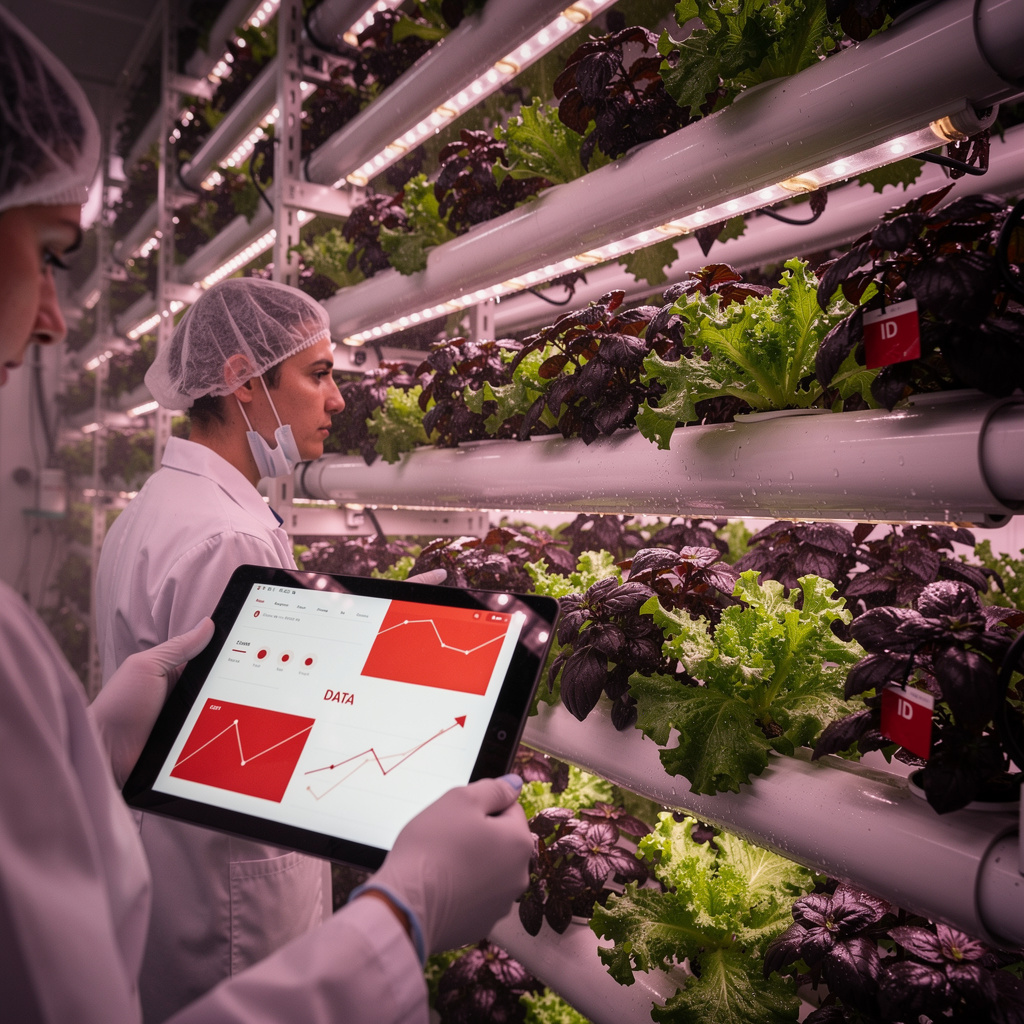
What is Vertical Farming Unit Economics?
Vertical Farming Unit Economics Training
The Vertical Farming Unit Economics certificate program delivers a rigorous, data-driven exploration of the financial systems that determine whether a vertical farm thrives or fails. Designed for aspiring agri-tech entrepreneurs, operations managers, investors, and agricultural finance professionals, this course translates complex cost structures into actionable decision-making frameworks. By the end, participants will be able to model a complete vertical farm profit-and-loss statement, identify the most impactful levers for profitability, and evaluate real-world investment opportunities with confidence.
The program progresses from foundational concepts to advanced analytical techniques, making it accessible to learners without prior vertical farming experience while still offering depth for seasoned professionals. It balances theoretical financial principles with hands-on exercises drawn from actual farm operations, covering revenue drivers, capital expenditure, operational expenditure, energy management, labor automation, crop selection, pricing strategies, and scaling dynamics. With energy costs and market volatility reshaping the industry, this training equips learners with the sensitivity analysis and risk management skills needed to navigate today's challenging agricultural landscape.
What is Vertical Farming Unit Economics?
Vertical farming unit economics is the discipline of analyzing the financial performance of indoor farming operations at the individual unit level, examining both the revenue streams and the cost structures that define profitability. It encompasses the study of capital expenditure—the cost of building the farm infrastructure—and operational expenditure, including energy, labor, seeds, nutrients, and maintenance. Core concepts include contribution margin, break-even analysis, payback periods, and the economies of scale that emerge as operations expand.
The subject has gained critical importance as the vertical farming industry matures from a speculative venture into a capital-intensive sector where financial discipline determines survival. With energy costs representing the single largest variable expense in most operations, and with crop prices fluctuating based on market dynamics and sales channel agreements, the ability to model and forecast unit economics has become a defining skill for industry leaders. Recent high-profile farm closures and consolidations have underscored the necessity of rigorous financial planning, making unit economics the central lens through which investors and operators evaluate viability.
Mastering vertical farming unit economics builds a robust skill stack that combines agricultural knowledge with financial modeling, pricing strategy, and risk assessment. Professionals who develop this expertise are equipped to make strategic decisions about crop selection, automation investments, facility expansion, and market positioning. The subject serves entrepreneurs seeking to launch sustainable operations, investors conducting due diligence, and managers optimizing existing farms, providing a universal framework for measuring and improving the financial health of controlled-environment agriculture.
Common Questions About Vertical Farming Unit Economics
Does the Vertical Farming Unit Economics certificate boost a CV for agri-tech jobs?
Can a beginner with no farming background start this vertical farming unit economics course?
How do you calculate contribution margin per pound in vertical farming?
Why does energy eat up the biggest variable cost in vertical farms?
What crop selection strategy maximizes revenue per square foot?
How do you compute break-even yield for a vertical farm?
- Calculate contribution margin per pound by subtracting variable costs from the farm-gate price.
- Sum all fixed costs for the period, including rent, insurance, and other non-variable expenses.
- Divide total fixed costs by contribution margin per pound to get the break-even volume in pounds.
- Convert that volume to yield per square foot by dividing by your total growing area.
Is it a myth that vertical farms always lose money on energy costs?
What Will This Course Bring You?
- Apply the unit economics framework to define cost and revenue components for a vertical farm.
- Analyze revenue drivers such as crop selection, pricing, and sales channels to maximize farm income.
- Calculate capital expenditure requirements for constructing a vertical farm, including equipment and infrastructure.
- Evaluate operational expenditure components like labor, energy, and maintenance to control ongoing costs.
- Analyze energy consumption patterns and implement strategies to reduce the largest variable cost in vertical farming.
- Design a labor and automation balance that optimizes operational efficiency and minimizes costs.
- Compute contribution margin, break-even point, and payback period for a vertical farm investment.
- Perform sensitivity analysis to identify key risk factors and develop mitigation plans for vertical farm operations.
Curriculum
12 Units1. Defining Unit Economics for Vertical Farms
1 hour
2. Revenue Drivers: Crops, Pricing, and Sales Channels
1 hour
3. Capital Expenditure: Building the Farm
1 hour
4. Operational Expenditure: Running the Farm
1 hour
5. Energy: The Biggest Variable Cost
1 hour
6. Labor and Automation: Balancing Costs
1 hour
7. Crop Selection and Yield Optimization
1 hour
8. Pricing Strategies and Market Dynamics
1 hour
9. Key Metrics: Contribution Margin, Break-Even, and Payback
1 hour
10. Scaling Up: Economies of Scale and Expansion
1 hour
11. Sensitivity Analysis and Risk Management
1 hour
12. Case Studies and Future Outlook
1 hour
Exam – Vertical Farming Unit Economics
20 Questions • 70% Pass • 30 min
Unlock All Units for Free
Create an account, enroll in the course, and start with the first unit right away.
Exam – Vertical Farming Unit Economics
20 Questions • Pass: 70% • 30 min
Course Duration
720
Total Minutes
12
Unit
1
Final Exam
~60
Min / Unit
Vertical Farming Unit Economics Certificate Program
Document Your Skill
Those who pass the 20-question, 30-minute exam with 70% receive the Vertical Farming Unit Economics Certificate.
Stand Out on Your CV
By adding your certificate to your CV, gain a professional reference in job applications and stand out from the crowd.
Career Advantage
Catch Wisdom certificates are recognized by HR departments and increase career opportunities.
CERTIFICATE FEE
At the end of the course, an online exam consisting of 20 questions with a 30-minute time limit is given. The exam appears automatically after you complete the topics. Anyone who scores at least 70 out of 100 on the certificate exam is awarded the Vertical Farming Unit Economics Document (certificate of attendance). You can add the certificate you earn to your CV for job applications in the many sectors listed above, and use it as a reference proving that you took this interactive course.
The Certificate of Achievement you receive with the Vertical Farming Unit Economics course program holds value that proves your personal and professional development in the business world. By adding it to your CV, it can serve as an important reference in your job applications. Moreover, compared with certificates from other private training institutions, Catch Wisdom certificates are offered to our participants at a much more affordable price.
Because HR departments recognize Catch Wisdom as a reputable institution in this field, they value these certificates and may evaluate your job applications favorably. For this reason, a Vertical Farming Unit Economics course certificate from Catch Wisdom can make your applications more attractive and place you in an advantageous position in the business world.
For more information, we recommend visiting the Support page.
Certificate in 7 Languages
Earning success certificates from our courses is now more meaningful and global. With certificates available in Turkish, English, German, French, Spanish, Arabic, and Russian, we fully unlock the potential of students worldwide.
Why Certificate in 7 Languages?
-
01
Global Skill Development
Receiving your certificates in 7 different languages strengthens your communication skills as you engage with more people worldwide. It lets you operate more confidently and capably on the international stage.
-
02
International Job Opportunities
Employers may see your certificates in multiple languages as a sign of your ability to seize global opportunities. You can open more doors to new jobs and projects.
-
03
Cultural Richness
The chance to earn certificates in different languages helps you build closer ties with various cultures and broadens your worldview. It enriches your global perspective and deepens cultural understanding.
-
04
Ability to Participate in International Projects
Multilingual certificates give you an edge to work more effectively on international projects. They boost your chances of leadership and participation in diverse projects in the business world.
-
05
Prove Yourself on the Global Stage
Certificates in multiple languages let you showcase your skills and knowledge worldwide. You can become an internationally recognized professional.
Language diversity opens worldwide opportunities. If you want to prove yourself in the international arena, join our online Vertical Farming Unit Economics course program and begin this journey with us.
Frequently Asked Questions (FAQ)
Is this course paid?
How do I join the course?
Can I take the course at my own pace?
How can I get my certificate?
What are the advantages of the Certified Certificate?
Boost Your Career
Take a new career step with the Vertical Farming Unit Economics course. Add your certificate to your CV, stand out in job applications, and open the door to new opportunities in the industry.
StartStudent Reviews
No reviews yet
Enroll in this course and be the first to leave a review about your experience with Vertical Farming Unit Economics.
Start