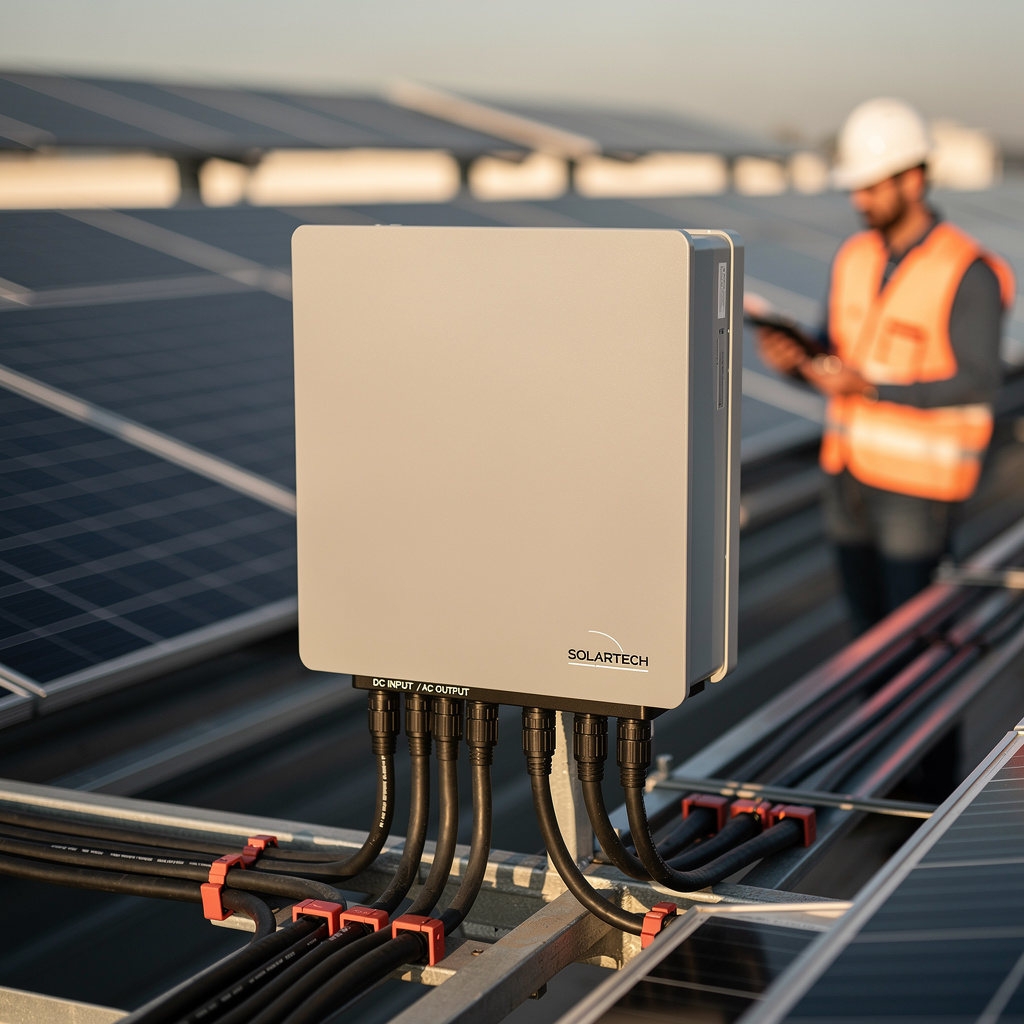
What is Solar Inverter and String Design?
Solar Inverter and String Design Training
The Solar Inverter and String Design certificate program delivers a comprehensive, hands-on foundation for designing efficient and reliable PV systems, focusing on the critical interplay between inverters and string configurations. This course is ideal for aspiring solar designers, electrical engineers, installation technicians, and renewable energy professionals who want to move beyond basic PV knowledge and master the technical decisions that determine system performance. By the end, you will be able to size inverters, calculate string voltage and current limits under real-world temperature conditions, and select appropriate protection components—directly translating theory into bankable designs.
The program is structured as a beginner-friendly progression that builds from solar PV fundamentals and inverter topologies through module electrical characteristics, MPPT behavior, and temperature-adjusted string sizing, then advances to multi-string combiner layouts, AC output design, and safety protection. You will develop four core skill areas: electrical calculations, component selection, system optimization, and troubleshooting—reinforced by practical case studies and simulation exercises. With the global push toward solar adoption and increasingly complex inverter technologies, this training equips you with the precise, current knowledge needed to design systems that maximize energy yield, comply with safety standards, and adapt to evolving grid requirements—making it a strategic choice for career advancement in the renewable energy sector.
What is Solar Inverter and String Design?
Solar inverter and string design is the engineering discipline that determines how photovoltaic (PV) modules are electrically grouped into strings and how those strings are connected to an inverter to convert DC power into usable AC power. Core concepts include module voltage-current characteristics, maximum power point tracking (MPPT), inverter input voltage and current windows, temperature coefficients, and the impact of series and parallel connections on system voltage and current. The subject also covers combiner boxes, fusing, disconnects, and grounding, ensuring that the array operates safely and efficiently under all environmental conditions.
Today, string design is more critical than ever as solar installations grow in scale and complexity, from residential rooftops to utility-scale plants. With the rise of high-efficiency modules, multi-MPPT inverters, and smart monitoring, precise string sizing directly influences energy harvest, system longevity, and return on investment. Real-world applications span distributed generation, commercial rooftops, floating solar, and hybrid systems, where engineers must balance module mismatch, shading, and temperature extremes. Recent shifts toward higher DC-to-AC ratios and advanced inverter features have made robust string design a key differentiator for project profitability and grid stability.
Mastering this subject builds a skill stack that includes electrical circuit analysis, thermal behavior prediction, component specification, and system-level optimization—competencies that are directly applicable in solar engineering firms, EPC contractors, utility planning, and independent consulting. Professionals who understand string design can reduce installation costs, prevent equipment failures, and improve system performance, making them invaluable in both technical and managerial roles. For learners, this knowledge bridges the gap between theoretical PV science and practical, code-compliant design, enabling confident decision-making in a rapidly expanding industry.
Common Questions About Solar Inverter and String Design
Is this solar inverter and string design certification for beginners?
How does a solar inverter string design certification boost my CV?
How do I calculate cold Voc for a solar string?
- Find Voc_STC: the module's open-circuit voltage at standard test conditions, from the datasheet.
- Get α_Voc: the temperature coefficient of voltage, also from the datasheet.
- Determine T_min: the record low temperature for your installation site.
- Apply the formula: plug the values in and compare the result to the inverter's maximum input voltage.
What is the role of MPPT in solar inverter sizing?
Why does current add in parallel strings with combiner boxes?
What is the DC/AC ratio and how does it impact inverter sizing?
Is it true that solar inverters only need to be sized for peak sun hours?
What Will This Course Bring You?
- Analyze the role of the inverter in a solar PV system and its impact on overall system performance.
- Compare different inverter types and topologies to select the appropriate one for a given application.
- Apply PV module electrical characteristics (I-V curve, temperature coefficients) to determine string voltage and current limits.
- Design string configurations that respect inverter input specifications and MPPT voltage range under varying temperature conditions.
- Evaluate the effects of temperature on string voltage and current to ensure safe operation across environmental extremes.
- Implement multiple string designs with combiner boxes to manage current and voltage for large-scale installations.
- Calculate inverter sizing and AC output design parameters to match system capacity and grid requirements.
- Apply protection and safety measures in string design, including fusing, overcurrent protection, and grounding.
Curriculum
12 Units1. Solar PV System Fundamentals and Inverter Role
1 hour
2. Solar Inverter Types and Topologies
1 hour
3. PV Module Electrical Characteristics
1 hour
4. Inverter Input Specifications and MPPT
1 hour
5. String Sizing Fundamentals: Voltage and Current
1 hour
6. Temperature Effects on String Design
1 hour
7. Multiple Strings and Combiner Boxes
1 hour
8. Inverter Sizing and AC Output Design
1 hour
9. Protection and Safety in String Design
1 hour
10. Design Tools and Simulation
1 hour
11. Optimizing String Design for Performance
1 hour
12. Case Studies and Troubleshooting
1 hour
Exam – Solar Inverter and String Design
20 Questions • 70% Pass • 30 min
Unlock All Units for Free
Create an account, enroll in the course, and start with the first unit right away.
Exam – Solar Inverter and String Design
20 Questions • Pass: 70% • 30 min
Course Duration
720
Total Minutes
12
Unit
1
Final Exam
~60
Min / Unit
Solar Inverter and String Design Certificate Program
Document Your Skill
Those who pass the 20-question, 30-minute exam with 70% receive the Solar Inverter and String Design Certificate.
Stand Out on Your CV
By adding your certificate to your CV, gain a professional reference in job applications and stand out from the crowd.
Career Advantage
Catch Wisdom certificates are recognized by HR departments and increase career opportunities.
CERTIFICATE FEE
At the end of the course, an online exam consisting of 20 questions with a 30-minute time limit is given. The exam appears automatically after you complete the topics. Anyone who scores at least 70 out of 100 on the certificate exam is awarded the Solar Inverter and String Design Document (certificate of attendance). You can add the certificate you earn to your CV for job applications in the many sectors listed above, and use it as a reference proving that you took this interactive course.
The Certificate of Achievement you receive with the Solar Inverter and String Design course program holds value that proves your personal and professional development in the business world. By adding it to your CV, it can serve as an important reference in your job applications. Moreover, compared with certificates from other private training institutions, Catch Wisdom certificates are offered to our participants at a much more affordable price.
Because HR departments recognize Catch Wisdom as a reputable institution in this field, they value these certificates and may evaluate your job applications favorably. For this reason, a Solar Inverter and String Design course certificate from Catch Wisdom can make your applications more attractive and place you in an advantageous position in the business world.
For more information, we recommend visiting the Support page.
Certificate in 7 Languages
Earning success certificates from our courses is now more meaningful and global. With certificates available in Turkish, English, German, French, Spanish, Arabic, and Russian, we fully unlock the potential of students worldwide.
Why Certificate in 7 Languages?
-
01
Global Skill Development
Receiving your certificates in 7 different languages strengthens your communication skills as you engage with more people worldwide. It lets you operate more confidently and capably on the international stage.
-
02
International Job Opportunities
Employers may see your certificates in multiple languages as a sign of your ability to seize global opportunities. You can open more doors to new jobs and projects.
-
03
Cultural Richness
The chance to earn certificates in different languages helps you build closer ties with various cultures and broadens your worldview. It enriches your global perspective and deepens cultural understanding.
-
04
Ability to Participate in International Projects
Multilingual certificates give you an edge to work more effectively on international projects. They boost your chances of leadership and participation in diverse projects in the business world.
-
05
Prove Yourself on the Global Stage
Certificates in multiple languages let you showcase your skills and knowledge worldwide. You can become an internationally recognized professional.
Language diversity opens worldwide opportunities. If you want to prove yourself in the international arena, join our online Solar Inverter and String Design course program and begin this journey with us.
Frequently Asked Questions (FAQ)
Is this course paid?
How do I join the course?
Can I take the course at my own pace?
How can I get my certificate?
What are the advantages of the Certified Certificate?
Boost Your Career
Take a new career step with the Solar Inverter and String Design course. Add your certificate to your CV, stand out in job applications, and open the door to new opportunities in the industry.
StartStudent Reviews
No reviews yet
Enroll in this course and be the first to leave a review about your experience with Solar Inverter and String Design.
Start