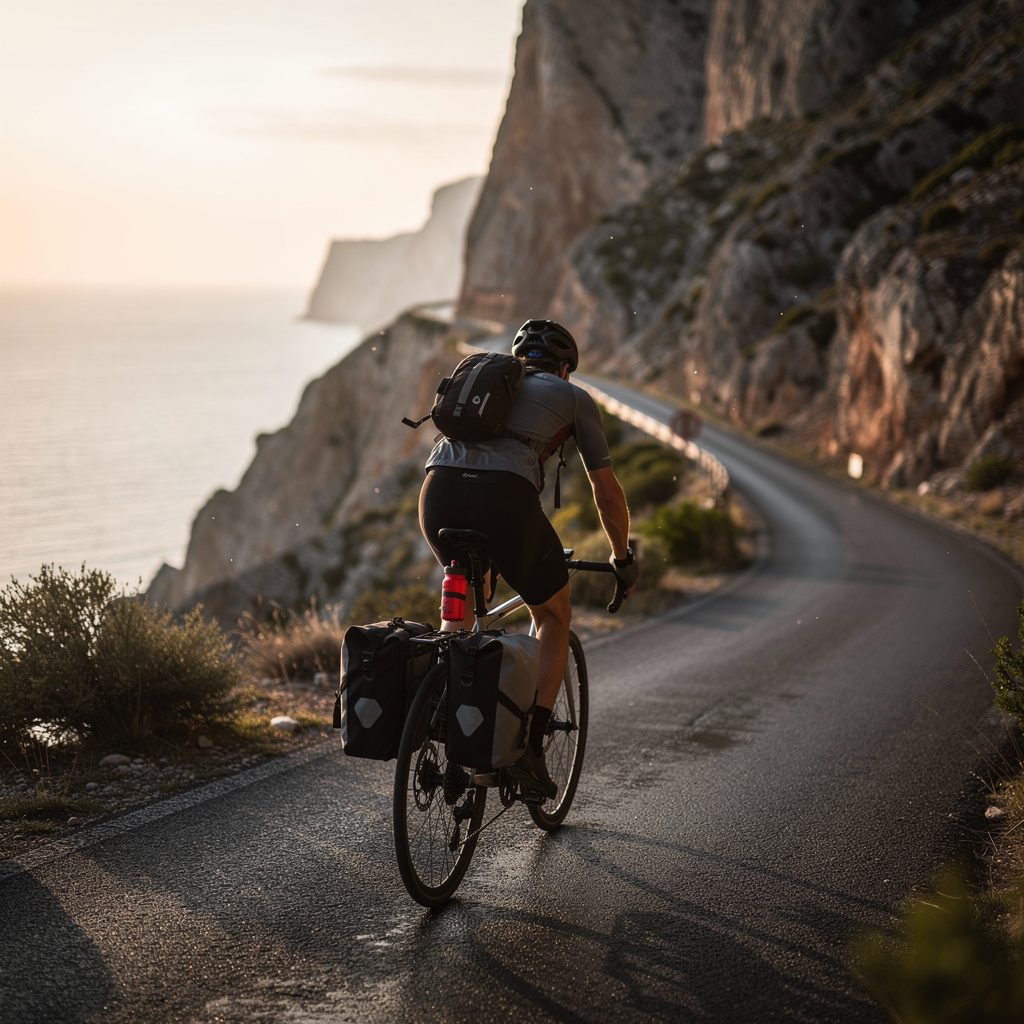
What is Solo Travel Safety?
Solo Travel Safety Training
Solo Travel Safety certificate program equips independent travelers with the practical knowledge and decision-making frameworks needed to reduce risk before, during, and after a solo trip. The course covers pre-trip planning and research, packing and gear selection, health and medical preparedness, accommodation and transportation safety, digital security, cultural awareness, situational awareness, self-defense basics, emergency response, legal and bureaucratic considerations, and confidence-building habits. It is designed for first-time solo travelers, experienced backpackers, digital nomads, remote workers, and anyone who wants to travel alone with greater competence and peace of mind. The main practical outcome is a personalized safety strategy that turns vague concerns into concrete, actionable steps for real-world solo journeys.
The program is structured as a beginner-friendly progression, starting with foundational concepts and moving through planning, health, logistics, digital safety, social interactions, situational awareness, crisis management, and long-term habit formation. Each lesson balances theory with practical application, using scenario-based reasoning, checklists, and reflective exercises rather than abstract lectures. The curriculum builds five core skill areas: preparation and research, health and medical readiness, environmental and logistical safety, digital and social awareness, and emergency response with sustained confidence. Learners choose this program now because solo travel is growing rapidly, remote work and bleisure trips are blurring the line between business and personal travel, and traditional group-tour safety advice no longer fits the way people actually move through the world alone.
What is Solo Travel Safety?
Solo Travel Safety is the practice of identifying, reducing, and managing risk while traveling without companions, using a combination of preparation, awareness, and adaptive decision-making. Its scope spans pre-departure research, health and medical planning, accommodation and transportation selection, digital hygiene, cultural literacy, legal awareness, emergency protocols, and the psychological habits that sustain calm under uncertainty. Core concepts include risk assessment, situational awareness, contingency planning, self-reliance, communication redundancy, and cultural competence. Rather than treating safety as a list of prohibitions, the subject frames it as a dynamic skill set that changes with context, destination, and personal capacity.
Solo Travel Safety matters today because solo travel has moved from niche to mainstream, driven by remote work, social media inspiration, and a broader desire for autonomy and flexible itineraries. In real life, the subject is used by travel risk managers, hospitality and tourism operators, international development organizations, journalists, field researchers, and corporate travel departments that need to protect lone workers and independent travelers. Recent shifts include heightened awareness of digital tracking and data privacy, rapid changes in local regulations and entry requirements, geopolitical volatility, health crises, and increasingly sophisticated scams targeting solo visitors. These developments make static, one-time safety advice obsolete and raise the value of continuous, context-aware safety literacy.
Mastering Solo Travel Safety builds a transferable skill stack: proactive risk assessment, calm decision-making under stress, cross-cultural communication, digital operational security, basic self-defense and de-escalation, and emergency response planning. These skills benefit professionals in travel and hospitality, international education, humanitarian and development work, field journalism, and any role that involves independent movement through unfamiliar environments. On a personal level, the subject supports confidence, autonomy, resilience, and the ability to distinguish real danger from manageable uncertainty. The result is not fear-based restriction but a durable capacity to travel alone with greater judgment, adaptability, and self-trust.
What Will This Course Bring You?
- Analyze solo travel risk factors and apply a personal safety framework to evaluate destinations, itineraries, and daily decisions before departure.
- Design a pre-trip research and packing plan that selects safety-relevant gear, documents, and local emergency contacts for a specific solo destination.
- Implement health and medical preparedness steps by assembling a solo travel first-aid kit and evaluating vaccination, insurance, and medication needs for the itinerary.
- Evaluate accommodation and transportation options using verified safety criteria, then apply navigation strategies that reduce isolation and exposure during solo transit.
- Build a digital safety and communication plan that protects personal data, configures device security, and establishes check-in protocols with trusted contacts.
- Apply cultural awareness and situational awareness techniques to assess social interactions, set boundaries, and respond to escalating discomfort in unfamiliar settings.
- Design an emergency response and crisis management plan that includes local legal procedures, embassy contacts, and decision steps for medical or security incidents.
- Implement confidence-building and habit-sustaining practices by evaluating past travel decisions and creating a repeatable solo safety routine for future trips.
Curriculum
12 Units1. Foundations of Solo Travel Safety
1 hour
2. Pre-Trip Planning and Research
1 hour
3. Packing and Gear for Safety
1 hour
4. Health and Medical Preparedness
1 hour
5. Accommodation Safety
1 hour
6. Transportation and Navigation Safety
1 hour
7. Digital Safety and Communication
1 hour
8. Social Interactions and Cultural Awareness
1 hour
9. Situational Awareness and Self-Defense Basics
1 hour
10. Emergency Response and Crisis Management
1 hour
11. Legal and Bureaucratic Safety
1 hour
12. Building Confidence and Sustaining Safety Habits
1 hour
Exam – Solo Travel Safety
20 Questions • 70% Pass • 30 min
Unlock All Units for Free
Create an account, enroll in the course, and start with the first unit right away.
Exam – Solo Travel Safety
20 Questions • Pass: 70% • 30 min
Course Duration
720
Total Minutes
12
Unit
1
Final Exam
~60
Min / Unit
Solo Travel Safety Certificate Program
Document Your Skill
Those who pass the 20-question, 30-minute exam with 70% receive the Solo Travel Safety Certificate.
Stand Out on Your CV
By adding your certificate to your CV, gain a professional reference in job applications and stand out from the crowd.
Career Advantage
With the verification code, employers can check your certificate instantly — a concrete way to show your growth.
CERTIFICATE FEE
At the end of the course, an online exam consisting of 20 questions with a 30-minute time limit is given. The exam appears automatically after you complete the topics. Anyone who scores at least 70 out of 100 on the certificate exam is awarded the Solo Travel Safety Document (certificate of attendance). You can add the certificate you earn to your CV for job applications in the many sectors listed above, and use it as a reference proving that you took this interactive course.
The Certificate of Achievement you receive with the Solo Travel Safety course program holds value that proves your personal and professional development in the business world. By adding it to your CV, it can serve as an important reference in your job applications. Moreover, compared with certificates from other private training institutions, Catch Wisdom certificates are offered to our participants at a much more affordable price.
The Solo Travel Safety course certificate is a document that proves, with a unique verification code, that you completed the course. Employers can instantly check its authenticity with this code, which helps you show your development concretely in your job applications.
For more information, we recommend visiting the Support page.
Certificate in 7 Languages
Earning success certificates from our courses is now more meaningful and global. With certificates available in Turkish, English, German, French, Spanish, Arabic, and Russian, we fully unlock the potential of students worldwide.
Why Certificate in 7 Languages?
-
01
Global Skill Development
Receiving your certificates in 7 different languages strengthens your communication skills as you engage with more people worldwide. It lets you operate more confidently and capably on the international stage.
-
02
International Job Opportunities
Employers may see your certificates in multiple languages as a sign of your ability to seize global opportunities. You can open more doors to new jobs and projects.
-
03
Cultural Richness
The chance to earn certificates in different languages helps you build closer ties with various cultures and broadens your worldview. It enriches your global perspective and deepens cultural understanding.
-
04
Ability to Participate in International Projects
Multilingual certificates give you an edge to work more effectively on international projects. They boost your chances of leadership and participation in diverse projects in the business world.
-
05
Prove Yourself on the Global Stage
Certificates in multiple languages give you the opportunity to present your skills and knowledge worldwide.
Language diversity opens worldwide opportunities. If you want to prove yourself in the international arena, join our online Solo Travel Safety course program and begin this journey with us.
Frequently Asked Questions (FAQ)
Is this course paid?
How do I join the course?
Can I take the course at my own pace?
How can I get my certificate?
What are the advantages of the certificate?
Boost Your Career
Take a new career step with the Solo Travel Safety course. Add your certificate to your CV, stand out in job applications, and open the door to new opportunities in the industry.
StartStudent Reviews
No reviews yet
Enroll in this course and be the first to leave a review about your experience with Solo Travel Safety.
Start