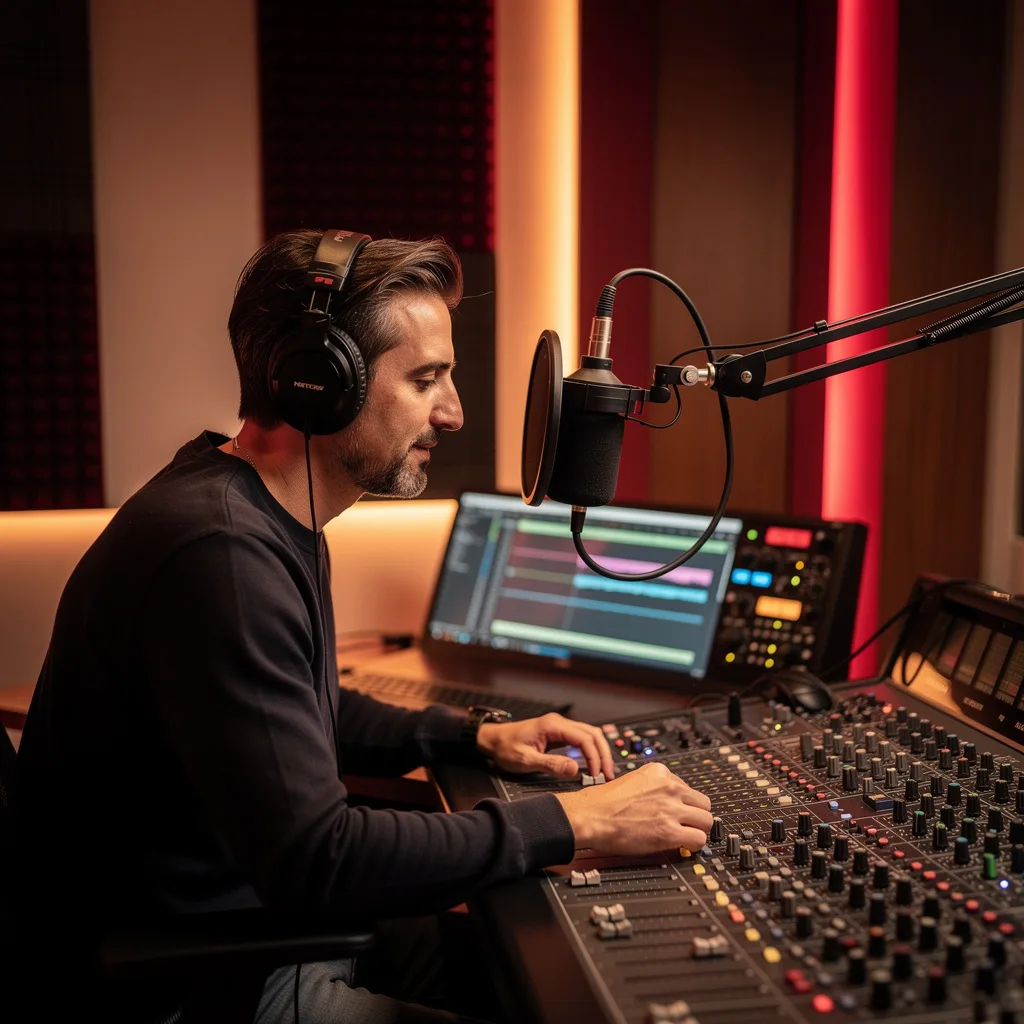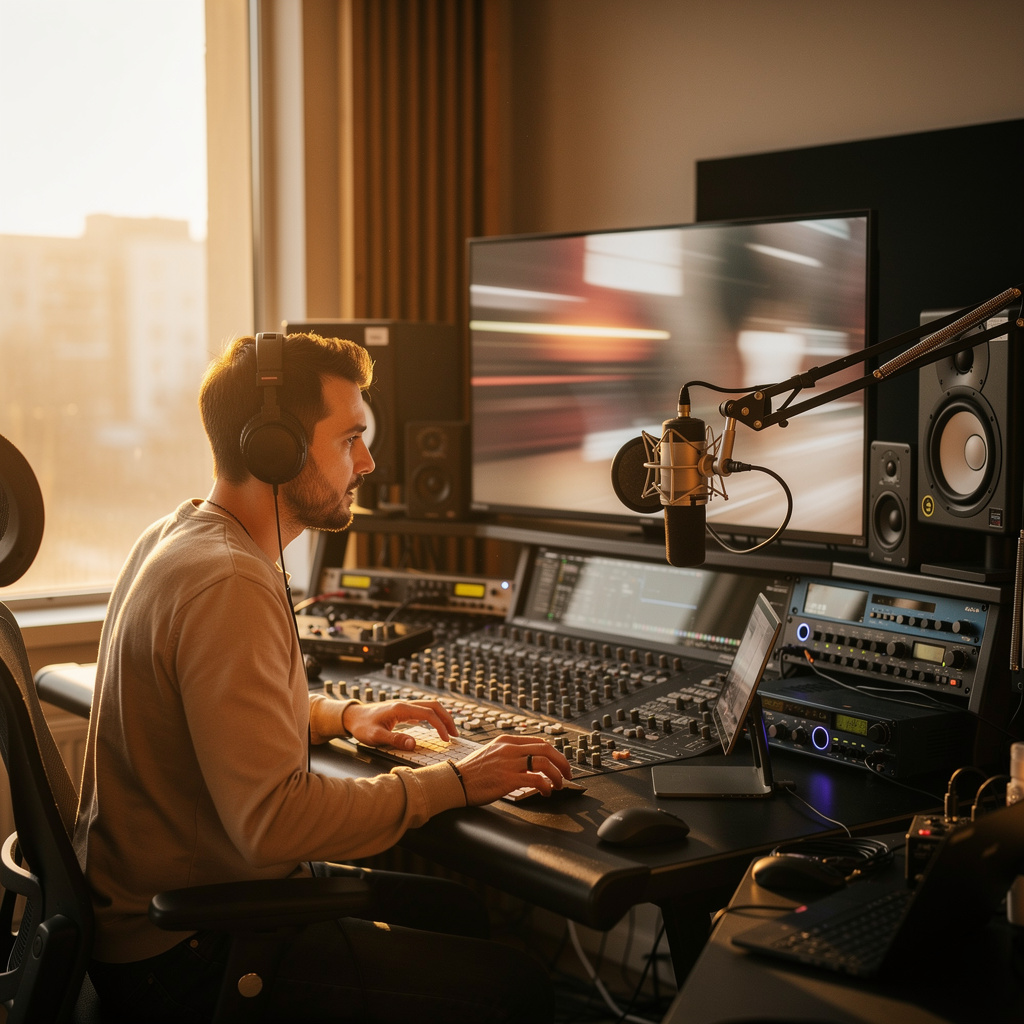
What is Sound Design for Video?
Sound Design for Video Training
The Sound Design for Video certificate program is a comprehensive, hands-on course that takes you from the physics of sound to the final delivery of a polished audio track. Designed for aspiring sound designers, video editors, filmmakers, and content creators, this program teaches you how to record, edit, design, mix, and deliver audio that elevates any visual project. By the end, you will have completed a capstone project that demonstrates your ability to build a full soundscape from scratch, ready for professional use.
The program is structured as a beginner-friendly progression that balances theoretical foundations with practical, project-based exercises. You will build core skills across five key areas: audio fundamentals and perception, field recording and microphone techniques, editing and restoration in a digital audio workstation, sound effect design and Foley/ADR performance, and mixing with EQ, dynamics, and spatial audio. With the rise of immersive formats like Dolby Atmos and the increasing demand for high-quality audio on streaming platforms, this training gives you the exact toolkit needed to stay competitive in today’s media landscape.
What is Sound Design for Video?
Sound design for video is the discipline of creating, capturing, and manipulating all audio elements that accompany a visual narrative. It encompasses dialogue, sound effects, ambient textures, Foley, and music, all woven together to support the story, evoke emotion, and build a believable world. Core concepts include frequency, amplitude, timbre, spatial perception, and the psychological impact of sound on the viewer, as well as the technical processes of recording, editing, mixing, and mastering.
In today’s media environment, sound design is more critical than ever. With the explosion of streaming services, online video, virtual reality, and gaming, audiences expect immersive and pristine audio that matches the visual quality. Recent shifts toward object-based audio and spatial sound have transformed how content is produced and consumed, making skilled sound designers indispensable in film, television, advertising, and interactive media. The industry now demands professionals who understand both the artistic and technical sides of audio, from loudness standards to immersive mixing.
Mastering sound design for video builds a versatile skill stack that includes critical listening, proficiency with digital audio workstations, microphone and field recording techniques, sound editing and restoration, and creative problem-solving. These skills are directly applicable to roles in post-production, broadcast, podcasting, and independent filmmaking, as well as for content creators who want to elevate their own work. Whether you aim to work in a professional studio or produce your own videos, this subject gives you the knowledge to craft audio that truly resonates with audiences.
Common Questions About Sound Design for Video
How does the Sound Design for Video certification boost my CV?
Can a complete beginner start the Sound Design for Video course?
What is the difference between Foley and ADR?
- Purpose: Foley builds the physical soundscape of a scene; ADR replaces or enhances spoken dialogue.
- Source: Foley is performed by dedicated Foley artists using props; ADR is performed by the original actors or voice doubles.
- Timing: Foley syncs to body movements and actions; ADR syncs to lip movements and facial expressions.
- Pipeline position: Both sit in post-production, but Foley often follows the picture edit while ADR is scheduled early to allow for editing and mixing.
How do you resolve frequency clashes with subtractive EQ?
- Identify the clash: Solo the two competing elements (for example, a kick drum and a bass guitar) and listen for muddiness or masking.
- Find the problem frequency: Sweep a narrow boost through the lower mids until the clash becomes obvious, then note that frequency.
- Cut, don't boost: Apply a gentle cut at that frequency on one of the elements — typically the less important one — to create space.
- Alternate the cuts: Give each element its own frequency pocket; if the kick lives at 60 Hz, let the bass sit higher, or vice versa.
- Check in context: Listen to the full mix to confirm the elements now coexist without fighting.
Can you give examples of diegetic and non-diegetic sound?
What is the first step in an audio restoration workflow?
Can AI fix any bad audio recording?
What Will This Course Bring You?
- Analyze the physical properties of sound waves and their perceptual impact to inform audio design decisions.
- Evaluate the narrative role of sound in video to enhance storytelling and emotional impact.
- Apply field recording techniques with microphones to capture high-quality audio for video.
- Implement editing and restoration workflows in a DAW to clean and enhance audio tracks.
- Design original sound effects using synthesis and layering techniques to match visual action.
- Perform Foley and ADR recording to synchronize performance sound with on-screen action.
- Select and license appropriate music for video projects, considering scoring and legal compliance.
- Mix audio using balance, EQ, and dynamics to achieve a professional sound.
Curriculum
12 Units1. Audio Fundamentals: Waves, Frequency, and Perception
1 hour
2. The Narrative Role of Sound in Video
1 hour
3. Recording Audio for Video: Microphones and Field Techniques
1 hour
4. Digital Audio Workstations and Editing Essentials
1 hour
5. Cleaning and Restoring Audio
1 hour
6. Designing Sound Effects
1 hour
7. Foley and ADR: Recording Performance Sound
1 hour
8. Music for Video: Selection, Licensing, and Scoring
1 hour
9. Mixing Fundamentals: Balance, EQ, and Dynamics
1 hour
10. Spatial Audio and Immersive Sound
1 hour
11. Delivering Audio: Codecs, Loudness, and Standards
1 hour
12. Capstone Project and Professional Workflow
1 hour
Exam – Sound Design for Video
20 Questions • 70% Pass • 30 min
Unlock All Units for Free
Create an account, enroll in the course, and start with the first unit right away.
Exam – Sound Design for Video
20 Questions • Pass: 70% • 30 min
Course Duration
720
Total Minutes
12
Unit
1
Final Exam
~60
Min / Unit
Sound Design for Video Certificate Program
Document Your Skill
Those who pass the 20-question, 30-minute exam with 70% receive the Sound Design for Video Certificate.
Stand Out on Your CV
By adding your certificate to your CV, gain a professional reference in job applications and stand out from the crowd.
Career Advantage
Catch Wisdom certificates are recognized by HR departments and increase career opportunities.
CERTIFICATE FEE
At the end of the course, an online exam consisting of 20 questions with a 30-minute time limit is given. The exam appears automatically after you complete the topics. Anyone who scores at least 70 out of 100 on the certificate exam is awarded the Sound Design for Video Document (certificate of attendance). You can add the certificate you earn to your CV for job applications in the many sectors listed above, and use it as a reference proving that you took this interactive course.
The Certificate of Achievement you receive with the Sound Design for Video course program holds value that proves your personal and professional development in the business world. By adding it to your CV, it can serve as an important reference in your job applications. Moreover, compared with certificates from other private training institutions, Catch Wisdom certificates are offered to our participants at a much more affordable price.
Because HR departments recognize Catch Wisdom as a reputable institution in this field, they value these certificates and may evaluate your job applications favorably. For this reason, a Sound Design for Video course certificate from Catch Wisdom can make your applications more attractive and place you in an advantageous position in the business world.
For more information, we recommend visiting the Support page.
Certificate in 7 Languages
Earning success certificates from our courses is now more meaningful and global. With certificates available in Turkish, English, German, French, Spanish, Arabic, and Russian, we fully unlock the potential of students worldwide.
Why Certificate in 7 Languages?
-
01
Global Skill Development
Receiving your certificates in 7 different languages strengthens your communication skills as you engage with more people worldwide. It lets you operate more confidently and capably on the international stage.
-
02
International Job Opportunities
Employers may see your certificates in multiple languages as a sign of your ability to seize global opportunities. You can open more doors to new jobs and projects.
-
03
Cultural Richness
The chance to earn certificates in different languages helps you build closer ties with various cultures and broadens your worldview. It enriches your global perspective and deepens cultural understanding.
-
04
Ability to Participate in International Projects
Multilingual certificates give you an edge to work more effectively on international projects. They boost your chances of leadership and participation in diverse projects in the business world.
-
05
Prove Yourself on the Global Stage
Certificates in multiple languages let you showcase your skills and knowledge worldwide. You can become an internationally recognized professional.
Language diversity opens worldwide opportunities. If you want to prove yourself in the international arena, join our online Sound Design for Video course program and begin this journey with us.
Frequently Asked Questions (FAQ)
Is this course paid?
How do I join the course?
Can I take the course at my own pace?
How can I get my certificate?
What are the advantages of the Certified Certificate?
Boost Your Career
Take a new career step with the Sound Design for Video course. Add your certificate to your CV, stand out in job applications, and open the door to new opportunities in the industry.
StartStudent Reviews
No reviews yet
Enroll in this course and be the first to leave a review about your experience with Sound Design for Video.
Start