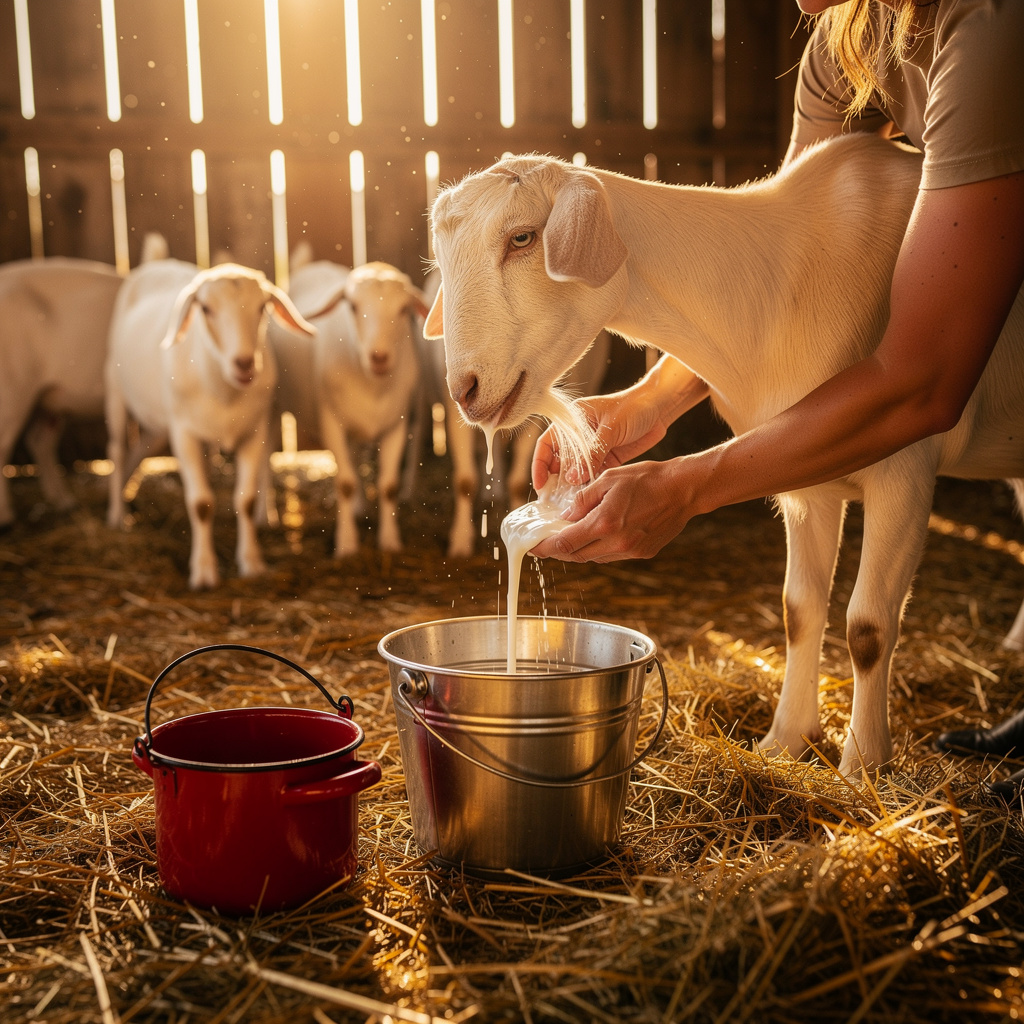
What is Starting a Small Goat Dairy?
Starting a Small Goat Dairy Training Program
Starting a Small Goat Dairy certificate program equips aspiring dairy goat farmers with the complete operational blueprint needed to launch and sustain a profitable small-scale dairy enterprise. This course is designed for beginners with no prior livestock experience, as well as for homesteaders and small farmers looking to diversify into goat milk production. By the end of the program, you will have a fully researched business plan, a breed selection strategy, and a practical understanding of daily milking routines, all tailored to your specific land and budget.
The curriculum follows a logical, beginner-friendly progression that moves from goal setting and feasibility analysis through to financial management and scaling. Each of the twelve lessons balances theoretical knowledge with hands-on application, covering core skill areas such as animal husbandry, facility design, milk safety, and direct-to-consumer marketing. You will also explore value-added product creation, regulatory compliance, and seasonal breeding cycles, ensuring you are prepared for both the challenges and opportunities of the modern goat dairy market. This program is ideal for anyone ready to turn a passion for sustainable agriculture into a viable income stream, especially as consumer demand for locally sourced dairy continues to rise.
What is Starting a Small Goat Dairy?
Starting a small goat dairy is the practice of establishing and operating a modest-scale enterprise focused on the production of goat milk, cheese, yogurt, and other dairy derivatives. It encompasses the entire lifecycle of the operation, from selecting appropriate dairy breeds like Saanen or Alpine, to designing efficient milking parlors, managing nutrition, and implementing biosecurity protocols. Core concepts include lactation cycles, milk composition, pasteurization standards, and the economic principles of small-scale agribusiness, all of which are essential for producing safe, high-quality dairy products.
Today, small goat dairies are gaining significant relevance as consumers increasingly seek out alternative dairy options due to lactose sensitivities, ethical farming concerns, and a preference for artisanal, farm-to-table products. The industry has seen a shift toward direct sales through farmers' markets, community-supported agriculture (CSA) programs, and online platforms, allowing small producers to thrive without competing with industrial-scale operations. Additionally, recent advances in portable milking equipment and low-cost refrigeration have lowered the barrier to entry, making this an accessible venture for rural and even peri-urban entrepreneurs.
Mastering the subject of small goat dairy production builds a diverse skill stack that includes animal health assessment, financial forecasting, food safety management, and niche marketing. These competencies are directly applicable not only to running your own dairy but also to roles in agricultural extension services, specialty food production, and farm-based education. For personal contexts, this knowledge empowers self-sufficiency and a deeper connection to food sources, while professionally, it opens doors to a growing sector that rewards careful planning and ethical stewardship.
Common Questions About Starting a Small Goat Dairy
What does the certificate provide for job applications in a goat dairy business?
Is Starting a Small Goat Dairy course suitable for complete beginners?
What is the most common feeding mistake that harms rumen health in goats?
What are the differences between LTLT and HTST pasteurization methods?
- LTLT: Heats milk at a lower temperature for a longer holding period, typically suited for small-batch artisanal production with simpler equipment.
- HTST: Uses a higher temperature for a much shorter time, designed for continuous flow and larger volumes, making it the industry standard for commercial dairies.
What are the three key components of a biosecurity protocol for goats?
How does parasite load affect milk production in dairy goats?
Is goat milk always healthier than cow milk?
What Will This Course Bring You?
- Analyze the feasibility of a small goat dairy venture by evaluating market demand, startup costs, and personal goals.
- Design a goat dairy facility layout that ensures efficient milking, animal welfare, and compliance with sanitation standards.
- Apply nutritional principles to formulate balanced rations for lactating goats, considering forage quality and supplementation.
- Implement a herd health management plan that includes vaccination schedules, parasite control, and biosecurity measures.
- Evaluate breeding strategies to optimize milk production and herd genetics, including estrus detection and kidding management.
- Demonstrate proper milking procedures and milk handling techniques to maintain milk quality and safety.
- Develop value-added goat milk products such as cheese or yogurt, applying food safety and processing standards.
- Create a marketing and sales plan targeting local markets, including pricing strategies and distribution channels.
Curriculum
12 Units1. Overview and Goal Setting
1 hour
2. Business Planning and Feasibility
1 hour
3. Breed Selection and Acquisition
1 hour
4. Facilities and Equipment
1 hour
5. Nutrition and Feeding
1 hour
6. Health and Disease Management
1 hour
7. Breeding and Reproduction
1 hour
8. Milking Procedures and Milk Handling
1 hour
9. Milk Processing and Value-Added Products
1 hour
10. Regulations and Compliance
1 hour
11. Marketing and Sales
1 hour
12. Financial Management and Scaling
1 hour
Exam – Starting a Small Goat Dairy
20 Questions • 70% Pass • 30 min
Unlock All Units for Free
Create an account, enroll in the course, and start with the first unit right away.
Exam – Starting a Small Goat Dairy
20 Questions • Pass: 70% • 30 min
Course Duration
720
Total Minutes
12
Unit
1
Final Exam
~60
Min / Unit
Starting a Small Goat Dairy Certificate Program
Document Your Skill
Those who pass the 20-question, 30-minute exam with 70% receive the Starting a Small Goat Dairy Certificate.
Stand Out on Your CV
By adding your certificate to your CV, gain a professional reference in job applications and stand out from the crowd.
Career Advantage
Catch Wisdom certificates are recognized by HR departments and increase career opportunities.
CERTIFICATE FEE
At the end of the course, an online exam consisting of 20 questions with a 30-minute time limit is given. The exam appears automatically after you complete the topics. Anyone who scores at least 70 out of 100 on the certificate exam is awarded the Starting a Small Goat Dairy Document (certificate of attendance). You can add the certificate you earn to your CV for job applications in the many sectors listed above, and use it as a reference proving that you took this interactive course.
The Certificate of Achievement you receive with the Starting a Small Goat Dairy course program holds value that proves your personal and professional development in the business world. By adding it to your CV, it can serve as an important reference in your job applications. Moreover, compared with certificates from other private training institutions, Catch Wisdom certificates are offered to our participants at a much more affordable price.
Because HR departments recognize Catch Wisdom as a reputable institution in this field, they value these certificates and may evaluate your job applications favorably. For this reason, a Starting a Small Goat Dairy course certificate from Catch Wisdom can make your applications more attractive and place you in an advantageous position in the business world.
For more information, we recommend visiting the Support page.
Certificate in 7 Languages
Earning success certificates from our courses is now more meaningful and global. With certificates available in Turkish, English, German, French, Spanish, Arabic, and Russian, we fully unlock the potential of students worldwide.
Why Certificate in 7 Languages?
-
01
Global Skill Development
Receiving your certificates in 7 different languages strengthens your communication skills as you engage with more people worldwide. It lets you operate more confidently and capably on the international stage.
-
02
International Job Opportunities
Employers may see your certificates in multiple languages as a sign of your ability to seize global opportunities. You can open more doors to new jobs and projects.
-
03
Cultural Richness
The chance to earn certificates in different languages helps you build closer ties with various cultures and broadens your worldview. It enriches your global perspective and deepens cultural understanding.
-
04
Ability to Participate in International Projects
Multilingual certificates give you an edge to work more effectively on international projects. They boost your chances of leadership and participation in diverse projects in the business world.
-
05
Prove Yourself on the Global Stage
Certificates in multiple languages let you showcase your skills and knowledge worldwide. You can become an internationally recognized professional.
Language diversity opens worldwide opportunities. If you want to prove yourself in the international arena, join our online Starting a Small Goat Dairy course program and begin this journey with us.
Frequently Asked Questions (FAQ)
Is this course paid?
How do I join the course?
Can I take the course at my own pace?
How can I get my certificate?
What are the advantages of the Certified Certificate?
Boost Your Career
Take a new career step with the Starting a Small Goat Dairy course. Add your certificate to your CV, stand out in job applications, and open the door to new opportunities in the industry.
StartStudent Reviews
No reviews yet
Enroll in this course and be the first to leave a review about your experience with Starting a Small Goat Dairy.
Start