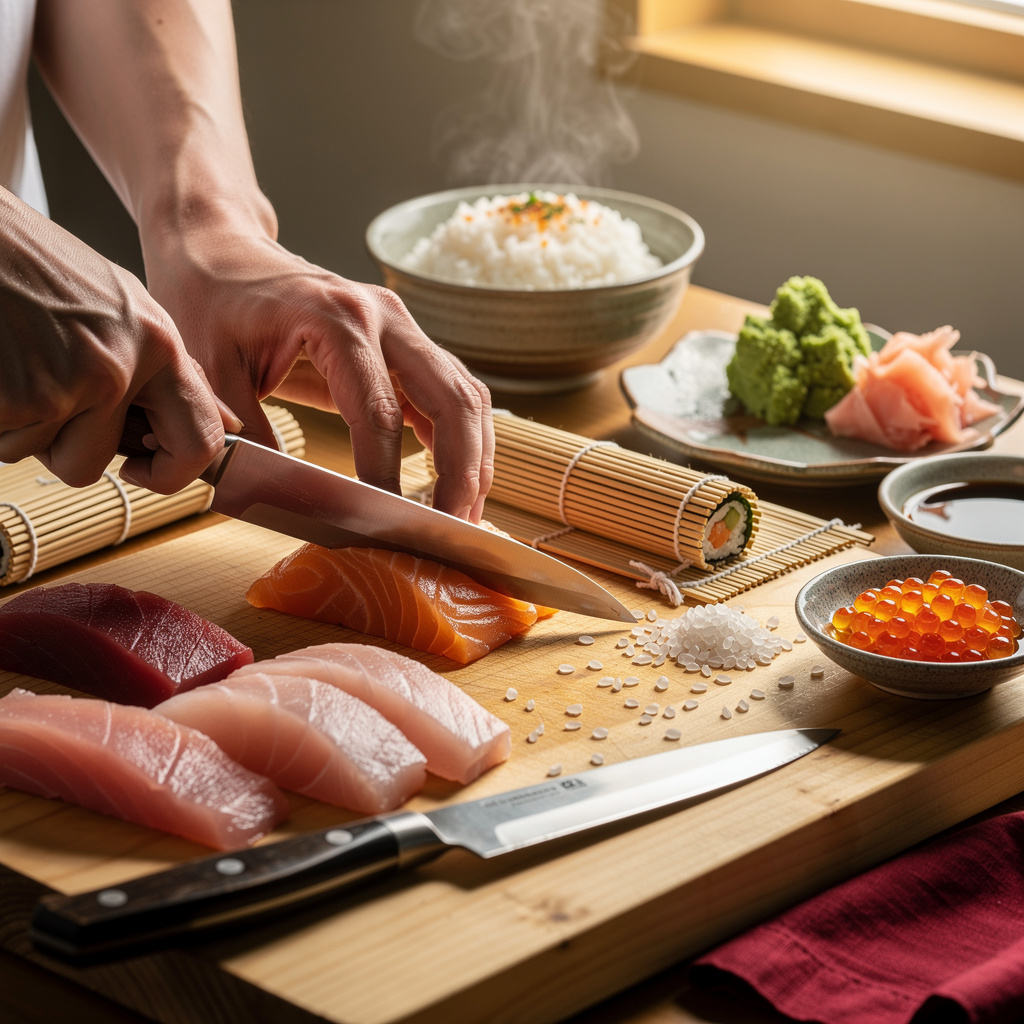
What is Sushi and Japanese Cuisine Techniques?
Sushi and Japanese Cuisine Techniques Training
The Sushi and Japanese Cuisine Techniques certificate program is a comprehensive exploration of Japan’s culinary arts, guiding learners from fundamental principles to the delicate craft of sushi and beyond. This course teaches essential techniques such as Japanese knife skills, rice preparation, dashi extraction, sushi rolling, sashimi cutting, tempura frying, and the art of kaiseki plating. It is designed for aspiring chefs, culinary students, and dedicated home cooks who seek to prepare authentic Japanese dishes with precision and artistry. The main practical outcome is the ability to confidently create a wide range of traditional and contemporary Japanese meals, balancing flavor, texture, and visual harmony.
The program is structured as a beginner-friendly progression that respects the depth of the subject, beginning with the foundations of Japanese cuisine and advancing through dedicated modules on knife maintenance, rice mastery, and dashi before immersing you in sushi history, types, and etiquette. Each lesson weaves together theory and hands-on practice, ensuring you grasp the cultural context and the reasoning behind every cut and seasoning. Core skill areas built throughout the training include precision cutting, sushi rice and vinegar mastery, nigiri and maki assembly, and a spectrum of cooking methods from grilling and broiling to simmering and steaming. With the global appetite for authentic Japanese dining experiences growing rapidly, this program offers a timely opportunity to develop a specialized, highly sought-after skill set that elevates both professional and personal culinary pursuits.
What is Sushi and Japanese Cuisine Techniques?
Sushi and Japanese cuisine techniques form a disciplined culinary tradition rooted in washoku, a philosophy that celebrates harmony, seasonality, and the inherent flavors of pristine ingredients. Sushi itself is the iconic marriage of seasoned rice with fresh seafood, vegetables, or other toppings, but the broader field encompasses everything from dashi-based soups and simmered dishes to intricate kaiseki multi-course meals. Core concepts include the pursuit of umami, the mastery of precise knife cuts that influence both texture and presentation, and the delicate balance of sweet, salty, sour, and bitter elements. This knowledge spans raw and cooked preparations, emphasizing minimalism, respect for the ingredient, and a deep connection to nature’s rhythms.
In today’s global culinary landscape, Japanese cuisine holds a position of extraordinary influence, with sushi bars, ramen shops, and fine dining establishments thriving on every continent. The UNESCO recognition of washoku as an intangible cultural heritage has further elevated its status, while health-conscious diners increasingly seek out its clean flavors and nutritional balance. Recent shifts include a strong focus on sustainable seafood practices, creative fusion that blends Japanese methods with local ingredients, and the integration of precise Japanese techniques into mainstream restaurant kitchens. As a result, the ability to execute proper knife work, rice preparation, and dashi extraction has become a valuable differentiator for culinary professionals and a source of authentic cultural engagement for enthusiasts.
Engaging deeply with sushi and Japanese cuisine techniques builds a robust skill stack that extends far beyond recipe following. It develops advanced knife dexterity, an intuitive understanding of flavor layering through dashi and seasoning, and the patience required for meticulous preparation and stunning presentation. These competencies open doors to careers as a sushi chef, Japanese restaurant specialist, or culinary educator, while also enriching personal contexts such as hosting omakase-style dinners or exploring mindful eating practices. Ultimately, the subject instills a mindset of continuous refinement and reverence for ingredients, qualities that resonate in any professional kitchen or creative personal endeavor.
Common Questions About Sushi and Japanese Cuisine Techniques
Is this sushi course suitable for beginners with no kitchen experience?
Will this course help me become a professional sushi chef?
What is the difference between dashi and regular broth?
Why is sushi rice vinegar so important for flavor?
How do you properly sharpen a Japanese knife?
- Soaking the stone: Submerge the water stone in water for 10-15 minutes until bubbles stop.
- Setting the angle: Hold the knife at a consistent 15-20 degree angle against the stone.
- Sharpening strokes: Push the blade across the stone in a sweeping motion, applying light pressure, and repeat on both sides evenly.
- Burr removal: Finish with a few light strokes on a finer stone or a leather strop to remove the burr.
What are common mistakes when making tempura batter?
Is sushi just raw fish?
What Will This Course Bring You?
- Analyze the foundational principles of Japanese cuisine, including umami, seasonality, and ingredient harmony, to inform dish composition.
- Apply professional Japanese knife techniques to fillet fish and prepare vegetables with precision, while maintaining blade sharpness and safety.
- Prepare perfectly seasoned sushi rice by mastering washing, cooking, and blending with custom seasoned vinegar for optimal texture and flavor.
- Execute nigiri and a variety of maki rolls, demonstrating proper hand-forming, rice density, and nori wrapping techniques.
- Select and cut sashimi-grade fish using traditional methods, evaluating freshness and applying appropriate slicing angles for presentation.
- Design and execute a tempura dish, controlling batter consistency, oil temperature, and frying time to achieve a light, crispy coating.
- Construct a multi-course kaiseki-inspired presentation, applying principles of balance, color, and seasonal garnishes to plate dishes artfully.
Curriculum
12 Units1. Foundations of Japanese Cuisine
1 hour
2. Japanese Knife Skills and Maintenance
1 hour
3. Mastering Japanese Rice
1 hour
4. Dashi and Japanese Soups
1 hour
5. Sushi: History, Types, and Etiquette
1 hour
6. Sushi Rice and Seasoned Vinegar Mastery
1 hour
7. Nigiri and Maki Rolling Techniques
1 hour
8. Sashimi Selection and Cutting Methods
1 hour
9. Tempura and Japanese Frying Techniques
1 hour
10. Grilling and Broiling in Japanese Cuisine
1 hour
11. Simmered and Steamed Dishes
1 hour
12. Plating, Presentation, and Kaiseki Principles
1 hour
Exam – Sushi and Japanese Cuisine Techniques
20 Questions • 70% Pass • 30 min
Unlock All Units for Free
Create an account, enroll in the course, and start with the first unit right away.
Exam – Sushi and Japanese Cuisine Techniques
20 Questions • Pass: 70% • 30 min
Course Duration
720
Total Minutes
12
Unit
1
Final Exam
~60
Min / Unit
Sushi and Japanese Cuisine Techniques Certificate Program
Document Your Skill
Those who pass the 20-question, 30-minute exam with 70% receive the Sushi and Japanese Cuisine Techniques Certificate.
Stand Out on Your CV
By adding your certificate to your CV, gain a professional reference in job applications and stand out from the crowd.
Career Advantage
Catch Wisdom certificates are recognized by HR departments and increase career opportunities.
CERTIFICATE FEE
At the end of the course, an online exam consisting of 20 questions with a 30-minute time limit is given. The exam appears automatically after you complete the topics. Anyone who scores at least 70 out of 100 on the certificate exam is awarded the Sushi and Japanese Cuisine Techniques Document (certificate of attendance). You can add the certificate you earn to your CV for job applications in the many sectors listed above, and use it as a reference proving that you took this interactive course.
The Certificate of Achievement you receive with the Sushi and Japanese Cuisine Techniques course program holds value that proves your personal and professional development in the business world. By adding it to your CV, it can serve as an important reference in your job applications. Moreover, compared with certificates from other private training institutions, Catch Wisdom certificates are offered to our participants at a much more affordable price.
Because HR departments recognize Catch Wisdom as a reputable institution in this field, they value these certificates and may evaluate your job applications favorably. For this reason, a Sushi and Japanese Cuisine Techniques course certificate from Catch Wisdom can make your applications more attractive and place you in an advantageous position in the business world.
For more information, we recommend visiting the Support page.
Certificate in 7 Languages
Earning success certificates from our courses is now more meaningful and global. With certificates available in Turkish, English, German, French, Spanish, Arabic, and Russian, we fully unlock the potential of students worldwide.
Why Certificate in 7 Languages?
-
01
Global Skill Development
Receiving your certificates in 7 different languages strengthens your communication skills as you engage with more people worldwide. It lets you operate more confidently and capably on the international stage.
-
02
International Job Opportunities
Employers may see your certificates in multiple languages as a sign of your ability to seize global opportunities. You can open more doors to new jobs and projects.
-
03
Cultural Richness
The chance to earn certificates in different languages helps you build closer ties with various cultures and broadens your worldview. It enriches your global perspective and deepens cultural understanding.
-
04
Ability to Participate in International Projects
Multilingual certificates give you an edge to work more effectively on international projects. They boost your chances of leadership and participation in diverse projects in the business world.
-
05
Prove Yourself on the Global Stage
Certificates in multiple languages let you showcase your skills and knowledge worldwide. You can become an internationally recognized professional.
Language diversity opens worldwide opportunities. If you want to prove yourself in the international arena, join our online Sushi and Japanese Cuisine Techniques course program and begin this journey with us.
Frequently Asked Questions (FAQ)
Is this course paid?
How do I join the course?
Can I take the course at my own pace?
How can I get my certificate?
What are the advantages of the Certified Certificate?
Boost Your Career
Take a new career step with the Sushi and Japanese Cuisine Techniques course. Add your certificate to your CV, stand out in job applications, and open the door to new opportunities in the industry.
StartStudent Reviews
No reviews yet
Enroll in this course and be the first to leave a review about your experience with Sushi and Japanese Cuisine Techniques.
Start