What is Terrariums and Miniature Gardens?
Terrariums and Miniature Gardens Training
The Terrariums and Miniature Gardens certificate program is a comprehensive training pathway that takes you from the foundational principles of enclosed gardening to advanced design and long-term care techniques. This course is designed for hobbyists, aspiring horticulturists, interior designers, and anyone who wants to bring a touch of living green into indoor spaces. By the end of the program, you will have built both a closed and an open terrarium, designed a miniature fairy or dish garden, and developed a complete maintenance routine that keeps your ecosystems thriving for years.
The program is structured as a beginner-friendly progression that balances scientific theory with hands-on practice. You will explore the biology of self-sustaining ecosystems, master container and substrate selection, learn plant pairing strategies, and develop design principles that transform simple glass vessels into living art. The curriculum builds four core skill areas: ecosystem science, horticultural selection, creative design, and long-term stewardship. With the growing demand for biophilic interior design and the rising popularity of miniature gardening as a wellness practice, this is the ideal moment to gain expertise in a craft that is both personally rewarding and professionally relevant.
What is Terrariums and Miniature Gardens?
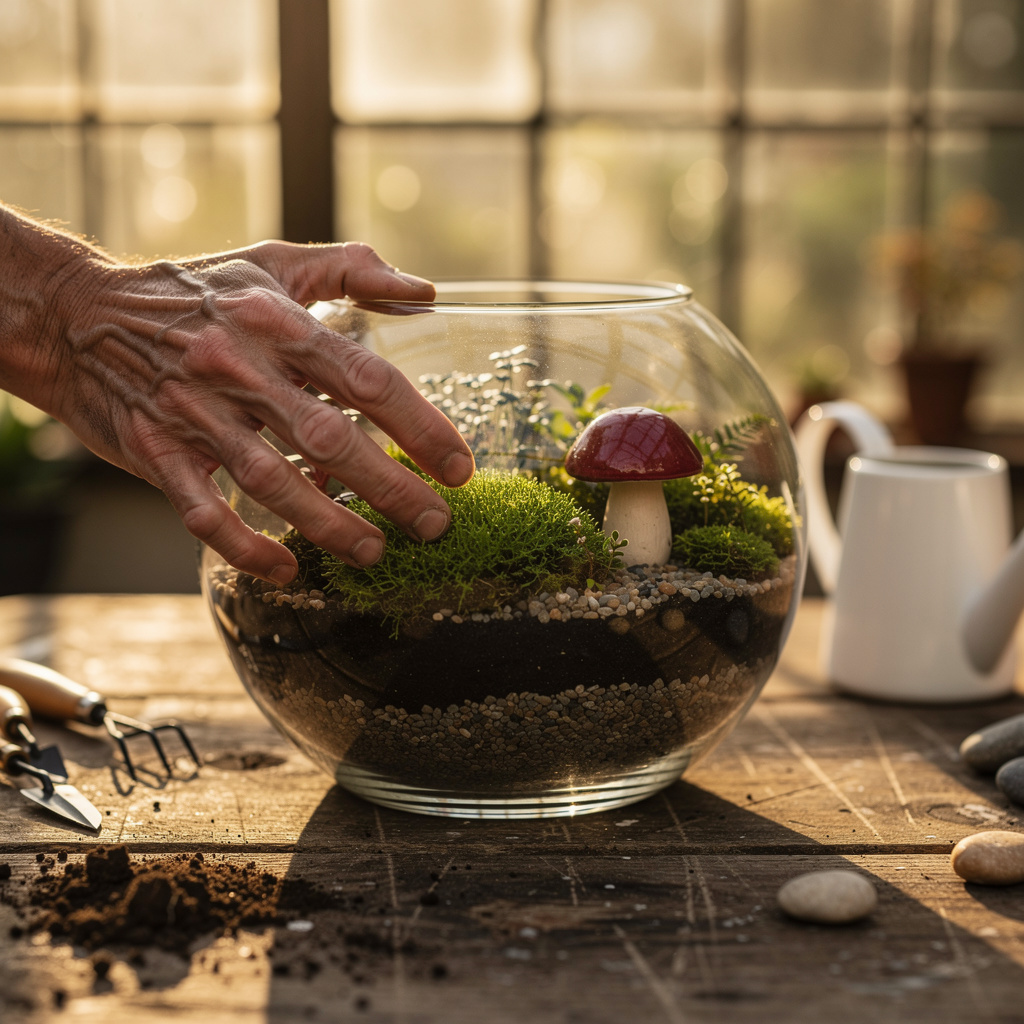
Terrariums and miniature gardens are self-contained living landscapes cultivated within glass containers or shallow dish planters, ranging from fully sealed closed ecosystems to open-air arrangements. The subject encompasses the science of creating balanced microclimates, the art of designing scaled-down natural scenes, and the horticultural knowledge required to sustain plant life in confined environments. Core concepts include the water cycle within closed vessels, substrate layering for drainage and root health, light and humidity management, and the careful selection of plant species that thrive in compact, often humid conditions.
In today's world, terrariums and miniature gardens have surged in relevance as urban living reduces access to outdoor green spaces and as biophilic design becomes a cornerstone of modern architecture and interior styling. These living installations are used in homes, offices, wellness centers, and retail spaces to improve air quality, reduce stress, and create visual focal points. The craft has also gained traction in academia and horticultural therapy, where building and maintaining miniature ecosystems serves as a meditative practice and a tool for teaching ecological principles. Recent shifts toward sustainable living and indoor gardening have further elevated the demand for skilled practitioners who can create and maintain these self-sustaining green spaces.
Mastering the subject of terrariums and miniature gardens builds a versatile skill stack that combines botanical knowledge, design sensibility, and environmental problem-solving. Practitioners develop an intuitive understanding of plant physiology, water dynamics, and soil science, alongside the creative ability to compose landscapes that are both aesthetically pleasing and biologically viable. These skills are valuable for professional florists, landscape designers, interior decorators, educators, and wellness practitioners, while also enriching personal spaces with living art. The discipline rewards patience and observation, offering a unique blend of science and artistry that continues to grow in cultural and commercial significance.
Common Questions About Terrariums and Miniature Gardens
What makes this terrarium course different from others?
Can a complete beginner take this terrarium and miniature gardens course?
How does the water cycle function inside a closed terrarium?
- Evaporation: moisture from the soil and plants rises as vapor
- Condensation: the vapor hits the cooler glass walls and forms droplets
- Precipitation: droplets run down the glass and fall back onto the soil
- Collection: water pools in the drainage layer, ready to evaporate again
What is the purpose of the drainage layer in an open terrarium?
Why do plant choices differ between closed and open terrariums?
How does the rule of thirds improve terrarium design?
Do terrariums really need zero maintenance after setup?
What Will This Course Bring You?
- Analyze the water cycle and gas exchange in a closed terrarium to ensure a self-sustaining ecosystem.
- Select appropriate containers and substrate layers based on drainage, aeration, and moisture retention.
- Apply design principles such as scale, balance, and focal points to create visually appealing miniature landscapes.
- Build a closed terrarium using correct layering, planting, and watering techniques to establish a balanced ecosystem.
- Construct an open terrarium suitable for low-humidity plants, incorporating proper ventilation and drainage.
- Design a fairy or dish garden by combining plants, hardscaping, and miniature accessories to create a narrative scene.
- Diagnose and treat common terrarium problems including mold, root rot, and inadequate light using appropriate solutions.
- Evaluate long-term care and display strategies to maintain plant health and aesthetic appeal over time.
Curriculum
12 Units1. Foundations of Terrariums and Miniature Gardens
1 hour
2. The Science of a Self-Sustaining Ecosystem
1 hour
3. Containers and Substrates
1 hour
4. Plant Selection
1 hour
5. Design Principles
1 hour
6. Building a Closed Terrarium
1 hour
7. Building an Open Terrarium
1 hour
8. Miniature Gardens: Fairy and Dish Gardens
1 hour
9. Hardscaping and Accessories
1 hour
10. Maintenance and Troubleshooting
1 hour
11. Advanced Techniques
1 hour
12. Display, Gifting, and Long-Term Care
1 hour
Exam – Terrariums and Miniature Gardens
20 Questions • 70% Pass • 30 min
Unlock All Units for Free
Create an account, enroll in the course, and start with the first unit right away.
Exam – Terrariums and Miniature Gardens
20 Questions • Pass: 70% • 30 min
Course Duration
720
Total Minutes
12
Unit
1
Final Exam
~60
Min / Unit
Terrariums and Miniature Gardens Certificate Program
Document Your Skill
Those who pass the 20-question, 30-minute exam with 70% receive the Terrariums and Miniature Gardens Certificate.
Stand Out on Your CV
By adding your certificate to your CV, gain a professional reference in job applications and stand out from the crowd.
Career Advantage
Catch Wisdom certificates are recognized by HR departments and increase career opportunities.
CERTIFICATE FEE
At the end of the course, an online exam consisting of 20 questions with a 30-minute time limit is given. The exam appears automatically after you complete the topics. Anyone who scores at least 70 out of 100 on the certificate exam is awarded the Terrariums and Miniature Gardens Document (certificate of attendance). You can add the certificate you earn to your CV for job applications in the many sectors listed above, and use it as a reference proving that you took this interactive course.
The Certificate of Achievement you receive with the Terrariums and Miniature Gardens course program holds value that proves your personal and professional development in the business world. By adding it to your CV, it can serve as an important reference in your job applications. Moreover, compared with certificates from other private training institutions, Catch Wisdom certificates are offered to our participants at a much more affordable price.
Because HR departments recognize Catch Wisdom as a reputable institution in this field, they value these certificates and may evaluate your job applications favorably. For this reason, a Terrariums and Miniature Gardens course certificate from Catch Wisdom can make your applications more attractive and place you in an advantageous position in the business world.
For more information, we recommend visiting the Support page.
Certificate in 7 Languages
Earning success certificates from our courses is now more meaningful and global. With certificates available in Turkish, English, German, French, Spanish, Arabic, and Russian, we fully unlock the potential of students worldwide.
Why Certificate in 7 Languages?
-
01
Global Skill Development
Receiving your certificates in 7 different languages strengthens your communication skills as you engage with more people worldwide. It lets you operate more confidently and capably on the international stage.
-
02
International Job Opportunities
Employers may see your certificates in multiple languages as a sign of your ability to seize global opportunities. You can open more doors to new jobs and projects.
-
03
Cultural Richness
The chance to earn certificates in different languages helps you build closer ties with various cultures and broadens your worldview. It enriches your global perspective and deepens cultural understanding.
-
04
Ability to Participate in International Projects
Multilingual certificates give you an edge to work more effectively on international projects. They boost your chances of leadership and participation in diverse projects in the business world.
-
05
Prove Yourself on the Global Stage
Certificates in multiple languages let you showcase your skills and knowledge worldwide. You can become an internationally recognized professional.
Language diversity opens worldwide opportunities. If you want to prove yourself in the international arena, join our online Terrariums and Miniature Gardens course program and begin this journey with us.
Frequently Asked Questions (FAQ)
Is this course paid?
How do I join the course?
Can I take the course at my own pace?
How can I get my certificate?
What are the advantages of the Certified Certificate?
Boost Your Career
Take a new career step with the Terrariums and Miniature Gardens course. Add your certificate to your CV, stand out in job applications, and open the door to new opportunities in the industry.
StartStudent Reviews
No reviews yet
Enroll in this course and be the first to leave a review about your experience with Terrariums and Miniature Gardens.
Start