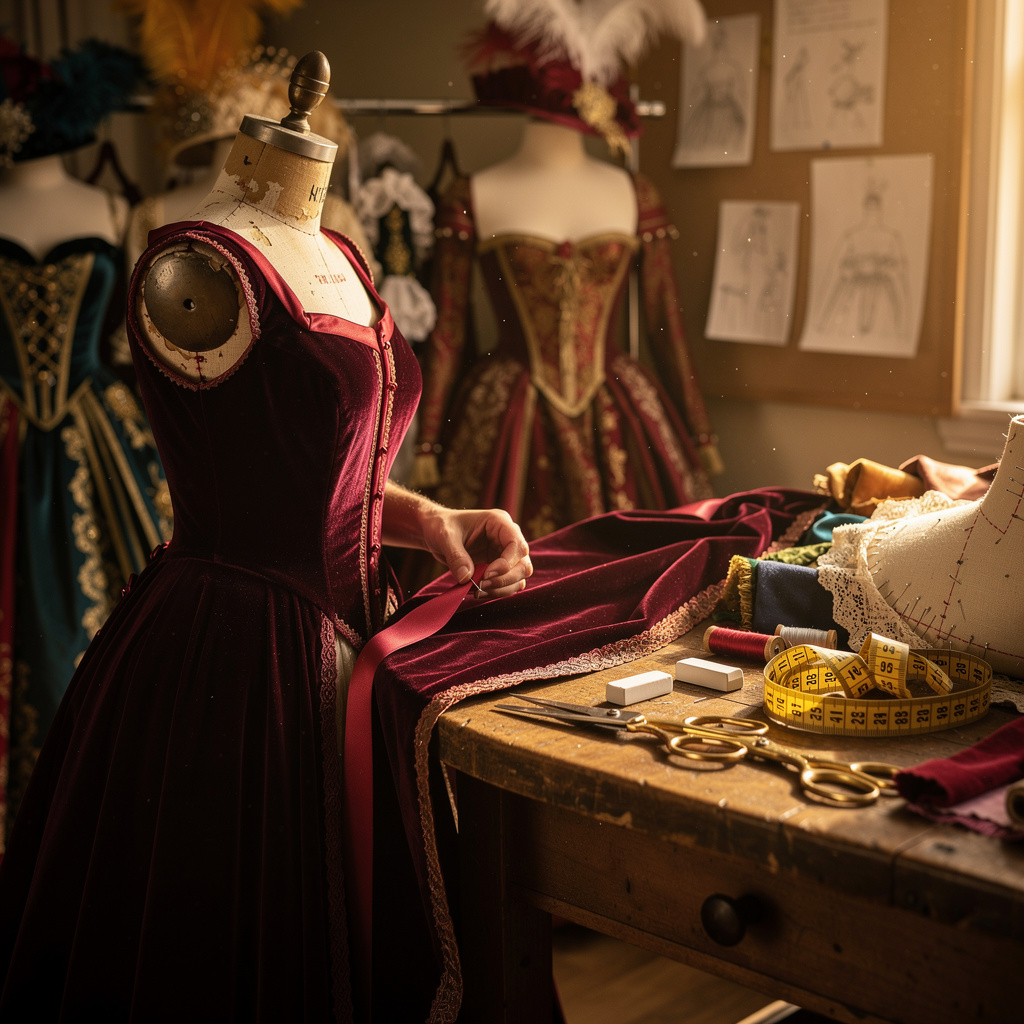
What is Traditional and Contemporary Asian Dress?
Traditional and Contemporary Asian Dress Certificate Program
The Traditional and Contemporary Asian Dress certificate program explores how garments, textiles, ornament, layering, and presentation practices across Asia carry cultural meaning and continue to shape modern fashion. It is designed for designers, merchandisers, educators, museum and heritage professionals, cultural researchers, and curious learners who need a structured understanding of Asian dress beyond surface-level style references. The program connects foundations of dress, fiber and ornament, regional traditions from South, East, Southeast, Central, and West Asia, and the ways ceremony, status, and identity are expressed through clothing. Its main practical outcome is the ability to analyze and interpret Asian dress with historical accuracy, textile awareness, and contemporary relevance, whether for design research, curation, teaching, product development, or cultural communication.
The program is structured as a beginner-friendly progression: it begins with foundational concepts and textile literacy, moves through regional dress systems and their layered silhouettes, sarongs, kebaya traditions, and modest layering, then examines ceremony, status, identity, colonialism, nationalism, and modern dress reform. Learners build five core skill areas—visual and material analysis, textile and ornament literacy, cultural and historical context, critical reading of representation and reform, and contemporary industry awareness—through a balance of conceptual study and applied interpretation. Later lessons connect these foundations to contemporary Asian fashion industries, designers, street style, media, youth fashion, craft revival, sustainability, ethics, and global Asian fashion futures. This program is valuable now because fashion sectors, museums, media, and design education are increasingly expected to engage Asian dress with nuance, ethical awareness, and attention to both tradition and living innovation.
What is Traditional and Contemporary Asian Dress?
Traditional and contemporary Asian dress is the study of how clothing, textiles, adornment, and bodily presentation are used across Asian societies and diasporic communities, both historically and in the present. Its scope includes garment forms, draping and layering, fibers and ornament, regional variation, ceremonial dress, status markers, modesty practices, and the visual languages of sarongs, kebaya, layered silhouettes, and tailored and draped ensembles. Core concepts include the relationship between dress and identity, the role of craft and textile production, the influence of trade and religion, and the tension between inherited tradition and ongoing change. The subject treats dress as material culture: not merely costume or decoration, but a system of meaning shaped by climate, economy, belief, gender, generation, and power.
This subject matters today because Asian dress is central to global fashion, cultural heritage debates, museum interpretation, media representation, and sustainability discussions. Contemporary designers, brands, stylists, and content creators frequently reference Asian garments and textiles, making informed understanding essential to avoid flattening regional distinctions or reducing living traditions to aesthetic trends. In academia, the field connects fashion studies, anthropology, art history, textile conservation, postcolonial studies, and material culture, while in industry it informs design research, sourcing, merchandising, and culturally responsive marketing. Recent shifts toward craft revival, ethical production, decolonial narratives, and global Asian fashion visibility have made the subject more urgent and more visible than ever.
Mastery of this subject builds a skill stack that combines visual literacy, textile and material knowledge, historical and cultural analysis, critical awareness of representation, and the ability to connect tradition with contemporary design and media contexts. It supports professional contexts such as fashion design and product development, curation and heritage interpretation, education and cultural programming, fashion journalism and content strategy, merchandising, and ethical sourcing, as well as personal enrichment for anyone seeking deeper cultural fluency. The subject also strengthens the capacity to ask better questions about authenticity, adaptation, appropriation, sustainability, and innovation when Asian dress appears in global fashion systems. In this way, knowledge of traditional and contemporary Asian dress becomes a bridge between cultural respect, historical understanding, and informed creative or professional practice.
What Will This Course Bring You?
- Analyze how geography, climate, religion, and trade shape foundational dress practices across Asian regions.
- Evaluate fiber choices, textile structures, and ornament techniques used in South, East, Southeast, Central, and West Asian dress traditions.
- Compare regional variation in South Asian traditional dress by examining garment forms, draping methods, and local ceremonial conventions.
- Design layered East Asian ensemble analyses that connect silhouette construction, garment layering, and symbolic color choices to cultural context.
- Assess Southeast Asian sarong and kebaya traditions by comparing draping techniques, regional styling, and social meanings across communities.
- Evaluate how ceremony, status markers, and modest layering communicate identity in Central and West Asian dress practices.
- Analyze colonial and nationalist influences on modern dress reform and contemporary Asian fashion industries using historical and designer case studies.
- Implement a craft-revival or sustainability proposal that addresses ethical sourcing, youth street-style media influence, and global futures for Asian fashion.
Curriculum
12 Units1. Foundations of Dress Across Asia
1 hour
2. Textiles, Fibers, and Ornament in Asian Dress
1 hour
3. South Asian Traditional Dress and Regional Variation
1 hour
4. East Asian Traditional Dress and Layered Silhouettes
1 hour
5. Southeast Asian Dress, Sarongs, and Kebaya Traditions
1 hour
6. Central and West Asian Dress and Modest Layering
1 hour
7. Ceremony, Status, and Identity in Asian Dress
1 hour
8. Colonialism, Nationalism, and Modern Dress Reform
1 hour
9. Contemporary Asian Fashion Industries and Designers
1 hour
10. Street Style, Media, and Youth Fashion in Asia
1 hour
11. Craft Revival, Sustainability, and Ethics in Asian Fashion
1 hour
12. Global Asian Fashion and Future Directions
1 hour
Exam – Traditional and Contemporary Asian Dress
20 Questions • 70% Pass • 30 min
Unlock All Units for Free
Create an account, enroll in the course, and start with the first unit right away.
Exam – Traditional and Contemporary Asian Dress
20 Questions • Pass: 70% • 30 min
Course Duration
720
Total Minutes
12
Unit
1
Final Exam
~60
Min / Unit
Traditional and Contemporary Asian Dress Certificate Program
Document Your Skill
Those who pass the 20-question, 30-minute exam with 70% receive the Traditional and Contemporary Asian Dress Certificate.
Stand Out on Your CV
By adding your certificate to your CV, gain a professional reference in job applications and stand out from the crowd.
Career Advantage
With the verification code, employers can check your certificate instantly — a concrete way to show your growth.
CERTIFICATE FEE
At the end of the course, an online exam consisting of 20 questions with a 30-minute time limit is given. The exam appears automatically after you complete the topics. Anyone who scores at least 70 out of 100 on the certificate exam is awarded the Traditional and Contemporary Asian Dress Document (certificate of attendance). You can add the certificate you earn to your CV for job applications in the many sectors listed above, and use it as a reference proving that you took this interactive course.
The Certificate of Achievement you receive with the Traditional and Contemporary Asian Dress course program holds value that proves your personal and professional development in the business world. By adding it to your CV, it can serve as an important reference in your job applications. Moreover, compared with certificates from other private training institutions, Catch Wisdom certificates are offered to our participants at a much more affordable price.
The Traditional and Contemporary Asian Dress course certificate is a document that proves, with a unique verification code, that you completed the course. Employers can instantly check its authenticity with this code, which helps you show your development concretely in your job applications.
For more information, we recommend visiting the Support page.
Certificate in 7 Languages
Earning success certificates from our courses is now more meaningful and global. With certificates available in Turkish, English, German, French, Spanish, Arabic, and Russian, we fully unlock the potential of students worldwide.
Why Certificate in 7 Languages?
-
01
Global Skill Development
Receiving your certificates in 7 different languages strengthens your communication skills as you engage with more people worldwide. It lets you operate more confidently and capably on the international stage.
-
02
International Job Opportunities
Employers may see your certificates in multiple languages as a sign of your ability to seize global opportunities. You can open more doors to new jobs and projects.
-
03
Cultural Richness
The chance to earn certificates in different languages helps you build closer ties with various cultures and broadens your worldview. It enriches your global perspective and deepens cultural understanding.
-
04
Ability to Participate in International Projects
Multilingual certificates give you an edge to work more effectively on international projects. They boost your chances of leadership and participation in diverse projects in the business world.
-
05
Prove Yourself on the Global Stage
Certificates in multiple languages give you the opportunity to present your skills and knowledge worldwide.
Language diversity opens worldwide opportunities. If you want to prove yourself in the international arena, join our online Traditional and Contemporary Asian Dress course program and begin this journey with us.
Frequently Asked Questions (FAQ)
Is this course paid?
How do I join the course?
Can I take the course at my own pace?
How can I get my certificate?
What are the advantages of the certificate?
Boost Your Career
Take a new career step with the Traditional and Contemporary Asian Dress course. Add your certificate to your CV, stand out in job applications, and open the door to new opportunities in the industry.
StartStudent Reviews
No reviews yet
Enroll in this course and be the first to leave a review about your experience with Traditional and Contemporary Asian Dress.
Start