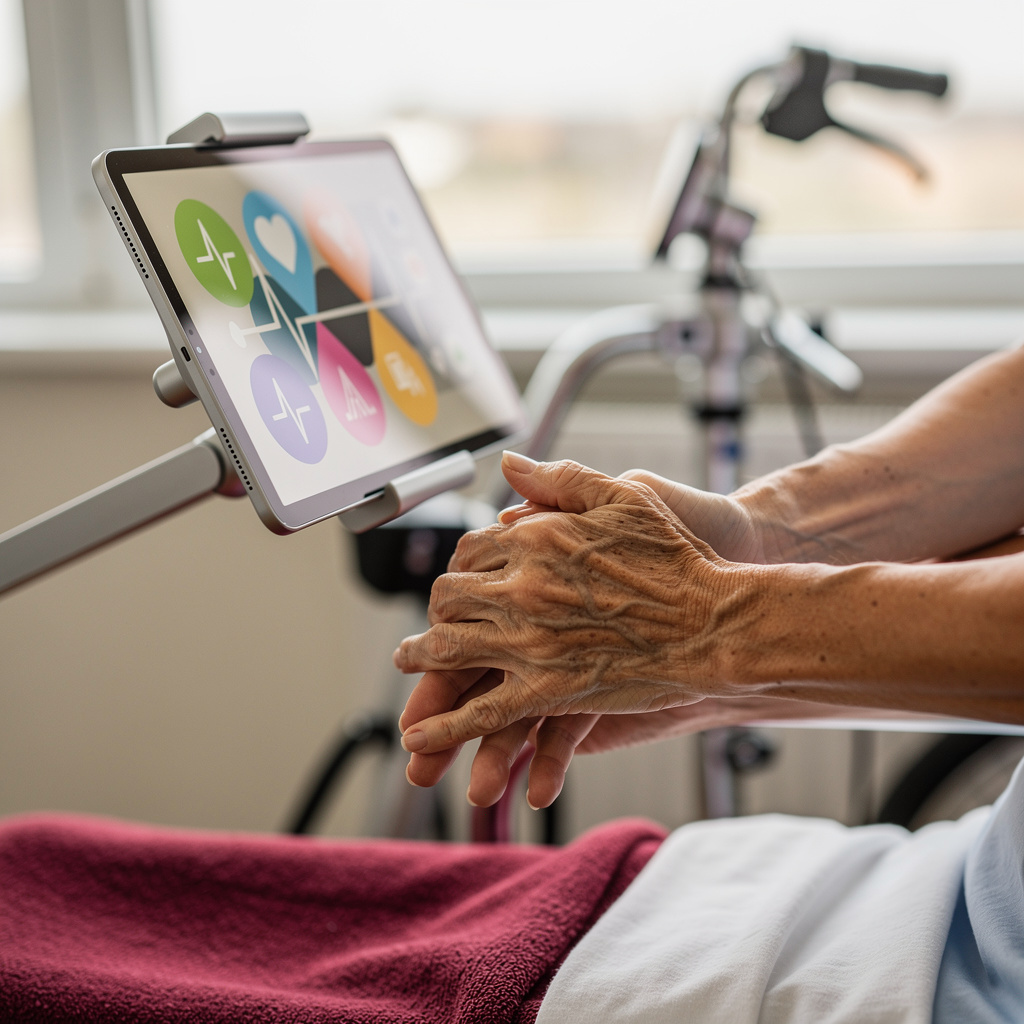
What is Understanding Visual Impairment?
Understanding Visual Impairment Training
This Understanding Visual Impairment certificate program delivers a comprehensive foundation in the medical, functional, and social dimensions of vision loss, designed for educators, rehabilitation specialists, support workers, and family members seeking to create meaningful impact. The curriculum moves from the anatomy of the visual system and classification of eye conditions through to practical strategies in orientation and mobility, assistive technology, and inclusive literacy, ensuring you can assess needs and implement support with confidence. By the end of the program, you will be equipped to foster independence and full community participation for individuals with visual impairment across the lifespan.
The training is structured as a progressive journey that begins with core concepts—defining visual impairment and understanding the physiology of the eye—before layering on clinical assessment, psychosocial considerations, and hands-on skill-building in daily living, mobility, and technology. A careful balance of theory and real-world application ensures you develop competencies in four essential areas: functional vision evaluation, accessible education and literacy, orientation and mobility fundamentals, and advocacy for inclusive policy. With the growing emphasis on universal design and the rising prevalence of vision loss globally, this program offers a timely opportunity to build specialized expertise that directly enhances quality of life and community inclusion.
What is Understanding Visual Impairment?
Understanding visual impairment is a multidisciplinary field that examines the causes, functional consequences, and societal dimensions of partial or total vision loss. It encompasses the medical classification of conditions—from refractive errors and cataracts to retinal diseases and cortical visual impairment—alongside the practical frameworks used to assess how an individual uses remaining vision in everyday tasks. Core concepts include the distinction between clinical acuity measurements and functional vision, the role of environmental adaptations, and the psychological processes of adjustment and identity formation. The field integrates knowledge from ophthalmology, education, rehabilitation therapy, and disability studies to create a holistic picture of what it means to live with and adapt to vision loss.
This subject has never been more relevant. Aging populations are driving a sharp increase in age-related eye conditions such as macular degeneration and glaucoma, while advances in neonatology mean more children with complex visual needs are entering education systems. Simultaneously, a paradigm shift from a medical model of disability to a rights-based, inclusive approach has transformed how services are designed and delivered, emphasizing self-determination and universal access. In schools, workplaces, and public spaces, there is a growing demand for professionals who can bridge the gap between clinical diagnosis and practical, empowering support that enables individuals with visual impairment to thrive.
Engaging deeply with the subject of visual impairment builds a versatile skill stack that combines scientific literacy with human-centered practice. Learners develop the ability to interpret clinical reports, conduct functional vision assessments, and apply strategies in orientation and mobility, assistive technology, and inclusive communication. This knowledge is essential for special educators, occupational therapists, orientation and mobility specialists, vision rehabilitation therapists, and community advocates, as well as for family members navigating the journey alongside a loved one. Ultimately, a thorough understanding of visual impairment transforms how we design environments, deliver education, and shape policies, ensuring that individuals with vision loss are not defined by their condition but are empowered to participate fully in all aspects of life.
Common Questions About Understanding Visual Impairment
Does the Understanding Visual Impairment certificate boost my resume?
Can beginners with no medical knowledge take this course?
What is the difference between low vision and legal blindness?
How does glaucoma silently steal peripheral vision?
Why is functional vision assessment different from clinical tests?
What assistive technologies help with daily living skills?
- Screen readers: convert text to speech for digital access.
- Magnification software: enlarges screen content for low vision users.
- Talking devices: such as talking thermometers, scales, and clocks.
- Adaptive tools: tactile markers, high-contrast kitchen utensils, and color identifiers.
Is it true that all visually impaired people use Braille?
What Will This Course Bring You?
- Classify visual impairments using the International Classification of Diseases and functional vision categories to inform individualized support planning.
- Analyze the anatomical structures and physiological processes of the visual system to identify how disruptions lead to specific visual impairments.
- Differentiate common eye conditions such as cataracts, glaucoma, and macular degeneration by their etiology, symptoms, and functional impact on vision.
- Design early intervention strategies that support developmental milestones in children with visual impairment, integrating sensory stimulation and family-centered approaches.
- Conduct a functional vision assessment by interpreting clinical data and observing task performance to recommend environmental and task modifications.
- Evaluate the psychosocial impact of visual impairment on identity and social participation using established frameworks to inform counseling and peer support interventions.
- Assess and recommend appropriate assistive technologies, including screen readers and magnification software, to enhance digital access for individuals with visual impairment.
- Critique current disability policies and propose advocacy strategies that advance the rights and community inclusion of people with visual impairment.
Curriculum
12 Units1. Defining Visual Impairment: Scope and Classification
1 hour
2. Anatomy and Physiology of the Visual System
1 hour
3. Common Eye Conditions and Causes of Visual Impairment
1 hour
4. Childhood Visual Impairment and Early Development
1 hour
5. Clinical and Functional Vision Assessment
1 hour
6. Psychosocial Impact of Visual Impairment
1 hour
7. Daily Living Skills and Independence
1 hour
8. Orientation and Mobility Fundamentals
1 hour
9. Assistive Technology for Visual Impairment
1 hour
10. Inclusive Education and Literacy Strategies
1 hour
11. Employment and Community Participation
1 hour
12. Advocacy, Policy, and Future Directions
1 hour
Exam – Understanding Visual Impairment
20 Questions • 70% Pass • 30 min
Unlock All Units for Free
Create an account, enroll in the course, and start with the first unit right away.
Exam – Understanding Visual Impairment
20 Questions • Pass: 70% • 30 min
Course Duration
720
Total Minutes
12
Unit
1
Final Exam
~60
Min / Unit
Understanding Visual Impairment Certificate Program
Document Your Skill
Those who pass the 20-question, 30-minute exam with 70% receive the Understanding Visual Impairment Certificate.
Stand Out on Your CV
By adding your certificate to your CV, gain a professional reference in job applications and stand out from the crowd.
Career Advantage
With the verification code, employers can check your certificate instantly — a concrete way to show your growth.
CERTIFICATE FEE
At the end of the course, an online exam consisting of 20 questions with a 30-minute time limit is given. The exam appears automatically after you complete the topics. Anyone who scores at least 70 out of 100 on the certificate exam is awarded the Understanding Visual Impairment Document (certificate of attendance). You can add the certificate you earn to your CV for job applications in the many sectors listed above, and use it as a reference proving that you took this interactive course.
The Certificate of Achievement you receive with the Understanding Visual Impairment course program holds value that proves your personal and professional development in the business world. By adding it to your CV, it can serve as an important reference in your job applications. Moreover, compared with certificates from other private training institutions, Catch Wisdom certificates are offered to our participants at a much more affordable price.
The Understanding Visual Impairment course certificate is a document that proves, with a unique verification code, that you completed the course. Employers can instantly check its authenticity with this code, which helps you show your development concretely in your job applications.
For more information, we recommend visiting the Support page.
Certificate in 7 Languages
Earning success certificates from our courses is now more meaningful and global. With certificates available in Turkish, English, German, French, Spanish, Arabic, and Russian, we fully unlock the potential of students worldwide.
Why Certificate in 7 Languages?
-
01
Global Skill Development
Receiving your certificates in 7 different languages strengthens your communication skills as you engage with more people worldwide. It lets you operate more confidently and capably on the international stage.
-
02
International Job Opportunities
Employers may see your certificates in multiple languages as a sign of your ability to seize global opportunities. You can open more doors to new jobs and projects.
-
03
Cultural Richness
The chance to earn certificates in different languages helps you build closer ties with various cultures and broadens your worldview. It enriches your global perspective and deepens cultural understanding.
-
04
Ability to Participate in International Projects
Multilingual certificates give you an edge to work more effectively on international projects. They boost your chances of leadership and participation in diverse projects in the business world.
-
05
Prove Yourself on the Global Stage
Certificates in multiple languages give you the opportunity to present your skills and knowledge worldwide.
Language diversity opens worldwide opportunities. If you want to prove yourself in the international arena, join our online Understanding Visual Impairment course program and begin this journey with us.
Frequently Asked Questions (FAQ)
Is this course paid?
How do I join the course?
Can I take the course at my own pace?
How can I get my certificate?
What are the advantages of the certificate?
Boost Your Career
Take a new career step with the Understanding Visual Impairment course. Add your certificate to your CV, stand out in job applications, and open the door to new opportunities in the industry.
StartStudent Reviews
No reviews yet
Enroll in this course and be the first to leave a review about your experience with Understanding Visual Impairment.
Start