What is Virtual Production Techniques?
Virtual Production Techniques Training
The Virtual Production Techniques certificate program provides a comprehensive, hands-on education in the rapidly evolving field of real-time filmmaking and immersive content creation. Designed for filmmakers, visual effects artists, game developers, and production professionals, this course teaches the end-to-end pipeline from pre-production planning through on-set execution and final post-production. The main practical outcome is the ability to plan, shoot, and complete a virtual production scene using industry-standard tools and workflows, culminating in a capstone project that demonstrates your proficiency.
The program follows a beginner-friendly progression, starting with the foundations of virtual production and real-time rendering engines before diving into camera tracking, LED volume technology, and virtual lighting. It balances theoretical concepts with hands-on exercises across four core skill areas: technical setup (tracking, calibration, LED walls), creative cinematography (virtual lighting, real-time compositing), production workflow (on-set procedures, multi-camera and XR stages), and post-production (keying, finalizing footage). With the film and broadcast industries rapidly adopting virtual production for its cost efficiency and creative flexibility, this training equips you with the exact skills studios are hiring for right now.
What is Virtual Production Techniques?
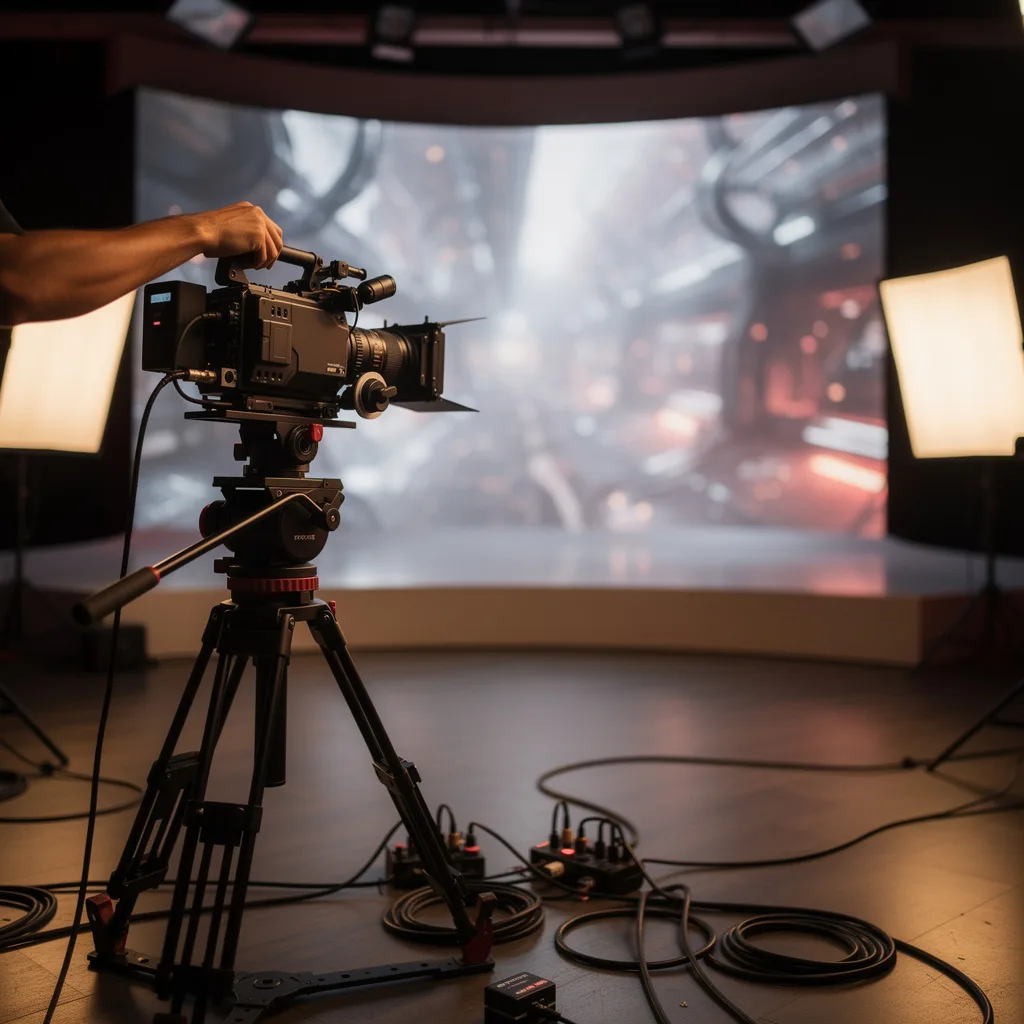
Virtual production techniques refer to the integration of real-time computer graphics with live-action filmmaking, enabling directors and cinematographers to see final or near-final visual effects in-camera during principal photography. Core concepts include real-time rendering engines (such as Unreal Engine), camera tracking and calibration to synchronize virtual and physical cameras, LED volume stages that display dynamic backgrounds, and live compositing and keying to blend actors with digital environments. This discipline merges traditional filmmaking with game engine technology, creating a seamless feedback loop between on-set performance and digital assets.
Today, virtual production is transforming the entertainment industry—from blockbuster films like The Mandalorian to live broadcasts, automotive commercials, and virtual concerts. It reduces post-production time, lowers costs, and allows directors to make creative decisions on the spot rather than months later in an editing suite. Recent shifts toward real-time workflows have also made virtual production accessible to smaller studios and independent creators, democratizing high-end visual effects. The technology is now a standard tool in major studios and is increasingly taught in film schools and professional training programs worldwide.
Mastering virtual production techniques builds a unique skill stack that combines technical proficiency (camera tracking, LED calibration, real-time rendering) with artistic vision (lighting, cinematography, composition) and production management (on-set workflow, multi-camera coordination). This interdisciplinary expertise is valuable for roles such as virtual production supervisor, technical director, real-time cinematographer, and VFX on-set supervisor. Beyond film and TV, professionals in live events, theme parks, and corporate media benefit from the ability to create immersive, interactive environments. The subject empowers you to bridge the gap between imagination and reality, delivering polished, real-time visuals that were once only possible in post-production.
Common Questions About Virtual Production Techniques
Is Virtual Production Techniques suitable for beginners with no film experience?
How long does it take to complete the Virtual Production Techniques course?
How does real-time rendering differ from traditional rendering in virtual production?
- Speed: Real-time renders instantly; traditional rendering is pre-computed offline.
- Interactivity: Real-time allows immediate adjustments to lighting, camera, and assets; traditional requires re-rendering after each change.
- Technology: Real-time engines like Unreal Engine use systems such as Lumen for dynamic lighting and Nanite for high-fidelity geometry, which are covered in the Real-Time Rendering Engines unit.
What is the role of camera tracking in LED volume technology?
Why is lens calibration critical for virtual production?
How do you match virtual lighting to physical lights on set?
Is virtual production only for big-budget Hollywood films?
What Will This Course Bring You?
- Analyze the foundational principles of virtual production to differentiate between traditional and real-time workflows.
- Implement real-time rendering engines to create interactive virtual environments for live-action integration.
- Calibrate camera tracking systems to ensure precise alignment between physical and virtual camera movements.
- Design LED volume setups that optimize lighting and perspective for in-camera visual effects.
- Apply virtual lighting techniques to match the aesthetic and mood of a live-action scene within a real-time engine.
- Evaluate compositing and keying methods to seamlessly integrate foreground and background elements in real time.
- Develop a pre-production plan that includes virtual art department workflows and technical rehearsals.
- Execute an on-set virtual production workflow coordinating real-time rendering, camera tracking, and live performance.
Curriculum
12 Units1. Foundations of Virtual Production
1 hour
2. Real-Time Rendering Engines
1 hour
3. Camera Tracking and Calibration
1 hour
4. LED Volume Technology
1 hour
5. Virtual Lighting and Cinematography
1 hour
6. Compositing and Keying in Real Time
1 hour
7. Virtual Production Pre-Production
1 hour
8. On-Set Virtual Production Workflow
1 hour
9. Advanced Techniques: Multi-Camera and XR Stages
1 hour
10. Post-Production and Finalizing Virtual Production Footage
1 hour
11. Case Studies and Industry Applications
1 hour
12. Capstone Project: Virtual Production Scene
1 hour
Exam – Virtual Production Techniques
20 Questions • 70% Pass • 30 min
Unlock All Units for Free
Create an account, enroll in the course, and start with the first unit right away.
Exam – Virtual Production Techniques
20 Questions • Pass: 70% • 30 min
Course Duration
720
Total Minutes
12
Unit
1
Final Exam
~60
Min / Unit
Virtual Production Techniques Certificate Program
Document Your Skill
Those who pass the 20-question, 30-minute exam with 70% receive the Virtual Production Techniques Certificate.
Stand Out on Your CV
By adding your certificate to your CV, gain a professional reference in job applications and stand out from the crowd.
Career Advantage
With the verification code, employers can check your certificate instantly — a concrete way to show your growth.
CERTIFICATE FEE
At the end of the course, an online exam consisting of 20 questions with a 30-minute time limit is given. The exam appears automatically after you complete the topics. Anyone who scores at least 70 out of 100 on the certificate exam is awarded the Virtual Production Techniques Document (certificate of attendance). You can add the certificate you earn to your CV for job applications in the many sectors listed above, and use it as a reference proving that you took this interactive course.
The Certificate of Achievement you receive with the Virtual Production Techniques course program holds value that proves your personal and professional development in the business world. By adding it to your CV, it can serve as an important reference in your job applications. Moreover, compared with certificates from other private training institutions, Catch Wisdom certificates are offered to our participants at a much more affordable price.
The Virtual Production Techniques course certificate is a document that proves, with a unique verification code, that you completed the course. Employers can instantly check its authenticity with this code, which helps you show your development concretely in your job applications.
For more information, we recommend visiting the Support page.
Certificate in 7 Languages
Earning success certificates from our courses is now more meaningful and global. With certificates available in Turkish, English, German, French, Spanish, Arabic, and Russian, we fully unlock the potential of students worldwide.
Why Certificate in 7 Languages?
-
01
Global Skill Development
Receiving your certificates in 7 different languages strengthens your communication skills as you engage with more people worldwide. It lets you operate more confidently and capably on the international stage.
-
02
International Job Opportunities
Employers may see your certificates in multiple languages as a sign of your ability to seize global opportunities. You can open more doors to new jobs and projects.
-
03
Cultural Richness
The chance to earn certificates in different languages helps you build closer ties with various cultures and broadens your worldview. It enriches your global perspective and deepens cultural understanding.
-
04
Ability to Participate in International Projects
Multilingual certificates give you an edge to work more effectively on international projects. They boost your chances of leadership and participation in diverse projects in the business world.
-
05
Prove Yourself on the Global Stage
Certificates in multiple languages give you the opportunity to present your skills and knowledge worldwide.
Language diversity opens worldwide opportunities. If you want to prove yourself in the international arena, join our online Virtual Production Techniques course program and begin this journey with us.
Frequently Asked Questions (FAQ)
Is this course paid?
How do I join the course?
Can I take the course at my own pace?
How can I get my certificate?
What are the advantages of the certificate?
Boost Your Career
Take a new career step with the Virtual Production Techniques course. Add your certificate to your CV, stand out in job applications, and open the door to new opportunities in the industry.
StartStudent Reviews
No reviews yet
Enroll in this course and be the first to leave a review about your experience with Virtual Production Techniques.
Start