What is 3D Artist Career Path and Skills?
3D Artist Career Path and Skills Certificate Program
The 3D Artist Career Path and Skills certificate program equips aspiring and early-career artists with the end-to-end competencies required to create production-ready 3D assets, from visual foundations and modeling through texturing, lighting, rigging, and real-time optimization. It is built for learners who want a structured route into game studios, animation houses, product visualization teams, or freelance 3D work, whether they are starting from scratch or formalizing existing self-taught skills. The main practical outcome is a professional portfolio and demo reel that demonstrate both artistic judgment and technical fluency across the 3D production pipeline.
The program follows a beginner-friendly progression that begins with the 3D artist role and production pipeline, then layers visual foundations, modeling fundamentals, digital sculpting, UV mapping and materials, lighting and look development, and rigging and animation constraints before moving into asset optimization for real-time pipelines. Theory is balanced with hands-on practice so that geometry, topology, scale, and texture decisions are always connected to how assets perform in engine or on screen. Four core skill areas anchor the curriculum: modeling and form development, surfacing and look development, technical constraints and optimization, and professional presentation through portfolio and demo reel work. Learners also explore specializations, studio pipelines, freelancing, client communication, and job search strategies, which makes the program relevant now as studios demand artists who can collaborate across disciplines and deliver optimized assets for real-time and interactive media.
What is 3D Artist Career Path and Skills?
3D artist career path and skills refers to the combination of artistic judgment, technical workflows, and production awareness that a 3D artist develops across modeling, sculpting, UV mapping, texturing, material creation, lighting, rendering, rigging, animation constraints, and asset optimization. Its core concepts include geometry and topology, form and silhouette, color and material response, light behavior, real-time performance budgets, and the handoff points within a studio production pipeline. The scope extends beyond making individual models to understanding how assets move through look development, rigging, animation, and final integration in engines or renderers. Career path knowledge adds another layer: specializations, portfolio presentation, collaboration norms, and the freelance or studio contexts in which 3D work is commissioned and delivered.
This subject matters today because real-time engines, virtual production, game development, architectural visualization, product configurators, and animated media all depend on optimized 3D assets that look correct under dynamic lighting and animation. Recent shifts toward real-time pipelines, physically based materials, and cross-disciplinary studio workflows mean that artists are expected to understand not only how to build geometry but also how their choices affect performance, rigging, and downstream animation. In academic and industry settings, 3D artist skills are increasingly treated as a blend of visual art fundamentals and technical problem-solving rather than isolated software operation. The growing use of 3D content in interactive commerce, simulation, and virtual environments keeps demand steady for artists who can move between artistic and technical constraints.
Mastering this subject builds a skill stack that combines visual foundations, spatial reasoning, material and lighting observation, topology discipline, optimization judgment, and professional communication through portfolio and demo reel presentation. These skills benefit learners in studio roles such as character or environment artist, texture and look development artist, technical artist, or generalist, and in freelance contexts where client communication and collaboration are as important as asset creation. The same knowledge supports personal projects, indie production, and adjacent fields like product visualization, architectural rendering, and interactive media, where 3D assets must be both expressive and efficient. Ultimately, the subject prepares learners to make informed trade-offs between visual quality and technical constraints while presenting their work credibly to collaborators, clients, and hiring teams.
What Will This Course Bring You?
- Explain the responsibilities of a 3D artist and trace how assets flow through each stage of a studio production pipeline.
- Apply visual foundations such as proportion, silhouette, color theory, and composition when blocking out and evaluating 3D forms.
- Build clean hard-surface and organic models using sound topology, correct scale, and efficient edge flow for deformation and detail.
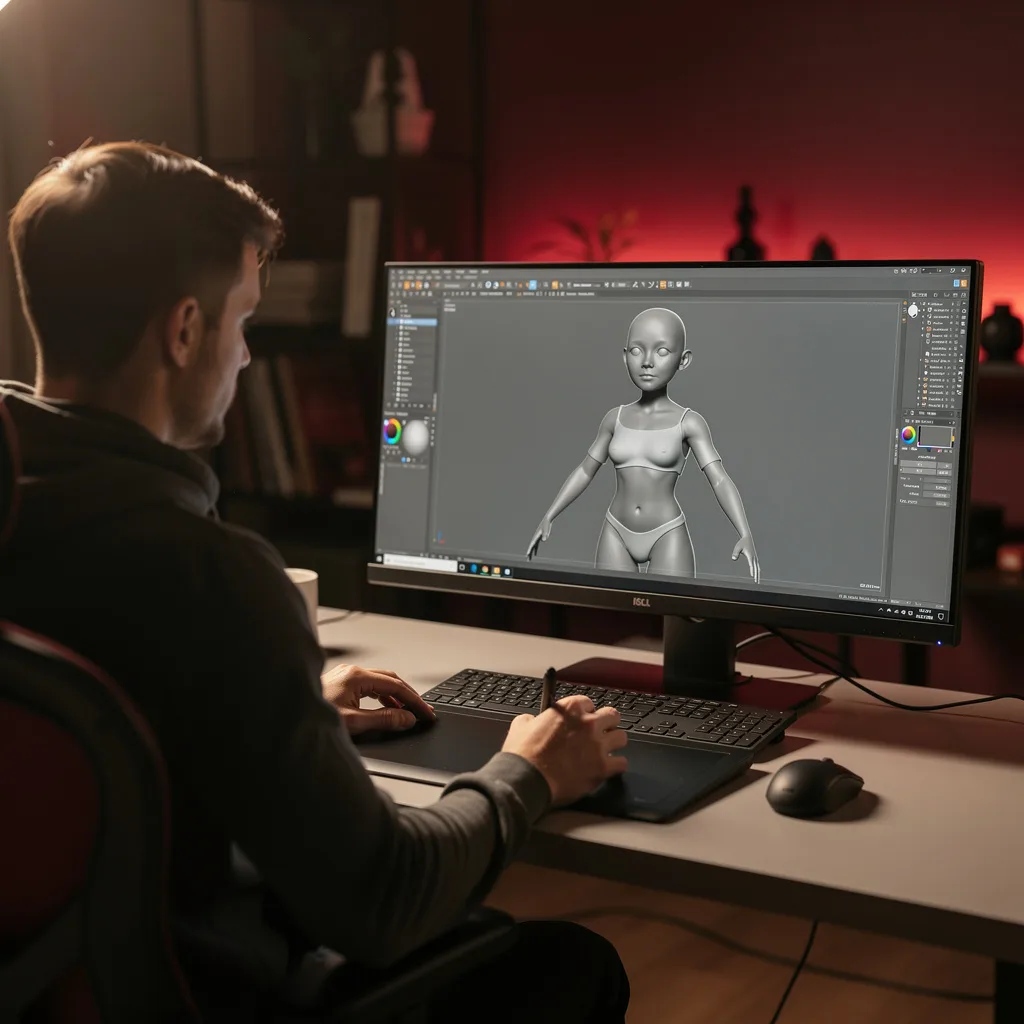
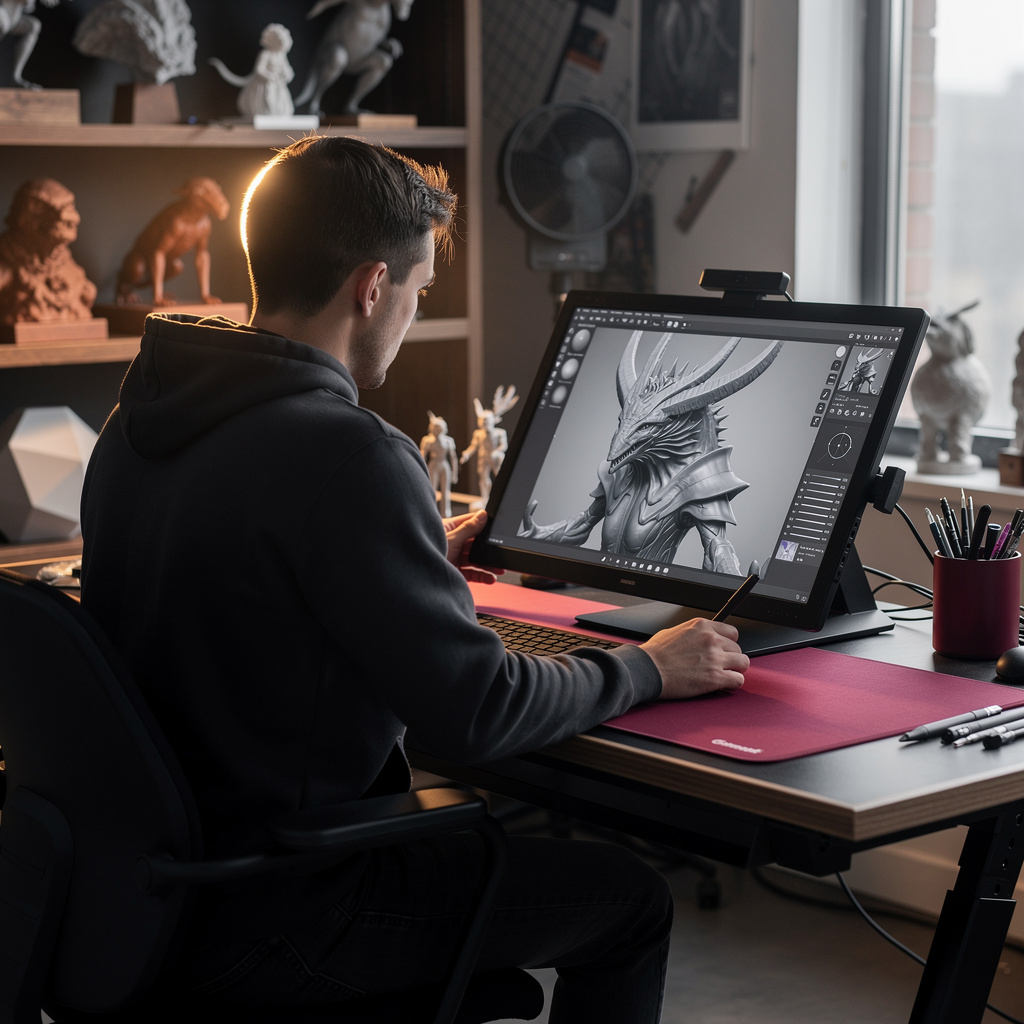
- Sculpt high-resolution forms with digital sculpting tools to develop anatomy, secondary shapes, and surface detail for characters or props.
- Implement UV layouts, texture maps, and PBR material workflows that accurately reproduce surface qualities and support downstream rendering.
- Evaluate lighting, rendering, and look development setups to produce portfolio-quality images that match a defined visual target.
- Optimize assets for real-time pipelines by managing polygon budgets, LODs, texture memory, and engine-specific export requirements.
- Assemble a professional demo reel, portfolio, and client communication strategy that demonstrates specialization and readiness for job search.
Curriculum
12 Units1. The 3D Artist Role and Production Pipeline
1 hour
2. Visual Foundations for 3D Artists
1 hour
3. 3D Modeling Fundamentals: Geometry, Topology, and Scale
1 hour
4. Digital Sculpting and Form Development
1 hour
5. UV Mapping, Texturing, and Materials
1 hour
6. Lighting, Rendering, and Look Development
1 hour
7. Rigging, Animation, and Technical Constraints for 3D Artists
1 hour
8. Asset Optimization and Real-Time Pipelines
1 hour
9. Specializations and Studio Pipelines
1 hour
10. Portfolio, Demo Reel, and Professional Presentation
1 hour
11. Freelancing, Collaboration, and Client Communication
1 hour
12. Career Launch, Job Search, and Continuous Growth
1 hour
Exam – 3D Artist Career Path and Skills
20 Questions • 70% Pass • 30 min
Unlock All Units for Free
Create an account, enroll in the course, and start with the first unit right away.
Exam – 3D Artist Career Path and Skills
20 Questions • Pass: 70% • 30 min
Course Duration
720
Total Minutes
12
Unit
1
Final Exam
~60
Min / Unit
3D Artist Career Path and Skills Certificate Program
Document Your Skill
Those who pass the 20-question, 30-minute exam with 70% receive the 3D Artist Career Path and Skills Certificate.
Stand Out on Your CV
By adding your certificate to your CV, gain a professional reference in job applications and stand out from the crowd.
Career Advantage
With the verification code, employers can check your certificate instantly — a concrete way to show your growth.
CERTIFICATE FEE
At the end of the course, an online exam consisting of 20 questions with a 30-minute time limit is given. The exam appears automatically after you complete the topics. Anyone who scores at least 70 out of 100 on the certificate exam is awarded the 3D Artist Career Path and Skills Document (certificate of attendance). You can add the certificate you earn to your CV for job applications in the many sectors listed above, and use it as a reference proving that you took this interactive course.
The Certificate of Achievement you receive with the 3D Artist Career Path and Skills course program holds value that proves your personal and professional development in the business world. By adding it to your CV, it can serve as an important reference in your job applications. Moreover, compared with certificates from other private training institutions, Catch Wisdom certificates are offered to our participants at a much more affordable price.
The 3D Artist Career Path and Skills course certificate is a document that proves, with a unique verification code, that you completed the course. Employers can instantly check its authenticity with this code, which helps you show your development concretely in your job applications.
For more information, we recommend visiting the Support page.
Certificate in 7 Languages
Earning success certificates from our courses is now more meaningful and global. With certificates available in Turkish, English, German, French, Spanish, Arabic, and Russian, we fully unlock the potential of students worldwide.
Why Certificate in 7 Languages?
-
01
Global Skill Development
Receiving your certificates in 7 different languages strengthens your communication skills as you engage with more people worldwide. It lets you operate more confidently and capably on the international stage.
-
02
International Job Opportunities
Employers may see your certificates in multiple languages as a sign of your ability to seize global opportunities. You can open more doors to new jobs and projects.
-
03
Cultural Richness
The chance to earn certificates in different languages helps you build closer ties with various cultures and broadens your worldview. It enriches your global perspective and deepens cultural understanding.
-
04
Ability to Participate in International Projects
Multilingual certificates give you an edge to work more effectively on international projects. They boost your chances of leadership and participation in diverse projects in the business world.
-
05
Prove Yourself on the Global Stage
Certificates in multiple languages give you the opportunity to present your skills and knowledge worldwide.
Language diversity opens worldwide opportunities. If you want to prove yourself in the international arena, join our online 3D Artist Career Path and Skills course program and begin this journey with us.
Frequently Asked Questions (FAQ)
Is this course paid?
How do I join the course?
Can I take the course at my own pace?
How can I get my certificate?
What are the advantages of the certificate?
Boost Your Career
Take a new career step with the 3D Artist Career Path and Skills course. Add your certificate to your CV, stand out in job applications, and open the door to new opportunities in the industry.
StartStudent Reviews
No reviews yet
Enroll in this course and be the first to leave a review about your experience with 3D Artist Career Path and Skills.
Start