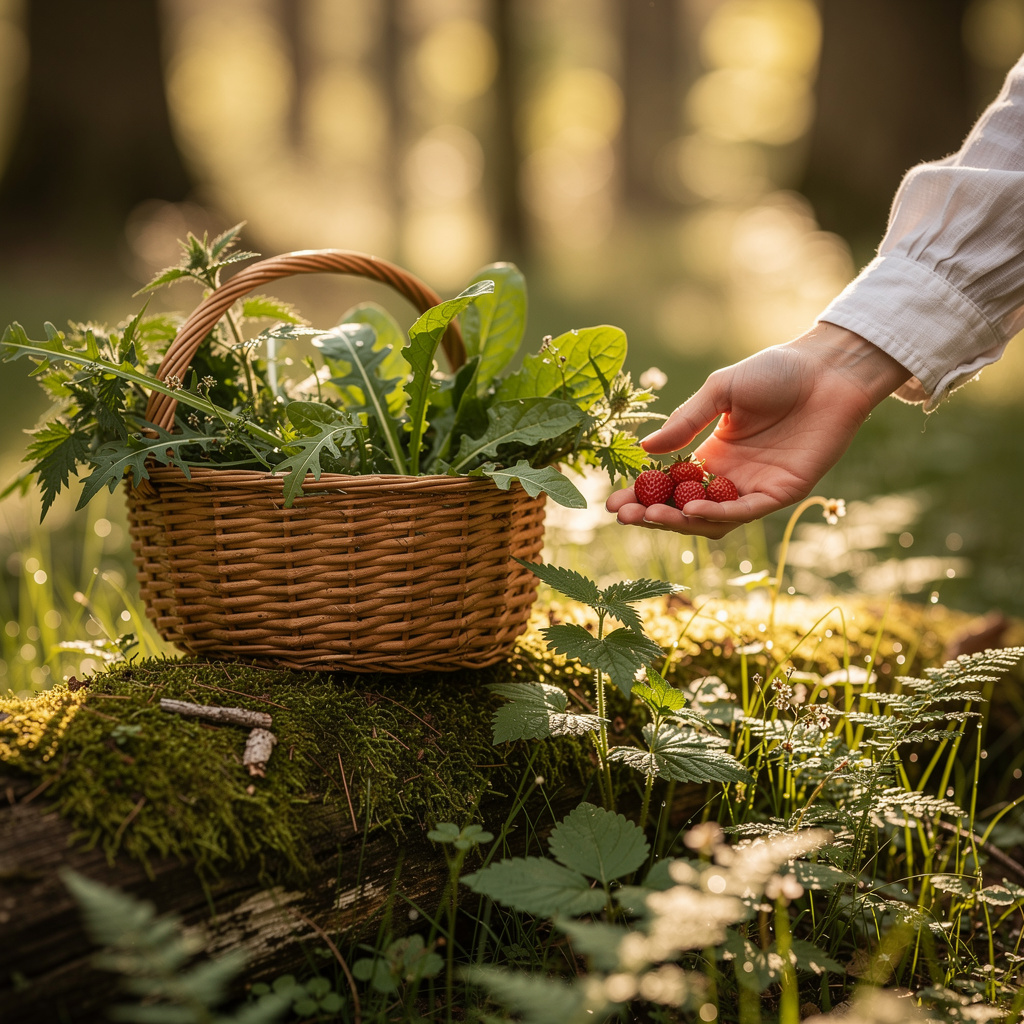
What is Foraging for Edible Wild Plants?
Foraging for Edible Wild Plants certificate program
The Foraging for Edible Wild Plants certificate program teaches you how to safely identify, harvest, and use wild edibles from forests, fields, and even urban green spaces. Designed for absolute beginners as well as outdoor enthusiasts, homesteaders, and culinary adventurers, this course provides the practical outcome of confidently gathering nutritious wild foods while avoiding dangerous look-alikes. You will build a solid foundation in plant identification, seasonal harvesting, and ethical stewardship of natural areas.
The program follows a beginner-friendly progression that starts with safety and identification fundamentals, then moves through each season—spring greens, summer berries, autumn nuts and roots, and winter bark and evergreens—before tackling the high‑risk, high‑reward world of mushrooms. It balances hands‑on field skills with scientific botany, covering five core areas: safe foraging protocols, plant and mushroom identification, poisonous look‑alikes, sustainable harvesting ethics, and food preservation techniques. With growing interest in local food systems and self‑sufficiency, this training equips you to reconnect with nature’s pantry in a responsible, informed way.
What is Foraging for Edible Wild Plants?
Foraging for edible wild plants is the practice of identifying, gathering, and consuming wild vegetation—including leaves, berries, nuts, seeds, roots, and mushrooms—that grows without cultivation. It draws on traditional ecological knowledge, botany, and mycology to distinguish nutritious species from toxic ones. Core concepts include plant morphology, habitat recognition, seasonal phenology, and the universal edibility test, which provides a systematic method for testing unknown plants when identification is uncertain.
Today, foraging is experiencing a renaissance driven by interest in local food systems, sustainability, and culinary innovation. Chefs incorporate wild ingredients into fine dining, herbalists use them for medicine, and outdoor enthusiasts rely on them for wilderness survival. Academic fields such as ethnobotany and conservation biology study foraging’s role in biodiversity and food sovereignty, while urban foragers reclaim neglected landscapes. Recent shifts toward self‑reliance and climate‑resilient food sources have made wild edibles a practical complement to modern diets.
Mastering foraging builds a unique skill stack that combines botanical knowledge, sensory observation, risk assessment, and ecological ethics. Practitioners develop sharpened attention to detail, patience, and a deep understanding of local ecosystems. These skills benefit personal contexts like family food security, nature connection, and outdoor recreation, as well as professional roles in environmental education, sustainable agriculture, culinary arts, and wilderness guiding. The subject ultimately transforms how you see the landscape—from a backdrop into a living larder.
What Will This Course Bring You?
- Apply the Universal Edibility Test to safely evaluate an unknown wild plant for edibility.
- Identify five common spring greens by analyzing their leaf shape, arrangement, and habitat.
- Distinguish edible summer berries from poisonous look-alikes using color, texture, and seed patterns.
- Evaluate the ripeness of autumn nuts and seeds by observing shell hardness and color changes.
- Identify edible winter bark and evergreen needles using bark texture and needle arrangement.
- Analyze the risks of foraging wild mushrooms by comparing key identification features of edible and toxic species.
- Implement sustainable harvesting techniques to ensure the long-term health of wild plant populations.
- Design a seasonal foraging plan that incorporates preservation methods like drying, pickling, and fermenting.
Curriculum
12 Units1. Foundations of Safe Foraging
30 min
2. Plant Identification Fundamentals
30 min
3. The Universal Edibility Test
30 min
4. Spring Greens and Early Season Plants
30 min
5. Summer Bounty: Berries, Fruits, and Flowers
30 min
6. Autumn Harvest: Nuts, Seeds, and Roots
30 min
7. Winter Foraging: Bark, Evergreens, and Persistence
30 min
8. Mushrooms: The Risky Reward
30 min
9. Poisonous Look-Alikes and Dangerous Plants
30 min
10. Ethical and Sustainable Foraging Practices
30 min
11. Processing and Preserving Wild Edibles
30 min
12. Building a Foraging Practice and Community
30 min
Exam – Foraging for Edible Wild Plants
20 Questions • 70% Pass • 30 min
Unlock All Units for Free
Create an account, enroll in the course, and start with the first unit right away.
Exam – Foraging for Edible Wild Plants
20 Questions • Pass: 70% • 30 min
Course Duration
360
Total Minutes
12
Unit
1
Final Exam
~30
Min / Unit
Foraging for Edible Wild Plants Certificate Program
Document Your Skill
Those who pass the 20-question, 30-minute exam with 70% receive the Foraging for Edible Wild Plants Certificate.
Stand Out on Your CV
By adding your certificate to your CV, gain a professional reference in job applications and stand out from the crowd.
Career Advantage
Catch Wisdom certificates are recognized by HR departments and increase career opportunities.
CERTIFICATE FEE
At the end of the course, an online exam consisting of 20 questions with a 30-minute time limit is given. The exam appears automatically after you complete the topics. Anyone who scores at least 70 out of 100 on the certificate exam is awarded the Foraging for Edible Wild Plants Document (certificate of attendance). You can add the certificate you earn to your CV for job applications in the many sectors listed above, and use it as a reference proving that you took this interactive course.
The Certificate of Achievement you receive with the Foraging for Edible Wild Plants course program holds value that proves your personal and professional development in the business world. By adding it to your CV, it can serve as an important reference in your job applications. Moreover, compared with certificates from other private training institutions, Catch Wisdom certificates are offered to our participants at a much more affordable price.
Because HR departments recognize Catch Wisdom as a reputable institution in this field, they value these certificates and may evaluate your job applications favorably. For this reason, a Foraging for Edible Wild Plants course certificate from Catch Wisdom can make your applications more attractive and place you in an advantageous position in the business world.
For more information, we recommend visiting the Support page.
Certificate in 7 Languages
Earning success certificates from our courses is now more meaningful and global. With certificates available in Turkish, English, German, French, Spanish, Arabic, and Russian, we fully unlock the potential of students worldwide.
Why Certificate in 7 Languages?
-
01
Global Skill Development
Receiving your certificates in 7 different languages strengthens your communication skills as you engage with more people worldwide. It lets you operate more confidently and capably on the international stage.
-
02
International Job Opportunities
Employers may see your certificates in multiple languages as a sign of your ability to seize global opportunities. You can open more doors to new jobs and projects.
-
03
Cultural Richness
The chance to earn certificates in different languages helps you build closer ties with various cultures and broadens your worldview. It enriches your global perspective and deepens cultural understanding.
-
04
Ability to Participate in International Projects
Multilingual certificates give you an edge to work more effectively on international projects. They boost your chances of leadership and participation in diverse projects in the business world.
-
05
Prove Yourself on the Global Stage
Certificates in multiple languages let you showcase your skills and knowledge worldwide. You can become an internationally recognized professional.
Language diversity opens worldwide opportunities. If you want to prove yourself in the international arena, join our online Foraging for Edible Wild Plants course program and begin this journey with us.
Frequently Asked Questions (FAQ)
Is this course paid?
How do I join the course?
Can I take the course at my own pace?
How can I get my certificate?
What are the advantages of the Certified Certificate?
Boost Your Career
Take a new career step with the Foraging for Edible Wild Plants course. Add your certificate to your CV, stand out in job applications, and open the door to new opportunities in the industry.
StartStudent Reviews
No reviews yet
Enroll in this course and be the first to leave a review about your experience with Foraging for Edible Wild Plants.
Start