What is Low-Sugar Desserts and Baking?
Low-Sugar Desserts and Baking Training
The Low-Sugar Desserts and Baking certificate program is a comprehensive, science-driven exploration of how to craft exceptional pastries, confections, and frozen treats with significantly reduced sugar content. Designed for professional bakers, pastry chefs, and dedicated home enthusiasts, this training demystifies the functional role of sugar in baking—from browning and moisture retention to crystallization and structure—and then systematically replaces those properties using natural sweeteners, sugar alcohols, and bulking agents. You will master the art of reformulating classic recipes into low-sugar versions that retain the texture, mouthfeel, and visual appeal of their traditional counterparts, while also learning to create entirely new desserts that stand on their own merit. The practical outcome is a robust portfolio of original, market-ready recipes and the confidence to adapt any dessert to meet modern dietary demands without sacrificing indulgence.
The program is structured as a progressive journey that begins with the science of sugar and sweetener functionality, then moves through specific product categories—cakes, cookies, pastries, frozen desserts, chocolates, and custards—before culminating in advanced formulation and elegant presentation. Each module balances theory with hands-on application, building four core skill areas: ingredient chemistry, recipe conversion mathematics, flavor enhancement without sugar, and professional plating for dietary-specific menus. You will explore how to use bulking agents and fiber replacers to maintain proper volume, harness flavor enhancement techniques to amplify sweetness perception, and develop your own conversion formulas for consistent results. In an era where consumers and clients increasingly demand reduced-sugar options that never compromise on taste, this training positions you at the forefront of a rapidly growing culinary movement.
What is Low-Sugar Desserts and Baking?
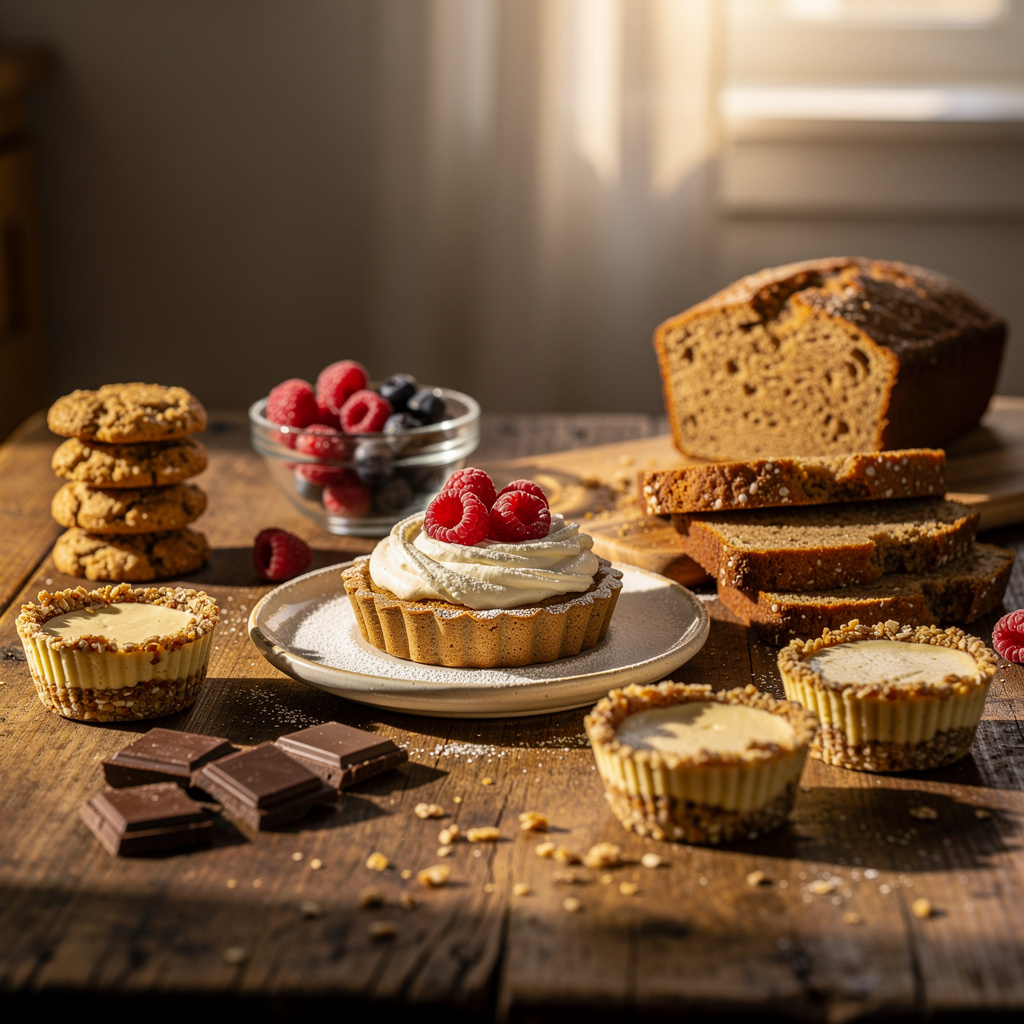
Low-sugar desserts and baking is a specialized culinary discipline that reimagines traditional pastry arts through the lens of sugar reduction, substitution, and elimination. It encompasses the entire spectrum of sweet creations—cakes, cookies, pies, tarts, frozen desserts, chocolates, custards, and mousses—reformulated to contain significantly less sugar than their conventional counterparts while preserving the sensory qualities that define them. The field rests on a deep understanding of sugar’s multifaceted role: beyond sweetness, sugar contributes to browning via caramelization and Maillard reactions, controls starch gelatinization, stabilizes egg foams, inhibits microbial growth, and provides bulk and structure. Mastering low-sugar baking means learning to replicate each of these functions using alternative sweeteners, fibers, proteins, and processing techniques, all while navigating the complex interplay of flavor, texture, and shelf stability.
This subject has surged in relevance as global health organizations, consumers, and food manufacturers confront the well-documented links between excessive sugar consumption and metabolic disease. The demand for reduced-sugar products that do not sacrifice taste or texture has reshaped the food industry, from artisanal bakeries and patisseries to large-scale production and hospitality. Recent advances in sweetener technology—including rare sugars like allulose, high-purity steviol glycosides, and sugar alcohols with improved digestive tolerance—have opened new possibilities for creating desserts that were once thought impossible without sugar. Simultaneously, the rise of low-carbohydrate and ketogenic diets has created a market that expects sophisticated, sugar-free options. This convergence of health awareness, ingredient innovation, and culinary creativity makes low-sugar baking one of the most dynamic and opportunity-rich areas in modern gastronomy.
Engaging deeply with low-sugar desserts and baking builds a unique skill stack that bridges food science, creative recipe development, and dietary customization. The knowledge gained extends far beyond simple substitution: you develop an intuitive grasp of how different sweeteners behave under heat, how to balance hygroscopicity to prevent dry or soggy textures, and how to layer flavors so that reduced sweetness becomes an advantage rather than a limitation. This expertise is invaluable for pastry professionals seeking to differentiate their menus, for health-focused food entrepreneurs developing product lines, and for home bakers who want to provide delicious, better-for-you treats for family and friends. Ultimately, the subject empowers you to transform the way people experience dessert—proving that less sugar can mean more flavor, more creativity, and more inclusive enjoyment for everyone at the table.
Common Questions About Low-Sugar Desserts and Baking
Is the low-sugar desserts course suitable for complete beginners?
Will this baking course provide a certificate for my resume?
Why does sugar's absence require a complete rebuild in cakes?
- Browning: Sugar drives Maillard reactions and caramelization for color and flavor.
- Moisture retention: Sugar is hygroscopic, keeping cakes soft and tender.
- Crystallization: Sugar affects crumb structure and texture.
- Structure: Sugar contributes to volume and rise by stabilizing air bubbles.
How do natural sweeteners like dates affect cookie spread?
What is the role of inulin as a bulking agent in desserts?
- Volume replacement: Inulin adds bulk without calories.
- Texture improvement: It helps retain moisture and softness.
- Subtle sweetness: Inulin has a mild sweet taste.
- Prebiotic fiber: It supports digestive health.
How does freezing point depression work in low-sugar ice cream?
Do low-sugar desserts always taste bland and unsatisfying?
What Will This Course Bring You?
- Analyze the functional roles of sugar in baking to predict how reducing or replacing it alters texture, browning, and moisture retention.
- Compare natural and artificial sweeteners to select appropriate substitutes based on sweetness profile, heat stability, and metabolic impact.
- Formulate low-sugar cake and muffin recipes by adjusting liquid, fat, and bulking agents to maintain crumb structure and mouthfeel.
- Apply flavor enhancement techniques using spices, extracts, and Maillard browning to compensate for reduced sweetness in baked goods.
- Convert conventional dessert recipes into low-sugar versions by calculating sweetener equivalencies and modifying mixing methods and baking times.
- Design visually appealing plated low-sugar desserts that balance dietary requirements with aesthetic principles of color, texture, and composition.
- Evaluate the texture and stability of sugar-free frozen desserts by manipulating freezing point depression and fat crystallization.
Curriculum
12 Units1. The Science of Sugar in Baking
1 hour
2. Natural and Artificial Sweeteners Overview
1 hour
3. Low-Sugar Cakes and Muffins
1 hour
4. Low-Sugar Cookies and Biscuits
1 hour
5. Reduced-Sugar Pies, Tarts, and Pastries
1 hour
6. Low-Sugar Frozen Desserts
1 hour
7. Sugar-Free Chocolate and Candy Making
1 hour
8. Low-Sugar Custards, Puddings, and Mousses
1 hour
9. Bulking Agents and Fiber Replacers
1 hour
10. Flavor Enhancement Without Sugar
1 hour
11. Recipe Conversion and Formulation
1 hour
12. Plating, Presentation, and Dietary Integration
1 hour
Exam – Low-Sugar Desserts and Baking
20 Questions • 70% Pass • 30 min
Unlock All Units for Free
Create an account, enroll in the course, and start with the first unit right away.
Exam – Low-Sugar Desserts and Baking
20 Questions • Pass: 70% • 30 min
Course Duration
720
Total Minutes
12
Unit
1
Final Exam
~60
Min / Unit
Low-Sugar Desserts and Baking Certificate Program
Document Your Skill
Those who pass the 20-question, 30-minute exam with 70% receive the Low-Sugar Desserts and Baking Certificate.
Stand Out on Your CV
By adding your certificate to your CV, gain a professional reference in job applications and stand out from the crowd.
Career Advantage
Catch Wisdom certificates are recognized by HR departments and increase career opportunities.
CERTIFICATE FEE
At the end of the course, an online exam consisting of 20 questions with a 30-minute time limit is given. The exam appears automatically after you complete the topics. Anyone who scores at least 70 out of 100 on the certificate exam is awarded the Low-Sugar Desserts and Baking Document (certificate of attendance). You can add the certificate you earn to your CV for job applications in the many sectors listed above, and use it as a reference proving that you took this interactive course.
The Certificate of Achievement you receive with the Low-Sugar Desserts and Baking course program holds value that proves your personal and professional development in the business world. By adding it to your CV, it can serve as an important reference in your job applications. Moreover, compared with certificates from other private training institutions, Catch Wisdom certificates are offered to our participants at a much more affordable price.
Because HR departments recognize Catch Wisdom as a reputable institution in this field, they value these certificates and may evaluate your job applications favorably. For this reason, a Low-Sugar Desserts and Baking course certificate from Catch Wisdom can make your applications more attractive and place you in an advantageous position in the business world.
For more information, we recommend visiting the Support page.
Certificate in 7 Languages
Earning success certificates from our courses is now more meaningful and global. With certificates available in Turkish, English, German, French, Spanish, Arabic, and Russian, we fully unlock the potential of students worldwide.
Why Certificate in 7 Languages?
-
01
Global Skill Development
Receiving your certificates in 7 different languages strengthens your communication skills as you engage with more people worldwide. It lets you operate more confidently and capably on the international stage.
-
02
International Job Opportunities
Employers may see your certificates in multiple languages as a sign of your ability to seize global opportunities. You can open more doors to new jobs and projects.
-
03
Cultural Richness
The chance to earn certificates in different languages helps you build closer ties with various cultures and broadens your worldview. It enriches your global perspective and deepens cultural understanding.
-
04
Ability to Participate in International Projects
Multilingual certificates give you an edge to work more effectively on international projects. They boost your chances of leadership and participation in diverse projects in the business world.
-
05
Prove Yourself on the Global Stage
Certificates in multiple languages let you showcase your skills and knowledge worldwide. You can become an internationally recognized professional.
Language diversity opens worldwide opportunities. If you want to prove yourself in the international arena, join our online Low-Sugar Desserts and Baking course program and begin this journey with us.
Frequently Asked Questions (FAQ)
Is this course paid?
How do I join the course?
Can I take the course at my own pace?
How can I get my certificate?
What are the advantages of the Certified Certificate?
Boost Your Career
Take a new career step with the Low-Sugar Desserts and Baking course. Add your certificate to your CV, stand out in job applications, and open the door to new opportunities in the industry.
StartStudent Reviews
No reviews yet
Enroll in this course and be the first to leave a review about your experience with Low-Sugar Desserts and Baking.
Start