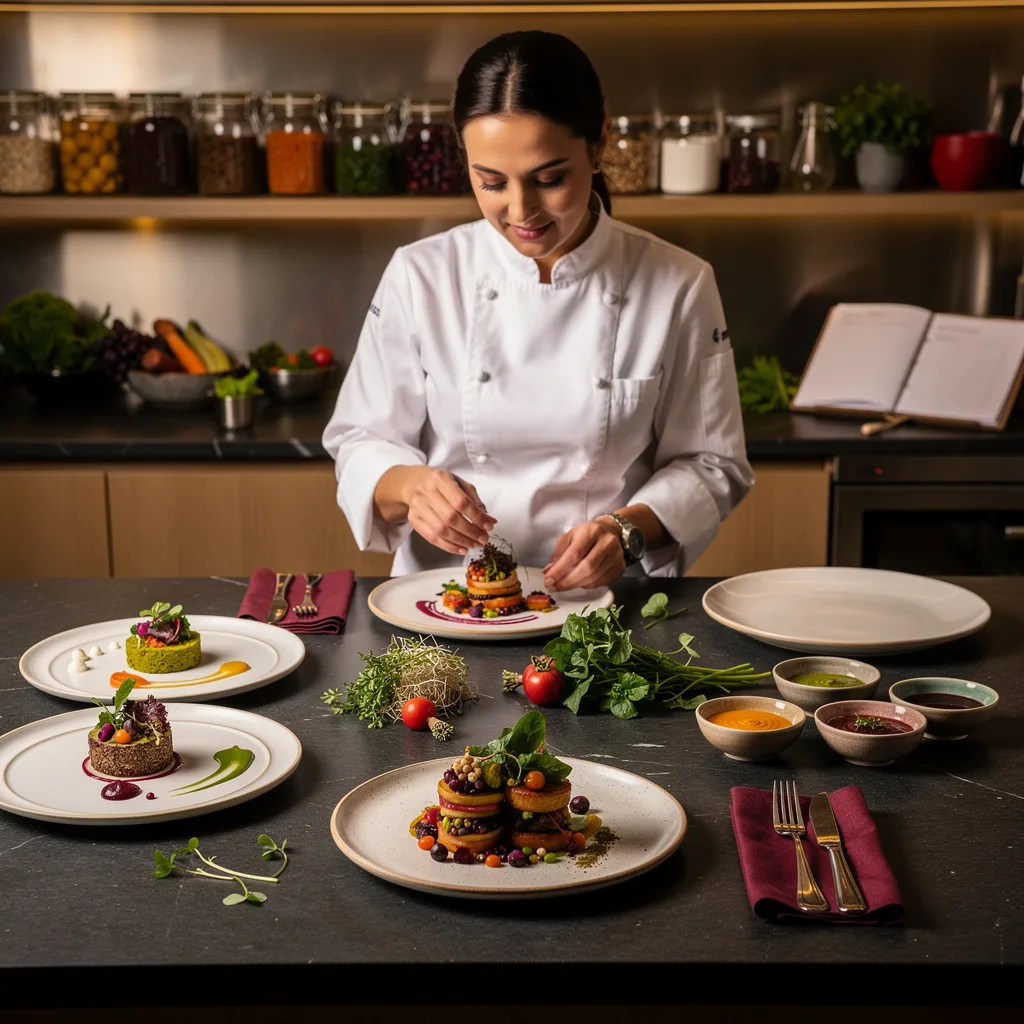
What is Pickling and Preserving?
Pickling and Preserving Training
The Pickling and Preserving certificate program is a practical training in safe, high-quality food preservation for home and small-scale production. It covers food-preservation principles and safety foundations, microbiology and acidity, sanitary equipment and jar setup, and the roles of salt, vinegar, sugar, and flavorings before moving into quick vinegar pickles, fermented brined vegetables, fruit preserves, water-bath canning, pressure canning, drying, freezing, and root cellaring. The program is designed for home cooks, gardeners, community food educators, culinary entrepreneurs, and small-scale producers who want reliable, evidence-based methods rather than guesswork. Its main practical outcome is the ability to plan, execute, and troubleshoot a complete preserving batch with appropriate safety controls, storage plans, and spoilage awareness.
The structure is beginner-friendly and cumulative: safety and microbiology come first, then equipment and ingredient selection, then hands-on methods that range from refrigerator pickles and fermented brines to jams, water-bath canning, pressure canning, drying, freezing, and root cellaring. Theory is balanced with practice through recipe reasoning, process decisions, sanitation routines, and a capstone that asks learners to plan and execute a preserving batch from start to storage. Across the lessons, the program builds five core skill areas: preservation safety and risk control, sanitary workspace and equipment management, ingredient and acidity formulation, method-specific processing, and storage and spoilage troubleshooting. People choose this program now because food costs, seasonal abundance, food-waste reduction, local food systems, and small-scale value-added production all reward dependable preserving skills.
What is Pickling and Preserving?
Pickling and preserving is the practice of extending the shelf life and improving the safety of foods by controlling the conditions that allow microorganisms to grow. Its scope includes vinegar pickling, salt-brining and fermentation, sugar-based fruit preserves, water-bath and pressure canning, drying, freezing, and root cellaring. Core concepts include acidity and pH, salt and sugar concentration, water activity, temperature control, oxygen exclusion, sanitation, processing time, headspace, and spoilage identification. The subject sits at the intersection of food science, microbiology, home economics, and culinary craft, so it treats recipes as systems of safety and quality rather than mere flavor instructions.
Preserving matters today because it connects household food security, seasonal eating, food-waste reduction, and local agricultural resilience. In real life it appears in home kitchens, community canning workshops, farmers markets, restaurants, food banks, and small value-added food businesses that turn surplus produce into shelf-stable products. In industry and academia, fermentation microbiology, acidification science, thermal processing validation, and shelf-life testing continue to shape safer guidelines and new product categories. Recent shifts toward local food systems, traditional fermentation, low-waste cooking, and small-batch food entrepreneurship have made preserving knowledge more relevant, not less.
Mastering this subject builds a skill stack that combines microbiological risk assessment, sanitation discipline, recipe and acidity formulation, process control, equipment operation, storage management, and spoilage diagnosis. These skills transfer to personal contexts such as preserving a garden harvest, managing a pantry, or teaching family and community groups. They also support professional contexts including small-scale food production, farmers-market value-added products, restaurant preservation programs, food education, and community food security projects. The bridge from subject knowledge to learner outcomes is practical judgment: knowing why a method works, when a process is safe, and how to adjust when ingredients, equipment, or storage conditions change.
What Will This Course Bring You?
- Apply food preservation safety principles to identify contamination risks and select appropriate methods for specific foods.
- Analyze acidity, salt, sugar, and moisture conditions to explain microbial spoilage and how preservation controls it.
- Set up a sanitary workspace by selecting, cleaning, and sanitizing jars, lids, tools, and equipment for safe pickling.
- Formulate balanced pickling brines and preserve mixtures by calculating and adjusting salt, vinegar, sugar, and flavoring proportions.
- Produce quick vinegar pickles and refrigerator pickles using proper packing, brining, and refrigeration techniques.
- Implement a fermented vegetable batch by managing brine concentration, temperature, time, and observable signs of safe fermentation.
- Evaluate fruit preserve set and safety by applying pectin, sugar, acid, and cooking tests to make jams, jellies, and marmalades.
- Design and execute a complete preserving batch by selecting water-bath canning, pressure canning, drying, freezing, or root cellaring and documenting storage and spoilage troubleshooting steps.
Curriculum
12 Units1. Food Preservation Principles and Safety Foundations
1 hour
2. Microbiology, Acidity, and Spoilage Control
1 hour
3. Equipment, Jars, and Sanitary Workspace Setup
1 hour
4. Salt, Vinegar, Sugar, and Flavoring Ingredients
1 hour
5. Quick Vinegar Pickling and Refrigerator Pickles
1 hour
6. Fermented Pickles and Brined Vegetables
1 hour
7. Fruit Preserves: Jams, Jellies, and Marmalades
1 hour
8. Water-Bath Canning for High-Acid Foods
1 hour
9. Pressure Canning for Low-Acid Foods
1 hour
10. Drying, Freezing, and Root Cellaring
1 hour
11. Storage, Shelf Life, and Spoilage Troubleshooting
1 hour
12. Capstone: Planning and Executing a Preserving Batch
1 hour
Exam – Pickling and Preserving
20 Questions • 70% Pass • 30 min
Unlock All Units for Free
Create an account, enroll in the course, and start with the first unit right away.
Exam – Pickling and Preserving
20 Questions • Pass: 70% • 30 min
Course Duration
720
Total Minutes
12
Unit
1
Final Exam
~60
Min / Unit
Pickling and Preserving Certificate Program
Document Your Skill
Those who pass the 20-question, 30-minute exam with 70% receive the Pickling and Preserving Certificate.
Stand Out on Your CV
By adding your certificate to your CV, gain a professional reference in job applications and stand out from the crowd.
Career Advantage
With the verification code, employers can check your certificate instantly — a concrete way to show your growth.
CERTIFICATE FEE
At the end of the course, an online exam consisting of 20 questions with a 30-minute time limit is given. The exam appears automatically after you complete the topics. Anyone who scores at least 70 out of 100 on the certificate exam is awarded the Pickling and Preserving Document (certificate of attendance). You can add the certificate you earn to your CV for job applications in the many sectors listed above, and use it as a reference proving that you took this interactive course.
The Certificate of Achievement you receive with the Pickling and Preserving course program holds value that proves your personal and professional development in the business world. By adding it to your CV, it can serve as an important reference in your job applications. Moreover, compared with certificates from other private training institutions, Catch Wisdom certificates are offered to our participants at a much more affordable price.
The Pickling and Preserving course certificate is a document that proves, with a unique verification code, that you completed the course. Employers can instantly check its authenticity with this code, which helps you show your development concretely in your job applications.
For more information, we recommend visiting the Support page.
Certificate in 7 Languages
Earning success certificates from our courses is now more meaningful and global. With certificates available in Turkish, English, German, French, Spanish, Arabic, and Russian, we fully unlock the potential of students worldwide.
Why Certificate in 7 Languages?
-
01
Global Skill Development
Receiving your certificates in 7 different languages strengthens your communication skills as you engage with more people worldwide. It lets you operate more confidently and capably on the international stage.
-
02
International Job Opportunities
Employers may see your certificates in multiple languages as a sign of your ability to seize global opportunities. You can open more doors to new jobs and projects.
-
03
Cultural Richness
The chance to earn certificates in different languages helps you build closer ties with various cultures and broadens your worldview. It enriches your global perspective and deepens cultural understanding.
-
04
Ability to Participate in International Projects
Multilingual certificates give you an edge to work more effectively on international projects. They boost your chances of leadership and participation in diverse projects in the business world.
-
05
Prove Yourself on the Global Stage
Certificates in multiple languages give you the opportunity to present your skills and knowledge worldwide.
Language diversity opens worldwide opportunities. If you want to prove yourself in the international arena, join our online Pickling and Preserving course program and begin this journey with us.
Frequently Asked Questions (FAQ)
Is this course paid?
How do I join the course?
Can I take the course at my own pace?
How can I get my certificate?
What are the advantages of the certificate?
Boost Your Career
Take a new career step with the Pickling and Preserving course. Add your certificate to your CV, stand out in job applications, and open the door to new opportunities in the industry.
StartStudent Reviews
No reviews yet
Enroll in this course and be the first to leave a review about your experience with Pickling and Preserving.
Start