What is Soil Fertility and Fertilizers?
Soil Fertility and Fertilizers Certificate Program
The Soil Fertility and Fertilizers certificate program is a structured training in the science and practice of managing plant nutrients, from the foundations of plant nutrient requirements and the physical, chemical, and biological properties that govern nutrient supply to soil pH, cation exchange, organic matter cycling, and diagnostic tools such as soil testing and plant analysis. It is designed for agronomists, crop advisors, farm managers, extension staff, horticulture and landscape professionals, and graduates in soil science, agronomy, or environmental science who need a rigorous, applied grounding in fertility management rather than a collection of isolated tips. The main practical outcome is the ability to diagnose nutrient constraints, select fertilizer materials, perform fertilizer calculations, interpret recommendations, and choose application methods and timing that raise nutrient use efficiency while protecting soil and water resources.
The program is structured as a beginner-friendly progression: it opens with foundational concepts and nutrient requirements, builds through soil properties, pH and cation exchange, and organic matter and nutrient cycling, then moves into diagnosis before advancing to fertilizer materials, calculations, application methods, and crop-specific management of nitrogen, phosphorus, potassium, secondary, and micronutrients. Each stage balances theory with practical reasoning, so learners move from understanding why a soil behaves as it does to interpreting a soil test, calculating nutrient rates, and designing integrated fertility programs. Its core skill areas are soil-plant nutrient relations, soil chemical and biological diagnostics, fertilizer product and rate calculation, efficiency-focused application and timing, and integrated management of fertility and fertilizers across cropping systems. Learners choose it now because fertilizer costs, nutrient loss regulations, and soil health goals make precise, evidence-based fertility management a defining professional competence.
What is Soil Fertility and Fertilizers?
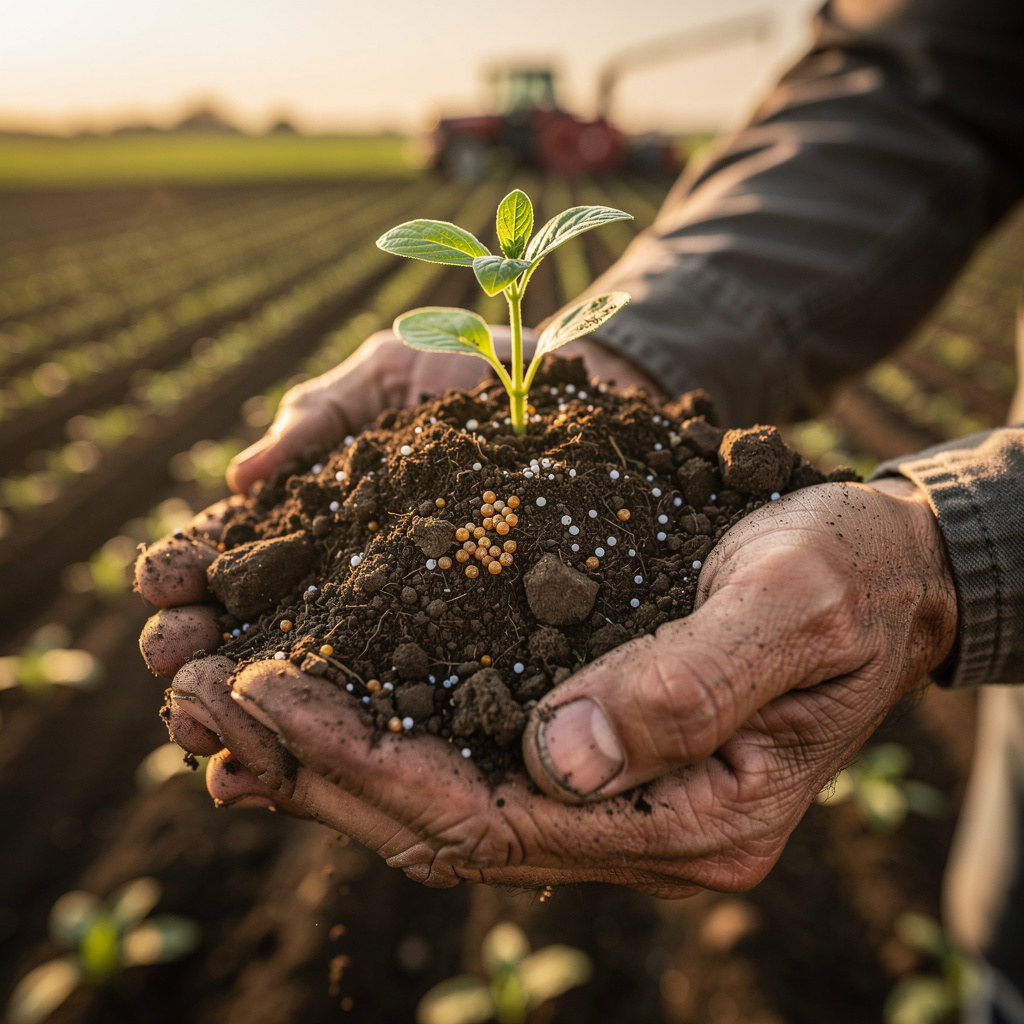
Soil fertility and fertilizers is the study of the soil's capacity to supply essential nutrients in adequate amounts and proportions, and of the materials and practices used to supplement that supply. Its scope spans the physiology of plant nutrient requirements, the physical, chemical, and biological properties that determine nutrient availability, the central role of soil pH and cation exchange in nutrient retention and solubility, and the cycling of nutrients through soil organic matter. Core concepts include nutrient availability versus total content, cation exchange capacity and base saturation, soil solution dynamics, nutrient uptake and limitation, and the classification, composition, and behavior of fertilizer materials. It is both a fundamental soil science discipline and a management discipline, connecting laboratory diagnosis to field decisions about rates, sources, timing, and placement.
The subject matters today because nutrient management sits at the intersection of productivity, economics, and environmental responsibility. In commercial agriculture and horticulture it underpins yield and quality decisions under volatile fertilizer prices; in environmental regulation it determines how nitrogen and phosphorus losses are managed to protect water quality and reduce greenhouse gas emissions; in academic research it links soil chemistry and microbiology to cropping system resilience and soil health. Recent shifts have moved the field beyond simple replacement of nutrients toward nutrient use efficiency, balanced nutrition, precision and variable-rate application, biological and organic nutrient sources, and integrated approaches that treat fertilizer as one component of soil fertility rather than the whole answer. Climate variability and the push for regenerative and circular nutrient systems make these questions more central than ever.
Mastering this subject builds a distinctive skill stack: the ability to read soil and plant analyses critically, reason from soil chemistry and biology to likely nutrient constraints, convert recommendations into accurate fertilizer quantities and blends, and choose methods and timing that minimize losses. It also builds the integrative judgment to combine organic and mineral sources, protect or adjust soil pH, and sequence management across rotations. These skills are used by agronomists and crop consultants advising farms, by soil testing laboratories and fertilizer suppliers, by horticultural and turfgrass managers, by extension and advisory services, and by researchers and policy specialists working on nutrient balances and environmental performance. The same understanding benefits growers and land managers directly, because fertility is among the few manageable factors that consistently influence both harvest outcomes and long-term soil condition.
What Will This Course Bring You?
- Analyze how soil physical, chemical, and biological properties govern nutrient supply and availability to diagnose fertility constraints in agricultural soils.
- Evaluate soil pH, cation exchange capacity, and base saturation to predict nutrient availability and recommend pH management practices for crop production.
- Interpret soil test reports and plant analysis results to diagnose nutrient deficiencies or imbalances and justify fertility recommendations.
- Calculate fertilizer rates and nutrient ratios using soil test recommendations and product analyses to design accurate fertilization programs.
- Compare fertilizer materials and application methods to select nutrient sources and timing that maximize crop uptake and minimize environmental losses.
- Design nitrogen management strategies that integrate source, rate, timing, and placement to improve nitrogen use efficiency and reduce losses.
- Evaluate organic matter management and nutrient cycling practices to build soil fertility and sustain nutrient availability across cropping systems.
- Develop integrated fertility management plans for phosphorus, potassium, secondary, and micronutrients based on soil tests, crop needs, and environmental risk.
Curriculum
12 Units1. Soil Fertility and Fertilizers: Foundations and Plant Nutrient Requirements
1 hour
2. Soil Physical, Chemical, and Biological Properties Affecting Nutrient Supply
1 hour
3. Soil pH, Cation Exchange, and Nutrient Availability
1 hour
4. Soil Organic Matter and Nutrient Cycling
1 hour
5. Soil Testing, Plant Analysis, and Fertility Diagnosis
1 hour
6. Fertilizer Materials and Nutrient Sources
1 hour
7. Fertilizer Calculations and Recommendation Interpretation
1 hour
8. Application Methods and Timing for Nutrient Use Efficiency
1 hour
9. Nitrogen Management and Nitrogen Use Efficiency
1 hour
10. Phosphorus, Potassium, and Secondary Nutrient Management
1 hour
11. Micronutrient Fertility and Diagnosis
1 hour
12. Integrated Management of Soil Fertility and Fertilizers
1 hour
Exam – Soil Fertility and Fertilizers
20 Questions • 70% Pass • 30 min
Unlock All Units for Free
Create an account, enroll in the course, and start with the first unit right away.
Exam – Soil Fertility and Fertilizers
20 Questions • Pass: 70% • 30 min
Course Duration
720
Total Minutes
12
Unit
1
Final Exam
~60
Min / Unit
Soil Fertility and Fertilizers Certificate Program
Document Your Skill
Those who pass the 20-question, 30-minute exam with 70% receive the Soil Fertility and Fertilizers Certificate.
Stand Out on Your CV
By adding your certificate to your CV, gain a professional reference in job applications and stand out from the crowd.
Career Advantage
With the verification code, employers can check your certificate instantly — a concrete way to show your growth.
CERTIFICATE FEE
At the end of the course, an online exam consisting of 20 questions with a 30-minute time limit is given. The exam appears automatically after you complete the topics. Anyone who scores at least 70 out of 100 on the certificate exam is awarded the Soil Fertility and Fertilizers Document (certificate of attendance). You can add the certificate you earn to your CV for job applications in the many sectors listed above, and use it as a reference proving that you took this interactive course.
The Certificate of Achievement you receive with the Soil Fertility and Fertilizers course program holds value that proves your personal and professional development in the business world. By adding it to your CV, it can serve as an important reference in your job applications. Moreover, compared with certificates from other private training institutions, Catch Wisdom certificates are offered to our participants at a much more affordable price.
The Soil Fertility and Fertilizers course certificate is a document that proves, with a unique verification code, that you completed the course. Employers can instantly check its authenticity with this code, which helps you show your development concretely in your job applications.
For more information, we recommend visiting the Support page.
Certificate in 7 Languages
Earning success certificates from our courses is now more meaningful and global. With certificates available in Turkish, English, German, French, Spanish, Arabic, and Russian, we fully unlock the potential of students worldwide.
Why Certificate in 7 Languages?
-
01
Global Skill Development
Receiving your certificates in 7 different languages strengthens your communication skills as you engage with more people worldwide. It lets you operate more confidently and capably on the international stage.
-
02
International Job Opportunities
Employers may see your certificates in multiple languages as a sign of your ability to seize global opportunities. You can open more doors to new jobs and projects.
-
03
Cultural Richness
The chance to earn certificates in different languages helps you build closer ties with various cultures and broadens your worldview. It enriches your global perspective and deepens cultural understanding.
-
04
Ability to Participate in International Projects
Multilingual certificates give you an edge to work more effectively on international projects. They boost your chances of leadership and participation in diverse projects in the business world.
-
05
Prove Yourself on the Global Stage
Certificates in multiple languages give you the opportunity to present your skills and knowledge worldwide.
Language diversity opens worldwide opportunities. If you want to prove yourself in the international arena, join our online Soil Fertility and Fertilizers course program and begin this journey with us.
Frequently Asked Questions (FAQ)
Is this course paid?
How do I join the course?
Can I take the course at my own pace?
How can I get my certificate?
What are the advantages of the certificate?
Boost Your Career
Take a new career step with the Soil Fertility and Fertilizers course. Add your certificate to your CV, stand out in job applications, and open the door to new opportunities in the industry.
StartStudent Reviews
No reviews yet
Enroll in this course and be the first to leave a review about your experience with Soil Fertility and Fertilizers.
Start