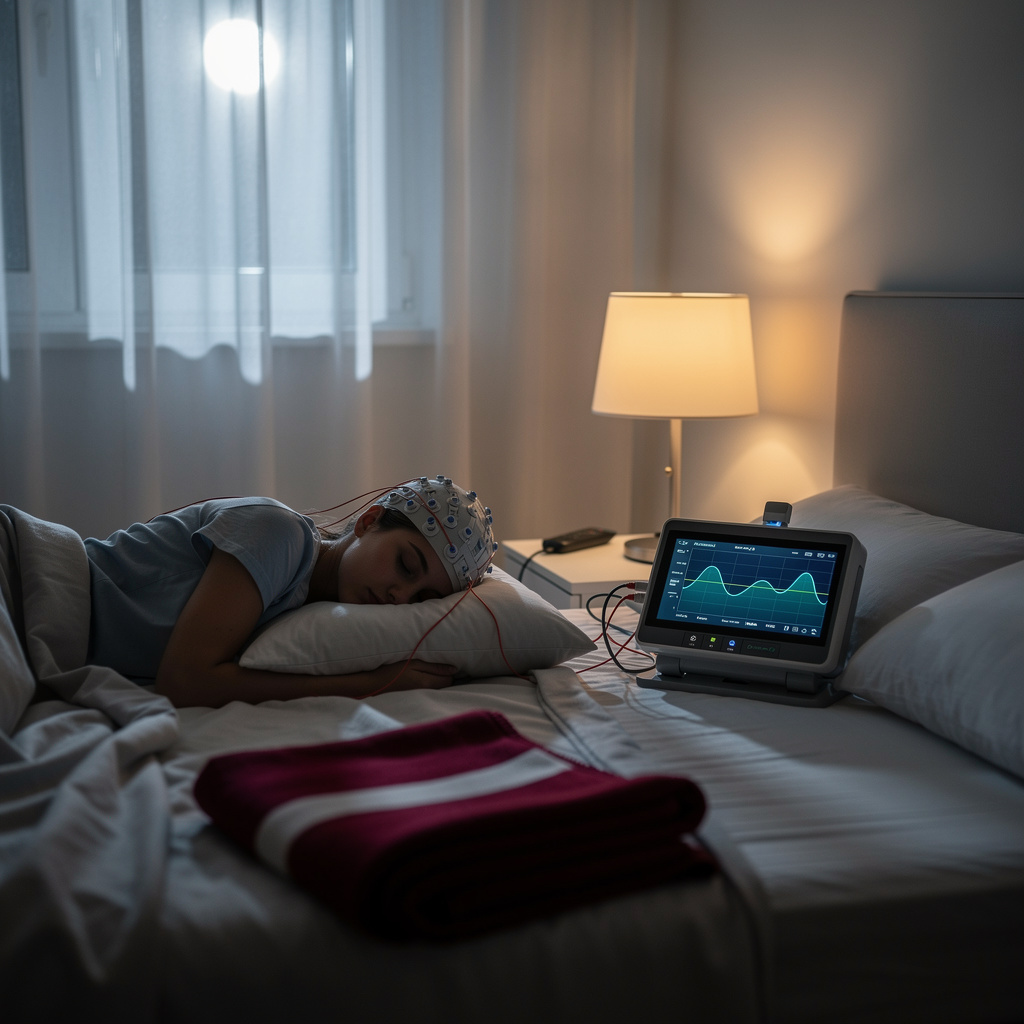
What is Wearable Health Data Analysis?
Wearable Health Data Analysis Training
The Wearable Health Data Analysis certificate program provides a comprehensive foundation in processing, interpreting, and deriving actionable insights from data generated by wearable devices such as smartwatches, fitness trackers, and medical-grade sensors. This course is designed for data analysts, healthcare professionals, and tech enthusiasts who want to bridge the gap between raw sensor signals and meaningful health outcomes. By the end, you will be able to build end-to-end analysis pipelines that transform accelerometer, heart rate, and sleep data into clinical or wellness recommendations.
The program is structured to guide you from data acquisition and preprocessing through exploratory visualization, feature engineering, and machine learning classification, with dedicated modules on time series modeling and anomaly detection. You will also explore ethical and privacy considerations unique to wearable health data, culminating in a capstone project that integrates all skills. This training is timely as wearable device adoption surges and healthcare systems increasingly rely on remote monitoring, making expertise in wearable data analysis a high-demand competency across research, clinical, and commercial settings.
What is Wearable Health Data Analysis?
Wearable health data analysis is the interdisciplinary field that focuses on extracting meaningful physiological and behavioral insights from continuous streams of data collected by body-worn sensors. Core concepts include signal processing for noise reduction, time-series analysis for trend detection, feature engineering to capture relevant health metrics (e.g., heart rate variability, step cadence, sleep stages), and machine learning for classification and anomaly detection. The field sits at the intersection of data science, biomedical engineering, and digital health, requiring both technical rigor and domain knowledge.
Today, wearable health data analysis is critical for remote patient monitoring, chronic disease management, fitness optimization, and early detection of health anomalies such as arrhythmias or falls. The COVID-19 pandemic accelerated adoption of wearables for tracking vital signs, and regulatory bodies now recognize certain algorithms as medical devices. Recent shifts include the integration of multimodal sensor data, edge computing for real-time analysis, and the use of deep learning for personalized health models, making this a rapidly evolving and impactful domain.
Mastering wearable health data analysis builds a skill stack that includes time-series forecasting, statistical hypothesis testing, feature extraction from noisy signals, and ethical data handling. These competencies are directly applicable in roles such as health data scientist, clinical informatics specialist, digital health product manager, and research scientist. Beyond professional contexts, individuals can apply these skills to personal health optimization, citizen science projects, or developing tools for underserved populations, making the subject both practically valuable and socially relevant.
Common Questions About Wearable Health Data Analysis
Is this wearable health data analysis course suitable for beginners?
Will this course help me build a portfolio for health data jobs?
How do you handle motion artifacts in wearable health data?
What is the difference between time-domain and frequency-domain HRV?
Why is missing data imputation important in health data analysis?
- Linear interpolation: estimates missing values by connecting neighboring points with a straight line.
- Last observation carried forward: repeats the last known value until a new one appears.
- Multiple imputation: creates several plausible datasets and combines results.
How does ANOVA help compare multiple health data groups?
Is wearable health data always accurate and reliable?
What Will This Course Bring You?
- Analyze the fundamental principles of wearable sensor data and their role in health monitoring.
- Design a data acquisition pipeline for collecting and managing physiological signals from wearable devices.
- Apply signal processing techniques to clean and preprocess noisy wearable health data.
- Engineer relevant features from raw health signals for downstream machine learning models.
- Implement a machine learning classifier to detect health conditions from wearable sensor data.
- Build a time series forecasting model to predict future health metrics from wearable data.
- Evaluate anomaly detection techniques for personalized health monitoring using wearable data.
- Analyze ethical and privacy considerations in the collection and use of wearable health data.
Curriculum
12 Units1. Foundations of Wearable Health Data
1 hour
2. Data Acquisition and Management
1 hour
3. Data Preprocessing and Cleaning
1 hour
4. Exploratory Analysis and Visualization
1 hour
5. Feature Engineering for Health Signals
1 hour
6. Statistical Methods for Health Insights
1 hour
7. Machine Learning for Classification
1 hour
8. Time Series Modeling and Forecasting
1 hour
9. Personalization and Anomaly Detection
1 hour
10. Ethical and Privacy Considerations
1 hour
11. Applications in Healthcare and Wellness
1 hour
12. Capstone Project: End-to-End Analysis
1 hour
Exam – Wearable Health Data Analysis
20 Questions • 70% Pass • 30 min
Unlock All Units for Free
Create an account, enroll in the course, and start with the first unit right away.
Exam – Wearable Health Data Analysis
20 Questions • Pass: 70% • 30 min
Course Duration
720
Total Minutes
12
Unit
1
Final Exam
~60
Min / Unit
Wearable Health Data Analysis Certificate Program
Document Your Skill
Those who pass the 20-question, 30-minute exam with 70% receive the Wearable Health Data Analysis Certificate.
Stand Out on Your CV
By adding your certificate to your CV, gain a professional reference in job applications and stand out from the crowd.
Career Advantage
With the verification code, employers can check your certificate instantly — a concrete way to show your growth.
CERTIFICATE FEE
At the end of the course, an online exam consisting of 20 questions with a 30-minute time limit is given. The exam appears automatically after you complete the topics. Anyone who scores at least 70 out of 100 on the certificate exam is awarded the Wearable Health Data Analysis Document (certificate of attendance). You can add the certificate you earn to your CV for job applications in the many sectors listed above, and use it as a reference proving that you took this interactive course.
The Certificate of Achievement you receive with the Wearable Health Data Analysis course program holds value that proves your personal and professional development in the business world. By adding it to your CV, it can serve as an important reference in your job applications. Moreover, compared with certificates from other private training institutions, Catch Wisdom certificates are offered to our participants at a much more affordable price.
The Wearable Health Data Analysis course certificate is a document that proves, with a unique verification code, that you completed the course. Employers can instantly check its authenticity with this code, which helps you show your development concretely in your job applications.
For more information, we recommend visiting the Support page.
Certificate in 7 Languages
Earning success certificates from our courses is now more meaningful and global. With certificates available in Turkish, English, German, French, Spanish, Arabic, and Russian, we fully unlock the potential of students worldwide.
Why Certificate in 7 Languages?
-
01
Global Skill Development
Receiving your certificates in 7 different languages strengthens your communication skills as you engage with more people worldwide. It lets you operate more confidently and capably on the international stage.
-
02
International Job Opportunities
Employers may see your certificates in multiple languages as a sign of your ability to seize global opportunities. You can open more doors to new jobs and projects.
-
03
Cultural Richness
The chance to earn certificates in different languages helps you build closer ties with various cultures and broadens your worldview. It enriches your global perspective and deepens cultural understanding.
-
04
Ability to Participate in International Projects
Multilingual certificates give you an edge to work more effectively on international projects. They boost your chances of leadership and participation in diverse projects in the business world.
-
05
Prove Yourself on the Global Stage
Certificates in multiple languages give you the opportunity to present your skills and knowledge worldwide.
Language diversity opens worldwide opportunities. If you want to prove yourself in the international arena, join our online Wearable Health Data Analysis course program and begin this journey with us.
Frequently Asked Questions (FAQ)
Is this course paid?
How do I join the course?
Can I take the course at my own pace?
How can I get my certificate?
What are the advantages of the certificate?
Boost Your Career
Take a new career step with the Wearable Health Data Analysis course. Add your certificate to your CV, stand out in job applications, and open the door to new opportunities in the industry.
StartStudent Reviews
No reviews yet
Enroll in this course and be the first to leave a review about your experience with Wearable Health Data Analysis.
Start