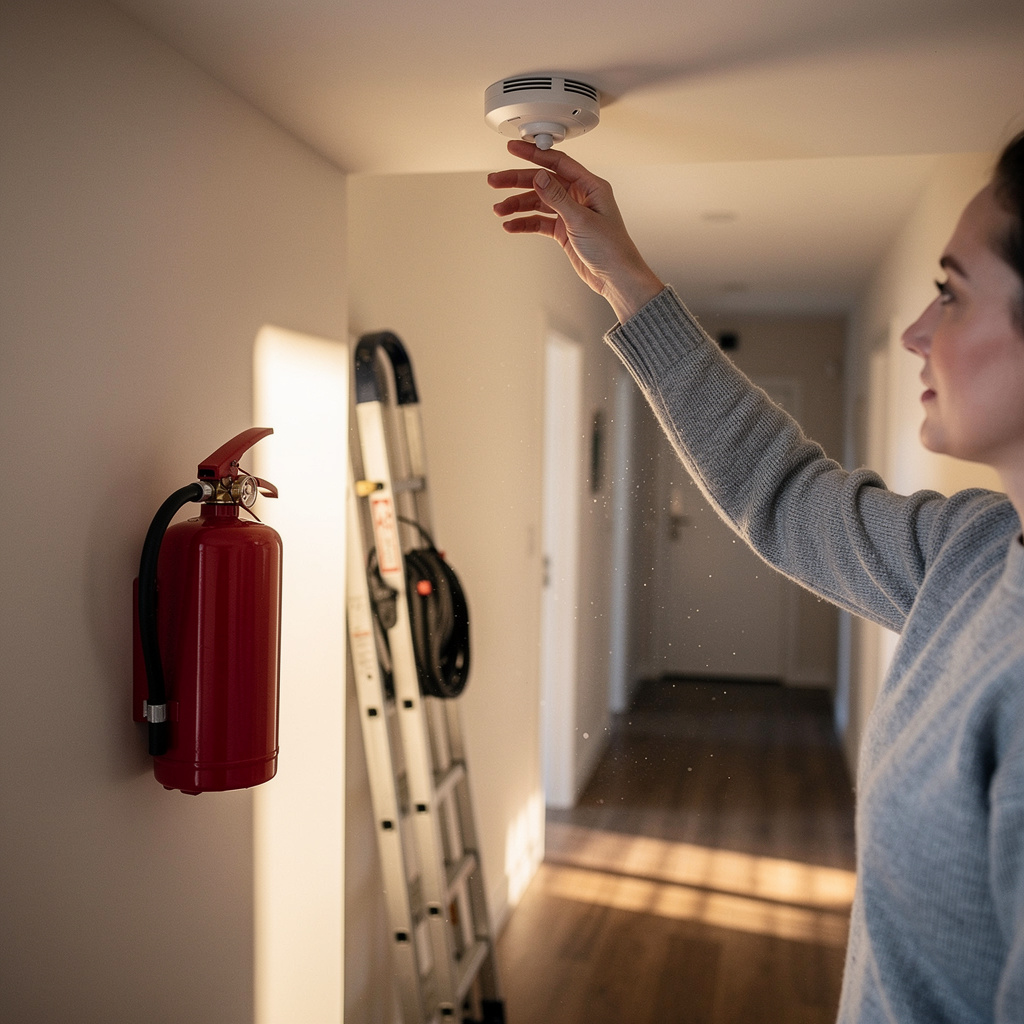
What is Earthquake Preparedness?
Earthquake Preparedness Certificate Program
Earthquake Preparedness certificate program equips learners with practical knowledge to reduce injury, property loss, and disruption before, during, and after seismic events. The curriculum moves from understanding earthquake hazards and conducting personal and household risk assessments to assembling emergency kits, drafting family communication plans, and securing living spaces. It is designed for homeowners, renters, parents, caregivers, workplace safety leads, community volunteers, and anyone who wants a clear, actionable plan rather than general awareness. The main practical outcome is a completed household or organizational preparedness package that includes a supply checklist, communication protocol, mitigation priorities, and drill schedule.
The program is structured as a beginner-friendly progression: early lessons establish hazard literacy and risk assessment, while later lessons build concrete plans, hands-on skills, and response actions such as Drop, Cover, and Hold On, evacuation, shelter-in-place, and basic first aid. Theory is balanced with practice through checklists, scenario walk-throughs, damage assessment exercises, and repeated drills that turn knowledge into automatic behavior. Across the twelve lessons, learners develop five core skill areas: seismic risk awareness, household and workplace preparedness planning, physical self-protection during shaking, post-event safety and medical response, and emotional and community resilience. People choose this program now because growing urban density, aging infrastructure, and more frequent felt tremors make earthquake readiness a practical necessity rather than a theoretical concern.
What is Earthquake Preparedness?
Earthquake preparedness is the discipline of anticipating seismic shaking and organizing people, spaces, supplies, and procedures so that harm and disruption are minimized. Its scope spans pre-event mitigation, immediate response actions, short-term recovery, communication continuity, and psychological readiness. Core concepts include the distinction between hazard and risk, structural and nonstructural mitigation, protective actions during shaking, emergency supply sustainment, family reunification protocols, rapid damage assessment, and community-wide drill practice. The subject draws on earth science, emergency management, public health, engineering, and behavioral science to turn uncertainty into workable plans.
Earthquake preparedness matters today because seismically active regions continue to urbanize, critical infrastructure ages, and interdependence across supply chains and services amplifies the consequences of disruption. In industry, it underpins business continuity planning, facility safety audits, insurance risk evaluation, and construction standards; in academia, it connects geophysics, structural engineering, and social science research on risk perception and response. Recent shifts include performance-based seismic design, faster alerting through earthquake early warning systems, greater attention to post-disaster mental health, and a stronger emphasis on household and community resilience rather than reliance on emergency services alone. Real-world practice now treats preparedness as continuous improvement, not a one-time checklist.
Mastering this subject builds a skill stack that combines risk analysis, practical planning, clear communication, physical self-protection, basic medical response, damage evaluation, emotional support, and drill facilitation. These capabilities matter in facility management, workplace safety, education, healthcare, logistics, insurance, urban planning, and community organizations, where decisions must be made quickly under uncertainty. They also matter at home, where small mitigation steps and rehearsed routines can prevent injuries and speed recovery. The bridge from subject knowledge to learner outcomes is therefore not abstract theory but a repeatable cycle of assessment, preparation, practice, and refinement that serves both professional roles and personal responsibility.
What Will This Course Bring You?
- Analyze local earthquake hazards and exposure factors to estimate the likely risks facing a specific household or workplace.
- Conduct a personal and household risk assessment by identifying structural vulnerabilities, nonstructural hazards, and high-risk occupant needs.
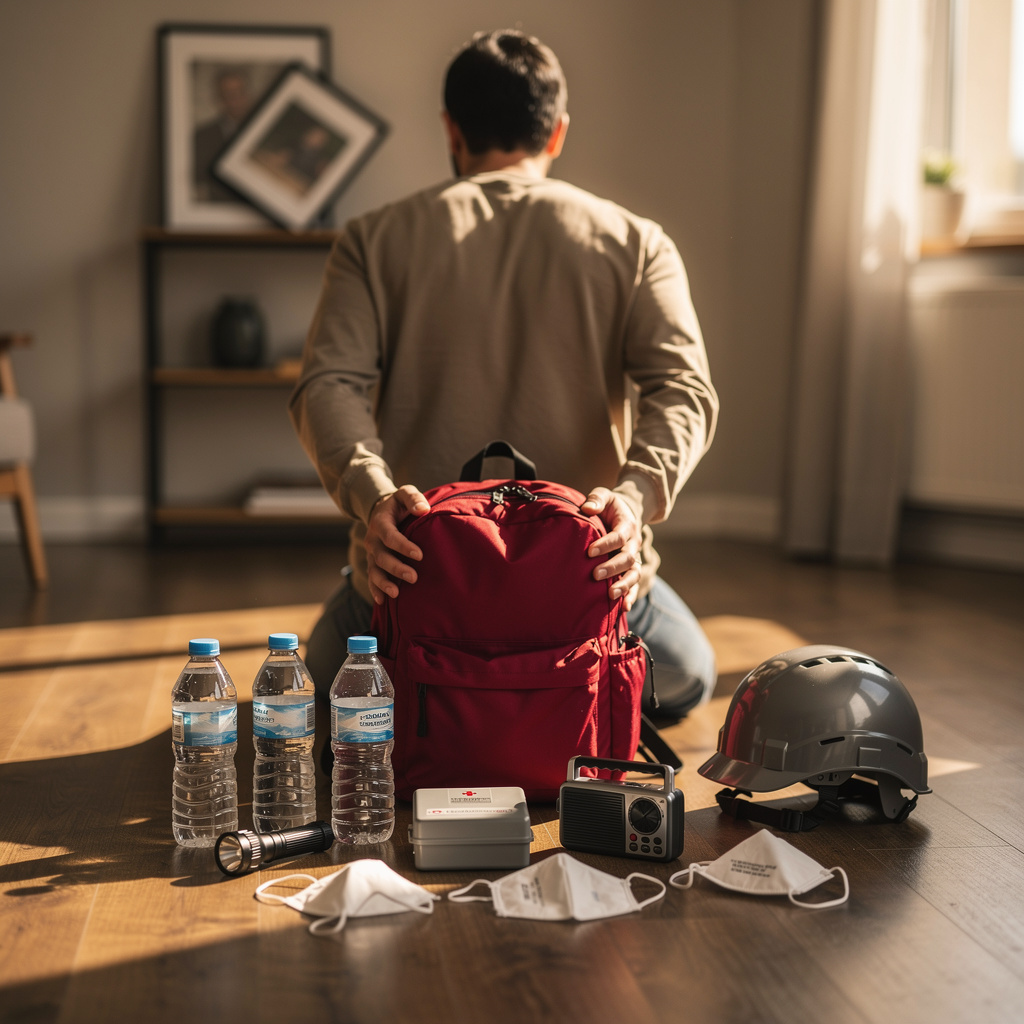
- Build a tailored emergency kit that includes essential supplies for sheltering, evacuation, medical needs, and at least seventy-two hours of survival.
- Design a family emergency communication plan specifying contact methods, meeting locations, out-of-area contacts, and message procedures for earthquake scenarios.
- Implement home hazard mitigation by securing furniture, appliances, and utilities and by correcting unsafe storage and structural weaknesses.
- Apply the Drop, Cover, and Hold On technique correctly in varied indoor and outdoor settings during simulated earthquake shaking.
- Evaluate post-earthquake evacuation and shelter-in-place options using safety, damage, utility, and access considerations to choose appropriate protective actions.
- Develop and run a workplace or community earthquake drill, then use participant feedback to improve response procedures and preparedness plans.
Curriculum
12 Units1. Understanding Earthquake Hazards and Risks
1 hour
2. Personal and Household Risk Assessment
1 hour
3. Building an Emergency Kit and Supplies
1 hour
4. Creating a Family Emergency Communication Plan
1 hour
5. Home Hazard Mitigation and Securing Your Space
1 hour
6. Drop, Cover, and Hold On: Self-Protection During Shaking
1 hour
7. Evacuation and Shelter-in-Place After an Earthquake
1 hour
8. Basic First Aid and Medical Preparedness for Earthquakes
1 hour
9. Post-Earthquake Safety and Damage Assessment
1 hour
10. Emotional and Psychological Preparedness
1 hour
11. Community and Workplace Earthquake Preparedness
1 hour
12. Conducting Drills and Continuous Improvement
1 hour
Exam – Earthquake Preparedness
20 Questions • 70% Pass • 30 min
Unlock All Units for Free
Create an account, enroll in the course, and start with the first unit right away.
Exam – Earthquake Preparedness
20 Questions • Pass: 70% • 30 min
Course Duration
720
Total Minutes
12
Unit
1
Final Exam
~60
Min / Unit
Earthquake Preparedness Certificate Program
Document Your Skill
Those who pass the 20-question, 30-minute exam with 70% receive the Earthquake Preparedness Certificate.
Stand Out on Your CV
By adding your certificate to your CV, gain a professional reference in job applications and stand out from the crowd.
Career Advantage
With the verification code, employers can check your certificate instantly — a concrete way to show your growth.
CERTIFICATE FEE
At the end of the course, an online exam consisting of 20 questions with a 30-minute time limit is given. The exam appears automatically after you complete the topics. Anyone who scores at least 70 out of 100 on the certificate exam is awarded the Earthquake Preparedness Document (certificate of attendance). You can add the certificate you earn to your CV for job applications in the many sectors listed above, and use it as a reference proving that you took this interactive course.
The Certificate of Achievement you receive with the Earthquake Preparedness course program holds value that proves your personal and professional development in the business world. By adding it to your CV, it can serve as an important reference in your job applications. Moreover, compared with certificates from other private training institutions, Catch Wisdom certificates are offered to our participants at a much more affordable price.
The Earthquake Preparedness course certificate is a document that proves, with a unique verification code, that you completed the course. Employers can instantly check its authenticity with this code, which helps you show your development concretely in your job applications.
For more information, we recommend visiting the Support page.
Certificate in 7 Languages
Earning success certificates from our courses is now more meaningful and global. With certificates available in Turkish, English, German, French, Spanish, Arabic, and Russian, we fully unlock the potential of students worldwide.
Why Certificate in 7 Languages?
-
01
Global Skill Development
Receiving your certificates in 7 different languages strengthens your communication skills as you engage with more people worldwide. It lets you operate more confidently and capably on the international stage.
-
02
International Job Opportunities
Employers may see your certificates in multiple languages as a sign of your ability to seize global opportunities. You can open more doors to new jobs and projects.
-
03
Cultural Richness
The chance to earn certificates in different languages helps you build closer ties with various cultures and broadens your worldview. It enriches your global perspective and deepens cultural understanding.
-
04
Ability to Participate in International Projects
Multilingual certificates give you an edge to work more effectively on international projects. They boost your chances of leadership and participation in diverse projects in the business world.
-
05
Prove Yourself on the Global Stage
Certificates in multiple languages give you the opportunity to present your skills and knowledge worldwide.
Language diversity opens worldwide opportunities. If you want to prove yourself in the international arena, join our online Earthquake Preparedness course program and begin this journey with us.
Frequently Asked Questions (FAQ)
Is this course paid?
How do I join the course?
Can I take the course at my own pace?
How can I get my certificate?
What are the advantages of the certificate?
Boost Your Career
Take a new career step with the Earthquake Preparedness course. Add your certificate to your CV, stand out in job applications, and open the door to new opportunities in the industry.
StartStudent Reviews
No reviews yet
Enroll in this course and be the first to leave a review about your experience with Earthquake Preparedness.
Start